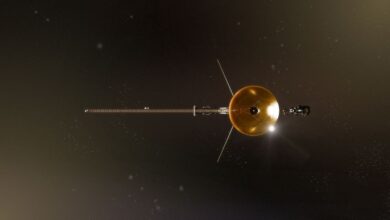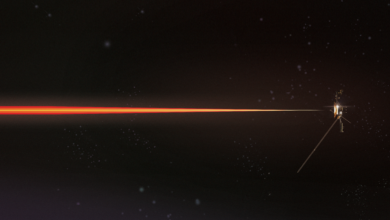

The confirmation was not immediate. NASA had predicted the crossing would occur on November 18 at 5:16 a.m. EST (10:16 GMT), but the agency waited for the physical arrival of the signal to verify the milestone. By the time the announcement was made, the spacecraft had already passed the threshold. The delay in official confirmation is inherent to the physics of the mission; at this distance, any command sent to the probe or data returned to Earth is subject to a one-way light time of 24 hours. This logistical reality fundamentally alters the interaction between Earth-based teams and the spacecraft, transforming real-time control into a long-delayed dialogue.
To mark this occasion, several major U.S. landmarks, including the Empire State Building in New York, the Space Needle in Seattle, and the Willis Tower in Chicago, were illuminated in gold. The color references the Golden Record, a phonographic record aboard both Voyager 1 and 2 containing sounds and images of Earth. The record, a project led by the late astronomer Carl Sagan, serves as an inanimate ambassador, carrying cultural data such as music, languages, and instructions for playing the record, intended for any potential extraterrestrial discoverer. While the building displays are symbolic gestures, the scientific significance lies in the probe’s continued function in the near-vacuum of interstellar space.
Voyager 1, launched in 1977, is the most distant human-made object in history. Its journey has been defined by a series of milestones: sweeping past Jupiter in 1979 and Saturn in 1980, capturing the famous “Pale Blue Dot” image in 1990, becoming the most distant human-made object in 1998, and crossing the heliopause—the boundary of the sun’s magnetic influence—into interstellar space in 2012. Its twin, Voyager 2, which also launched in 1977, took a different route to visit Uranus and Neptune, entering interstellar space later, in 2018. Voyager 2 is currently projected to reach the one-light-day mark in 2035.
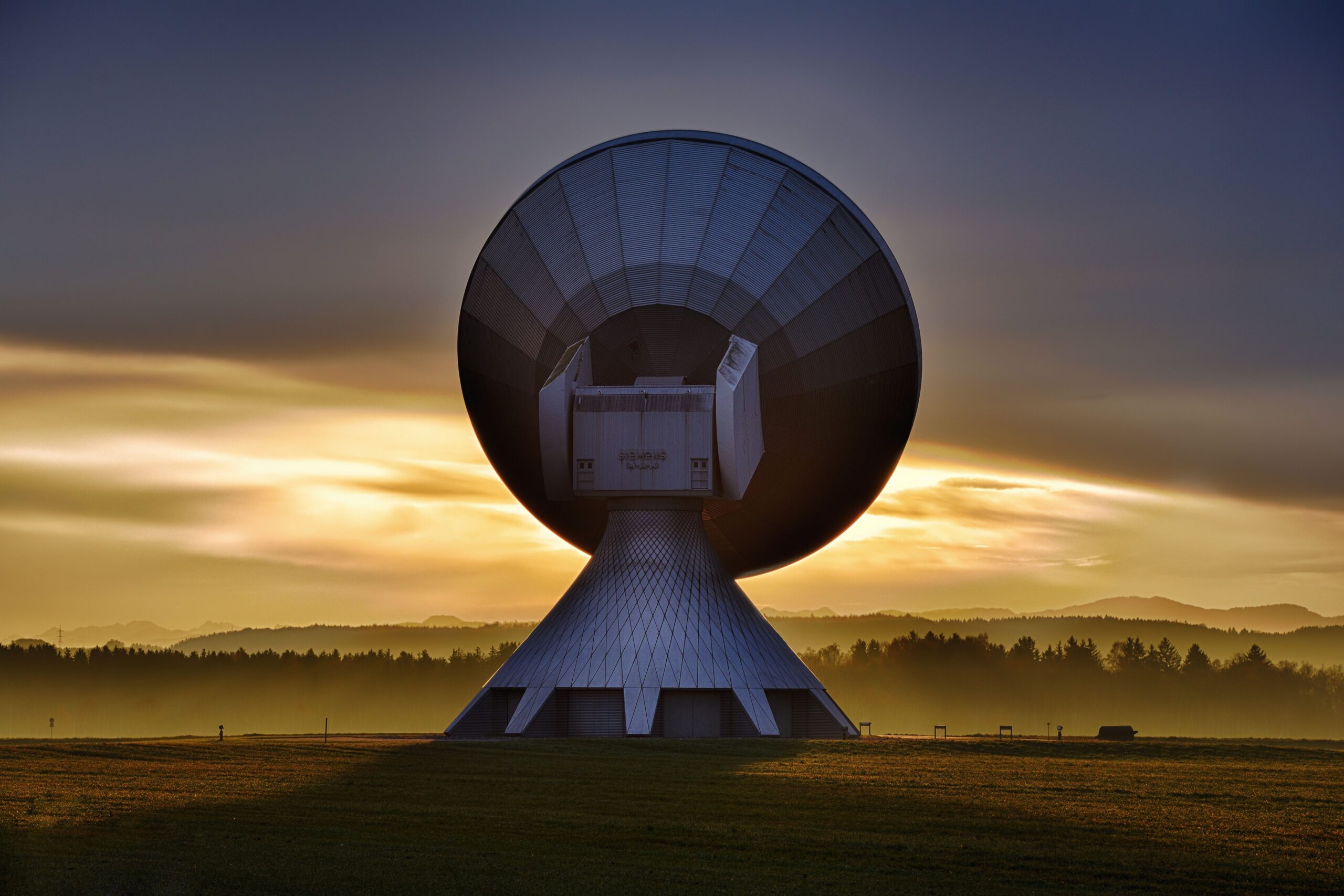
Despite its age—nearly 50 years—the spacecraft continues to operate at approximately 38,000 miles per hour (61,000 kph). However, the confirmation of the light-day milestone coincided with an anomaly in data transmission. According to NASA, no science or engineering data have been received from Voyager 1 since Saturday, November 15. The carrier signal, which typically conveys this data, remained active, allowing flight controllers to confirm the spacecraft’s existence and position. However, the payload data stream has stopped. Controllers are currently investigating why the flow of scientific and engineering data ceased, a development that adds a layer of uncertainty to the mission’s future.
The scientific value of Voyager 1 remains significant despite the data outage. The probe is currently studying the effects of the sun on the interstellar medium, including solar storms, shocks, and pressure fronts that extend to the probe’s location. These observations provide critical insights into the heliosphere and the broader interstellar environment. Joe Westlake, director of NASA’s heliophysics division, noted in a statement that while traveling a light-day is a singular feat, the mission’s broader contribution to planetary science and heliophysics is what makes it remarkable. “The Voyager mission would be remarkable just for what it contributed to planetary science with the Grand Tour of the outer planets,” Westlake said, adding that it has become central to understanding the sun.
The longevity of the Voyager missions is increasingly dependent on power management. Both spacecraft are powered by plutonium radioisotope thermoelectric generators (RTGs), which decay over time. To extend their operational life, engineers have implemented power-saving measures by shutting down non-essential instruments. A representative at JPL indicated that these measures could allow the spacecrafts to maintain communication with Earth for three to four more years. This timeline is tight, especially as the 50th anniversary of the launch approaches next year. The cessation of data from Voyager 1 may force a reassessment of these power budgets, potentially prioritizing the maintenance of the carrier signal over the transmission of new scientific data.
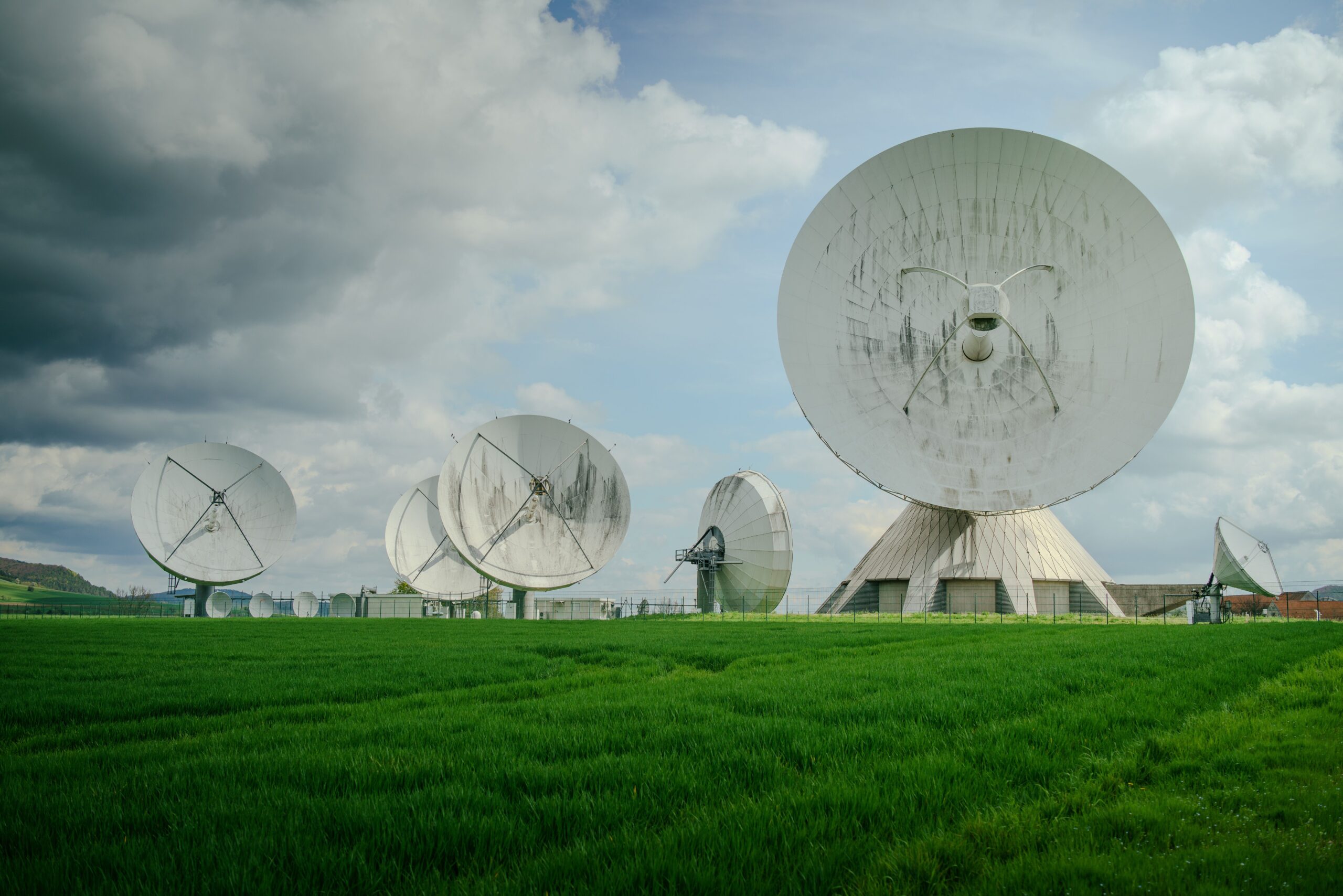
The distinction between the carrier signal and the data payload is crucial to understanding the current status of the mission. The carrier signal confirms the spacecraft is alive and its RTG is generating power, but the lack of data means the probe is no longer actively contributing new scientific observations. This creates a gap in the evidentiary record of the interstellar environment. While the spacecraft’s position is known through flight path calculations and the timing of the signal, the direct observational data that has defined the mission for decades is currently unavailable.
As the signal from Voyager 1 continues to arrive, one day after transmission, the mission stands at a crossroads. The one-light-day mark is a geometric achievement, a testament to the speed of light and the persistence of the probe. Yet, the scientific narrative is now dominated by the question of the data outage. The next phase of the mission will likely focus on diagnosing the cause of the data loss and determining if the signal can be restored, all while managing the dwindling power reserves that sustain this distant emissary in the void between stars.