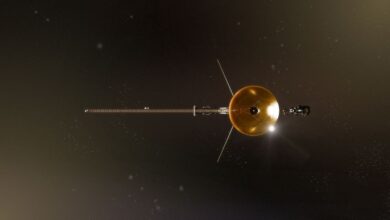
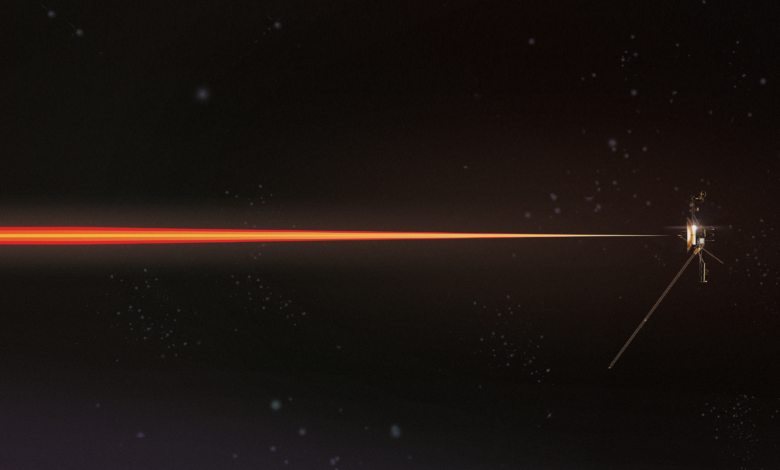
The confirmation process highlights the unique challenges of deep-space operations at this scale. Because light and radio waves travel at the speed of light—approximately 186,000 miles (299,000 kilometers) per second in a vacuum—any signal sent from Earth to Voyager 1 takes 24 hours to arrive. Consequently, the mission team at NASA’s Jet Propulsion Laboratory (JPL) in Southern California did not receive the probe’s signal until early Thursday, November 19, exactly 24 hours after the distance threshold was crossed.
Dr. Joe Westlake, director of the Heliophysics Division at NASA Headquarters, emphasized that while reaching a light-day is a singular feat, Voyager’s significance extends far beyond its distance. “The Voyager mission would be remarkable just for what it contributed to planetary science with the Grand Tour of the outer planets,” Westlake stated. “But it went on to become central to NASA’s fleet of heliophysics missions offering insights into the star that we all revolve around, the Sun.”
Operational Status Amidst Data Interruption
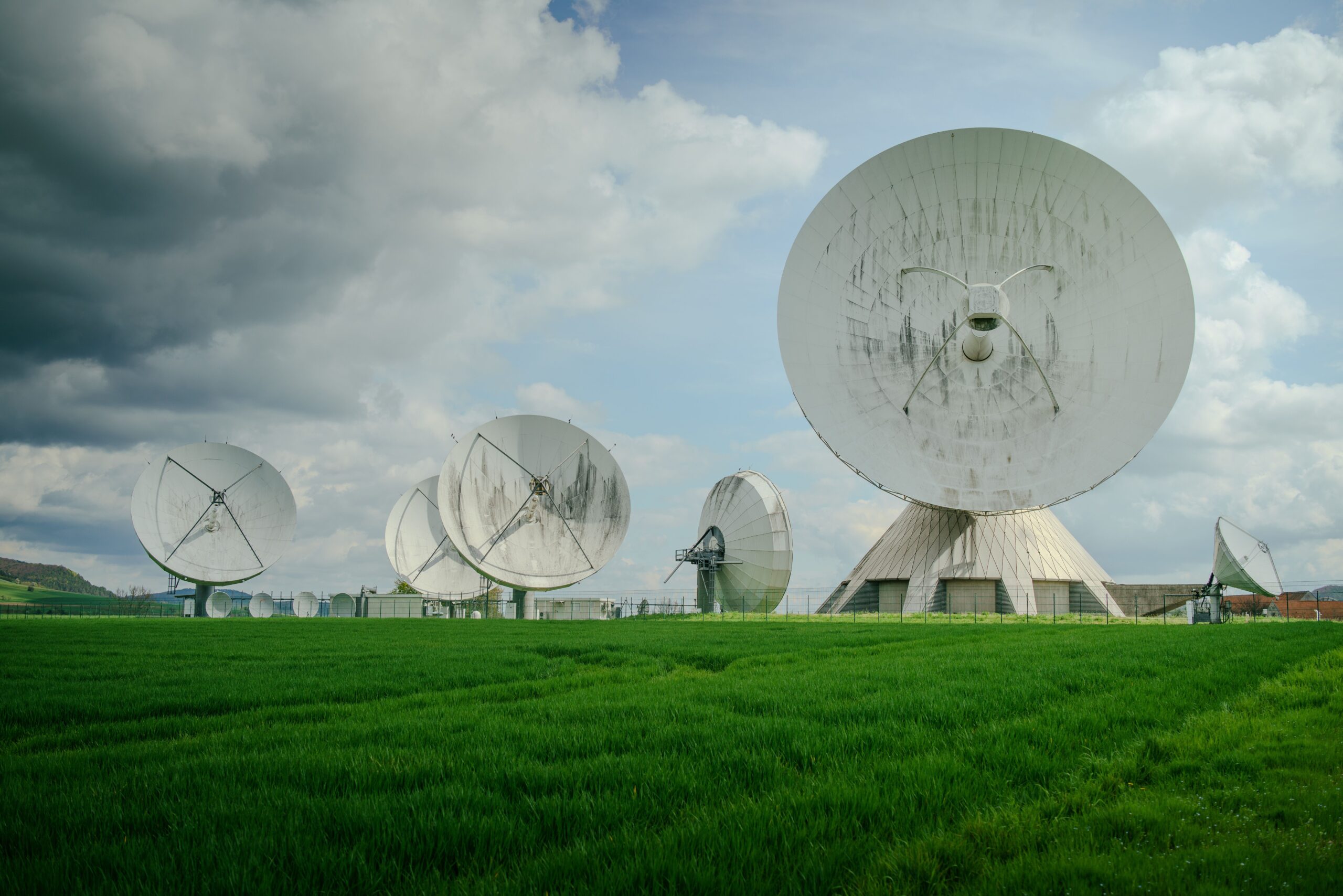
The milestone was reached during a period of technical uncertainty. On November 14, the mission team became aware that Voyager 1 had stopped transmitting science and engineering data. This interruption occurred after a Deep Space Network (DSN) antenna in Canberra, Australia, locked onto the spacecraft and received a carrier signal, but no accompanying data payload.
Despite the lack of data, engineers were able to confirm the probe’s status and its distance using the carrier signal and precise trajectory calculations. The presence of the carrier signal is a critical indicator of the spacecraft’s health. It confirms that Voyager 1’s Attitude and Articulation Control computer is successfully keeping the spacecraft pointed at Earth, and that its antenna and broadcast equipment are functioning. The issue appears to be isolated to the onboard computer responsible for collecting data from the spacecraft’s subsystems and formatting it for transmission.
“Even though the team has not received science and engineering data from Voyager 1 since Nov. 14, the spacecraft is sending what is called a carrier signal, which typically conveys that data to Earth,” explained mission officials. “Mission engineers used the carrier signal and trajectory calculations to confirm the light-day milestone. They continue to analyze the issue impacting the science and engineering data.”
Diagnostic Challenges and Historical Context
Diagnosing issues with the Voyager spacecraft is an inherently slow process. A radio wave takes 24 hours to reach the probe, and any response takes another 24 hours to return to Earth. As a result, determining the cause of the current data gap may take weeks or longer.
This scenario is not without precedent. In 2023, Voyager 1 experienced a similar issue where ground controllers received a carrier signal but no data. That previous incident was traced to a malfunction in one of the onboard computers. The engineering team’s experience in resolving that 2023 issue is directly informing their current approach. Additionally, the team is investigating whether this data loss is connected to a brief communications gap that occurred in October, during which the spacecraft lost all contact for approximately 48 hours before resuming normal operations independently.
Because Voyager 1 is traveling away from Earth at a consistent speed of about 38,000 mph (61,155 kph) on a known trajectory, its physical position is determined by years of continuous measurements. Engineering issues cannot alter the spacecraft’s velocity or direction, meaning the timing of the light-day milestone was unaffected by the data transmission problems.
Power Conservation and Long-Term Viability
Voyager 1 and its twin, Voyager 2, launched in 1977 to exploit a rare planetary alignment. They were the third and fourth spacecraft to visit Jupiter and Saturn, with Voyager 2 subsequently studying Uranus and Neptune. Both probes are now the only human-made objects in interstellar space, having crossed the heliopause—the boundary of the Sun’s magnetic influence—in 2012 and 2018, respectively.
As the spacecraft age, energy conservation has become a primary engineering focus. The probes are powered by radioisotope thermal generators, essentially nuclear batteries that convert heat from decaying plutonium into electricity. With the plutonium supply depleting, both Voyagers lose approximately 4 watts of power each year.

Earlier this year, engineers implemented a risky but necessary strategy to extend the mission’s life. They turned off three devices on Voyager 1 and substituted them with three lower-power alternatives. This measure is designed to preserve enough power for the spacecraft to maintain its current suite of science instruments until at least their 50th launch anniversaries next summer.
Linda Spilker, Voyager project scientist at JPL, noted that the probes are “revolutionizing our understanding of interstellar space, a previously unexplored region outside the heliosphere.” She highlighted a key scientific surprise: the extent to which the Sun continues to affect interstellar space all the way out to Voyager 1’s location. “Where does the Sun’s influence end and pristine interstellar space begin? Perhaps Voyager may endure long enough to answer that question,” Spilker said.
The mission also carries a symbolic payload: the Golden Record, a gold-plated copper phonograph compiling images and sounds from Earth, intended as a message to any advanced civilization that might one day find it. Dave Gallagher, JPL director, described the light-day crossing as “yet another historic feat on an extraordinary voyage of discovery,” crediting the “exceptional teams who built, programmed, and fly these spacecraft today.”
As the engineering team works to resolve the data transmission issue, the focus remains on keeping the probe operational for as long as possible. The mission expects to eventually lose both spacecraft to unresolvable engineering constraints, but the immediate goal is to continue gathering insights into the heliophysics of the outer solar system and the interface with interstellar space.