

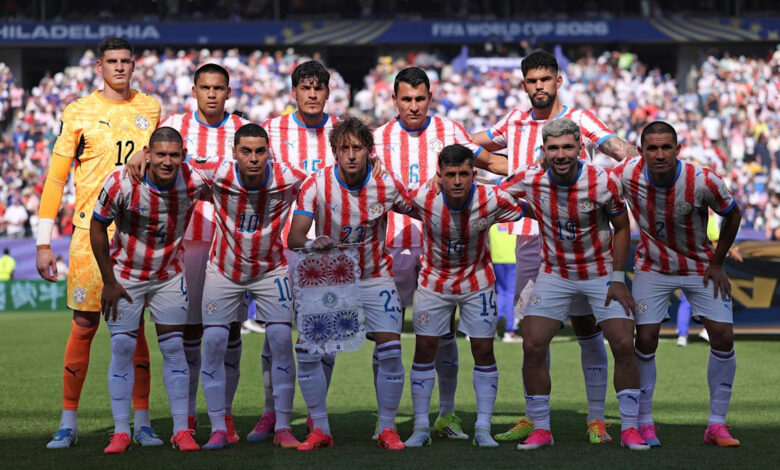
The significance of this fixture for Paraguay is underscored by their recent performance on the global stage. It was the nation’s first appearance at a World Cup since 2010. Competing in Group D alongside the United States, Türkiye, and Australia, Paraguay finished third with four points, recording one win, one draw, and one loss. Despite missing the knockout stage from the group phase, the team advanced through the Round of 32 after a dramatic encounter with Germany. The match ended 1-1 after extra time, leading to a penalty shootout where Paraguay emerged victorious with a 4-3 win. Their journey concluded in the Round of 16 against France, who secured a 1-0 victory in regular time.
For Bolivia, the context of the friendly is one of continued pursuit of World Cup qualification. The team came within a single victory of securing a place in the 2026 tournament during the FIFA inter-confederation playoffs held in March. Bolivia successfully defeated Suriname 2-1 in the semifinal stage. However, their campaign ended in the final qualifier against Iraq in Mexico, where they fell 2-1. The loss in Guadalupe, at the Estadio Monterrey, denied Bolivia a return to the World Cup, a tournament they have not attended in 32 years. Goalkeeper Guillermo Viscarra is among the key figures expected to feature, providing stability to the squad as they prepare for future challenges.
The broader landscape of international football in 2026 is defined by the expansion of the tournament to 48 teams, the largest edition in history. While all 48 spots are set to be filled by next Tuesday, the final stages of qualification have seen intense competition across confederations. In UEFA, four mini-tournaments are determining the final European qualifiers, with winners joining groups that include host nations such as Canada, the United States, and Mexico. Outside of Europe, six nations are vying for two remaining spots in separate three-team tournaments held in Mexico. These winners will be placed in groups headlined by either France or the Netherlands.
As South American nations prepare for the World Cup, various formats are being utilized to build cohesion and test tactical cohesion. While many teams engage in traditional friendlies, others are participating in the 2026 FIFA Series, which features intercontinental clashes against opponents they would not typically face. This approach allows teams to evaluate their readiness against diverse styles of play. For instance, Argentina, following a strong qualification campaign that included matches against Venezuela, Puerto Rico, and Angola, is scheduled to face Mauritania and Zambia in Buenos Aires. These fixtures follow the cancellation of their planned Finalissima clash with Spain due to ongoing geopolitical conflicts in the Middle East, forcing a shift in their preparatory schedule.
The upcoming match in Washington, D.C., represents a strategic opportunity for both Paraguay and Bolivia. For Paraguay, it is a chance to consolidate the confidence gained from their World Cup run, particularly their ability to compete with top-tier European sides in high-pressure situations. For Bolivia, the friendly serves as a platform to assess squad depth and tactical adjustments following their playoff exit. With the 2026 World Cup now just months away for those still qualifying, and recently played for those who advanced, every international window carries weight for squad morale and competitive sharpness.
The result of this friendly will not directly impact standings, but it will provide valuable insights into the current form of both national teams. Paraguay’s ability to retain possession and manage game tempo will be closely watched, as will Bolivia’s defensive structure and counter-attacking efficiency. As the international break progresses, these fixtures will lay the groundwork for the remaining competitive matches in the cycle, ensuring that all 10 South American nations are fully prepared for the final push toward the summer tournament.