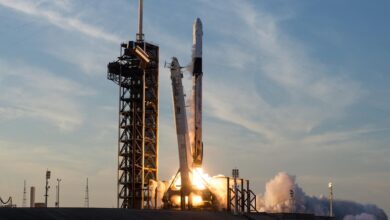
The launch site is located in California, a key location for SpaceX’s West Coast operations. The company utilizes this facility for a variety of missions, including national security launches, scientific payloads, and commercial satellite deployments. The selection of a California-based launch is often dictated by the specific orbital requirements of the payload, such as inclination and sun-synchronous orbits, which are more efficiently accessed from the western United States compared to the company’s Florida operations.
As is standard for SpaceX missions, the launch vehicle will likely be a Falcon 9 rocket, the company’s primary workhorse. The Falcon 9 is a two-stage, medium-lift launch vehicle designed for multiple flights, featuring a reusable first-stage booster. The reusability aspect has significantly reduced the cost per kilogram to orbit and increased the turnaround time between consecutive launches. Engineers will conduct a final scrub check to ensure all systems are nominal before the Green Light is given for ignition.
The mission’s trajectory will be monitored by global space tracking networks and amateur enthusiasts alike. Live telemetry will be available through official channels, providing real-time data on the rocket’s ascent, stage separation, and booster landing. The booster is expected to return to either a drone ship at sea or a landing pad at the launch site, depending on the flight profile and weather conditions. A successful landing will add to the company’s record of reusing boosters, a technology that has become a cornerstone of modern spaceflight economics.
The primary objective of the mission, while not detailed in the initial release, aligns with SpaceX’s broader goals of increasing access to space and supporting a diverse portfolio of clients. These clients range from government agencies to private satellite operators. The success of this launch will be a factor in the company’s planning for subsequent missions, which are often scheduled in rapid succession to maintain momentum and meet customer deadlines.
Weather conditions will play a crucial role in determining the exact launch time within the designated window. Launch directors will monitor forecasts for wind speeds, cloud cover, and precipitation, which can affect both the rocket’s ascent and the booster’s landing. If weather conditions do not meet safety thresholds, the launch may be postponed to the next available window. The company has demonstrated a high success rate in adhering to scheduled launch dates, reflecting robust pre-flight testing and operational efficiency.
The upcoming launch underscores the increasingly commercial nature of space access. As demand for satellite internet, Earth observation, and communication services grows, the ability to launch frequently and reliably becomes a critical competitive advantage. SpaceX’s operational model, which emphasizes rapid turnaround and reusability, has reshaped the expectations of the commercial space sector. This weekend’s mission is a routine but significant entry in the company’s flight log, contributing to the cumulative data used to refine launch processes and improve vehicle performance.
Observers and space agencies will watch the launch closely, not just for the immediate mission success, but for any new operational procedures or technology demonstrations. SpaceX frequently utilizes launch opportunities to test new features or software updates on its hardware. Any anomalies or deviations from the expected flight profile would be subject to detailed post-flight analysis. The company’s transparency in sharing data and footage has contributed to public engagement and scientific understanding of orbital mechanics and rocket propulsion.
The launch is scheduled to occur within the designated weekend window, with specific times to be announced as the countdown begins. The mission will be tracked from liftoff to orbital insertion, providing a clear picture of the vehicle’s performance. The successful completion of the flight will allow for immediate planning of the next launch, maintaining the tight schedule that defines SpaceX’s current operational tempo. This continuous cycle of launch, recovery, refurbishment, and relaunch is a defining characteristic of the company’s approach to spaceflight.