
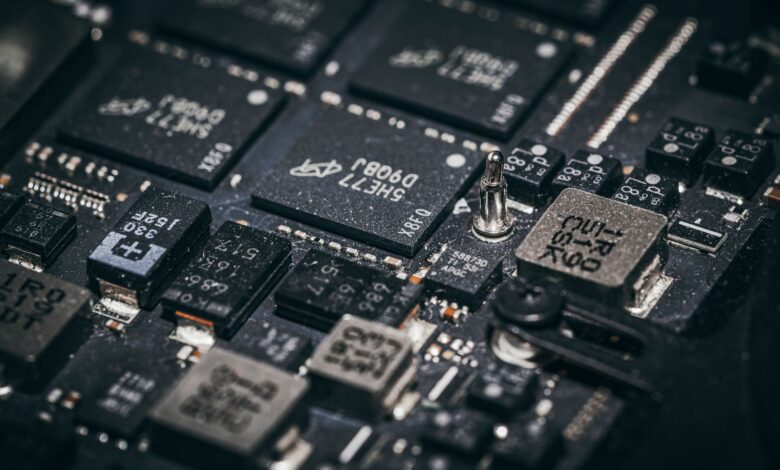
Nvidia, which controls an estimated 80 to 90 percent of the global market for graphics processing units (GPUs) used in frontier artificial intelligence, has long advocated for maintaining access to the Chinese market. Jensen Huang, who co-founded the company in 1993, has lobbied President Donald Trump to loosen export controls, arguing that China already possesses sufficient computing power and that broader US adoption would preserve American dominance in the AI sector. However, this stance now faces intense scrutiny. On Sunday, Nvidia’s board launched an internal inquiry into the relationship, pledging to examine “all available information” while expressing confidence in the CEO. Huang has stated he will cooperate fully with the investigation. Concurrently, President Trump confirmed that the FBI is investigating whether the relationship resulted in any compromise to US national security.
The controversy has accelerated legislative efforts to restrict chip exports. Democratic Senator Elizabeth Warren and Republican Senator Jim Banks called on Congress on Monday to pass the AI Overwatch Act, which would allow lawmakers to scrutinize and potentially halt exports of advanced chips to adversaries. Additionally, Democratic House Representative Bill Foster urged the passage of the Chip Security Act, a measure cosponsored by Republican Representative Bill Huizenga, which aims to track the location of chips sent overseas to prevent illicit smuggling. Rui Ma, founder of Tech Buzz China, noted that advocates for tighter restrictions now hold a “much stronger political argument,” particularly if Huang’s influence is diminished by the investigation.
Recent US policy has attempted to balance national security concerns with commercial interests. In May, the Department of Commerce scrapped the previous administration’s “AI Diffusion Rule,” which would have capped chip exports to over 100 countries. In December, President Trump granted Nvidia approval to sell its H200 chip to China, under an arrangement where 25 percent of sales would be paid to the US government. However, the administration has resisted allowing exports of Nvidia’s top-tier Blackwell chips, which offer approximately 2.5 times the performance of the H200. Despite these controls, the effectiveness of export restrictions remains questionable. Epoch AI estimates that chips with the compute power of 1.6 million Nvidia H100s were smuggled into China by the end of 2025. Furthermore, Chinese companies have bypassed US laws by remotely accessing Nvidia-powered data centers in Singapore, Malaysia, and Thailand.
Analysts suggest the espionage allegations may increase pressure on the administration to address these remote access vulnerabilities. Gabriel Wildau of Teneo noted that while the claims merit skepticism due to anonymous sources, President Trump may face new pressure from Congress to close export control loopholes. The political dynamics are further complicated by diplomatic efforts to maintain US-China relations. President Trump and Chinese President Xi Jinping met twice this year and are scheduled to meet again next week at the APEC summit in Shenzhen, with a fourth meeting expected in December 2026 at the G20 summit in Miami.



One Comment