
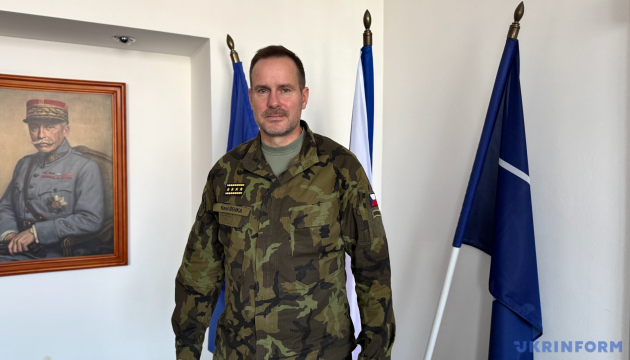
The warning comes against a backdrop of renewed Russian rhetoric targeting European security. On February 23, Dmitry Medvedev, Deputy Chairman of Russia’s Security Council, threatened the European Union, suggesting that former Russian military personnel could enter Schengen countries “as in 1812 or 1945.” Similarly, Norwegian authorities have stated they do not rule out the possibility of a Russian invasion and are preparing for scenarios involving the seizure of territory. Conversely, Estonia’s foreign intelligence service has indicated that Russia does not intend to launch a military attack on NATO in the 2026–2027 timeframe, but is instead focused on rebuilding its armed forces amid concerns over European rearmament. Despite these conflicting intelligence assessments, Řehka emphasized that the West must prevent miscalculations similar to those made by Russia in Ukraine, where Moscow apparently did not anticipate a prolonged conflict characterized by heavy monthly losses.
Řehka addressed concerns regarding NATO’s immediate operational readiness, noting that while years of underfunding have resulted in shortages of stockpiles, ammunition, and resources, Allied forces remain capable of acting decisively. “If this were to happen tomorrow, we would fight with what we have. Without hesitation,” Řehka said. He expressed strong confidence in NATO’s political cohesion, stating that the activation of collective defense would occur if necessary because there is no alternative. “If that did not happen, it would be the end of NATO,” he added, noting that such a failure would be a tragedy that Russia seeks to exploit.
Domestically, the Czech Republic is undertaking a significant transformation of its military structure to adapt to this changing security landscape. Traditionally structured as an expeditionary force, the Czech military must now meet emerging operational demands. Řehka indicated that the country requires approximately 7,500 additional troops in the coming years. Given current staffing levels, this represents an overall increase of nearly 14,000 personnel, amounting to roughly 60% of the current force. As of early last year, the Czech defense sector included 27,826 conscripts and 4,266 active reservists, alongside a professional military force of around 24,000 troops. The long-term goal is to reach 30,000 professional soldiers and 10,000 reservists by 2030. However, NATO’s strategic objectives suggest a need for up to 37,500 Czech military personnel to contribute effectively to collective deterrence and defense.
Defense Minister Jana Cernochova has highlighted the financial implications of this expansion, stating that the current defense budget allocation of 2% of GDP represents a minimum requirement. She suggested that increasing military expenditures to 3% of GDP may be necessary to sustain the growing demands placed on the armed forces. This expansion aligns with broader efforts to enhance the country’s defense posture in response to geopolitical shifts, including increased military cooperation between Russia, Iran, China, and North Korea.
Public support for these measures remains strong, particularly among younger demographics. A survey by the Central European Digital Media Observatory found that 44% of Czechs support Ukraine’s victory in the ongoing war, while 62% of those aged 16–24 back this outcome. Concerns about the future of the conflict are prevalent, with 67% of respondents fearing a prolonged war and 55% worried about an escalation into a NATO-Russia confrontation. Řehka, who has been engaged in civic support for Ukraine through initiatives like the Nemesis drone campaign, noted that most Czech society remains willing to continue its assistance. He described the war in Ukraine as a warning signal for democratic nations, underscoring the importance of strengthening defense capabilities to ensure resilience and deter future aggression.