

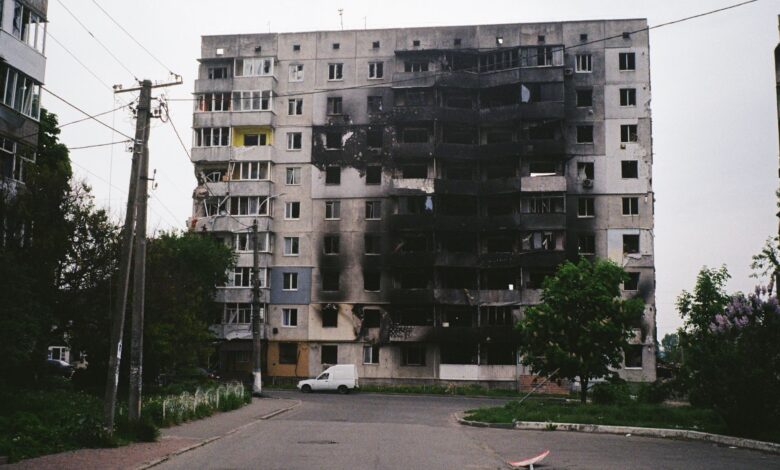
In Kyiv, Mayor Vitaliy Klitschko announced that at least 19 people were injured in the city on September 28, including three children. One woman died in the attacks. A seven-story administrative building in the Shevchenkivskyi district was hit on the fourth floor. Footage published by witnesses showed a fire at the “Dobrobyut” hospital in the city center, located near the Constitutional Court of Ukraine. Earlier that day, a building housing the National Academy of Sciences was also struck by drones. Klitschko stated that air raid alerts in the capital have been nearly continuous, citing a threat from jet-powered drones. Six injured individuals, including two children, were hospitalized.
In Odesa, a Russian strike on a residential high-rise during the day on September 28 injured four people, including a child. Regional military administration head Serhiy Lysak confirmed that an apartment on the 12th floor was destroyed, while the facade, balconies, and windows of floors one through 11 were damaged. Odesa regional governor Oleh Kiper identified the injured as a 56-year-old man and a 37-year-old woman, both of whom were hospitalized, as well as two girls aged 17 and 18 who received on-site medical aid.

Ukrainian authorities previously reported that Russian drone strikes overnight into September 27 killed at least four people. One man was killed in Kyiv’s Solomyanskyi district when a drone hit a nonresidential building, while three others died in the Zaporizhzhya region. The State Emergency Service reported fires at a car-repair facility and another nonresidential building in the same Kyiv district.
Ukraine retaliated against Russian targets with counterstrikes affecting oil and military sites in the Tula and Voronezh regions. A railway bridge in the Bryansk region was also reported to have been attacked. These actions follow ongoing Russian offensives that have caused significant destruction to civilian infrastructure across eastern and southern Ukraine.
The sustained aerial campaign highlights the continued vulnerability of urban centers to long-range drone attacks. Ukrainian officials emphasized that the frequency of air raids has increased, with alerts frequently remaining in effect for extended periods. The strikes on Kyiv and Odesa occurred within 24 hours of one another, resulting in fatalities and injuries to civilians, including minors, in both cities.

Military analysts note that the use of jet-powered drones represents a shift in the conflict’s aerial dimension, posing a greater challenge to air defense systems due to their speed. Ukrainian forces have continued to verify the extent of damage and assist in firefighting efforts at the strike sites. The humanitarian impact remains significant, with hospitals and residential areas bearing the brunt of the attacks.
Further details regarding the specific types of munitions used and the full extent of infrastructure damage in the Zaporizhzhya region are pending official confirmation from local authorities. The Ukrainian government continues to coordinate emergency services to manage the aftermath of the strikes and support affected residents.