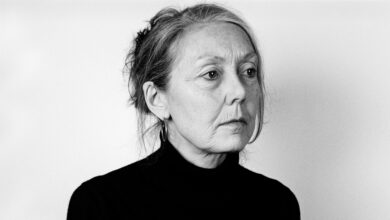

Carson, 76, is celebrated for a career that frequently crosses the boundaries between poetry, fiction, and academic scholarship. The Nobel committee’s citation highlights her ability to move fluidly between classical and modern poetry, as well as between different genres and art forms. Anders Olsson, chairman of the Swedish Academy’s Nobel committee for Literature, noted that Carson has “broken away from lyrical poetry bound to the narrative self,” inspiring new forms through works that are both playful and ironic.
The award carries a prize of 12 million Swedish kronor (approximately $1.2 million or £900,000). Ingrid Carlberg, the permanent secretary of the Swedish Academy, revealed that she informed Carson of the win by phone shortly before the public announcement. Carlberg described the reaction from the poet, who was in Iceland at the time: “She was taken by surprise but very happy. I could hear that in her voice.” Carlberg added that Carson had time to mention she was in Iceland “listening to the wind.” When speaking to the Icelandic public broadcaster RUV, Carson responded with characteristic humor, joking that the judges were “crazy” for honoring her.
Born in Toronto in 1950, Carson has held Canadian citizenship and has also held Icelandic citizenship since 2022. She currently lives in Michigan. Her notable works include The Glass Essay, Autobiography of Red: A Novel in Verse, Nox, Float, and The Beauty of the Husband: A Fictional Essay in 29 Tangos. Her writing is characterized by a distinctive style that blends wit and imagination, bringing ancient stories to modern audiences and transforming the way literature is conceived.
Carson’s academic and pedagogical footprint extends significantly into the United States, particularly at UC Berkeley. She served as the Roberta C. Holloway Lecturer in the Practice of Poetry during the 2000-01 academic year, joining a distinguished roster of previous laureates that includes Louise Glück, Frank Bidart, Robert Hass, Paul Muldoon, and Yusef Komunyakaa. During the 1990s, she also spent two semesters at the university as a visiting professor, teaching graduate seminars in the Classics and Comparative Literature departments.
Academic Legacy and Pedagogical Impact
Her time at Berkeley left a lasting impression on faculty and students. Celeste Langan, an associate professor in Berkeley’s Department of English, attended Carson’s 2001 Holloway lecture, during which Carson read from The Beauty of the Husband. This narrative poetry collection explores a troubled marriage through 29 sections of verse referred to as “tangos,” using the dance as a metaphor for the commitment of marriage. For Langan, it was a first encounter with the “tango” as a literary form. Langan now teaches several of Carson’s more recent poems, including “Gloves On!,” which addresses how involuntary tremors caused by Parkinson’s disease have altered Carson’s handwriting. Langan describes such works as challenging “the fantasy of one’s very own voice,” prompting students to question the relationship between bodily control and identity.
Geoffrey O’Brien, a Berkeley professor of English and the faculty lead for the Holloway lectureship, held the appointment himself in 2003-04. He notes that the program allows for a “thicker sense of what is on offer in the contemporary field,” a sentiment that aligns with Carson’s own approach to expanding literary boundaries. Notably, despite her current global acclaim, records indicate that Carson was denied tenure at Princeton University, a fact that has drawn attention to the often non-linear paths of literary excellence.
“She has brought ancient stories to new audiences and transformed the way we think about literature,” wrote Canadian Prime Minister Mark Carney, calling the win “an extraordinary achievement and a proud moment for Canada.”
Carson’s recognition underscores a shift in literary criticism toward valuing interdisciplinary work that refuses to be confined by traditional genre definitions. By remixing ancient Greek texts and engaging in a playful dialogue with the classical tradition, she has created a body of work that is both intellectually rigorous and emotionally resonant. The Nobel committee’s decision reflects a broader appreciation for writers who innovate form as much as content, offering new frameworks for understanding both the past and the present.