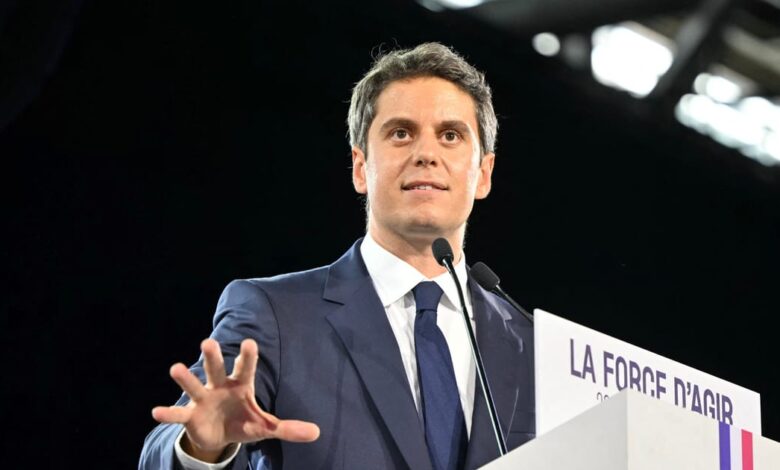
Attal’s entry into the race represents a significant break from his mentor, President Emmanuel Macron. After nearly a decade of Macron-led governments, the incumbent’s popularity has waned, prompting Attal to position himself as the face of a new generation. He criticized past administrations for being “taken hostage by an obsession to pay for yesterday’s spending,” arguing that this approach sacrifices long-term investment and risks a “generational fracture.” To counter this, Attal promised to make France the leading European power in artificial intelligence and to restore the country’s status as a major global force within six years.
The campaign launch comes at a moment of profound institutional fragility in France. The political landscape has been destabilized by the recent resignation of Prime Minister François Bayrou, who was forced out after losing a crushing confidence vote in parliament. Bayrou, 74, lasted only nine months in office, a tenure defined by a failed budget that sought over €40 billion in savings through welfare freezes and civil-service job cuts. His gamble united his political enemies: the far-right National Rally and a left-wing alliance voted to topple him, 364 to 194. This marked the third time in 14 months that a head of government was removed, leaving Macron scrambling to manage a cycle of collapse that has become routine in the National Assembly.
The rift between Attal and Macron deepened following the summer of 2024, when the president dissolved parliament in a surprise move that blindsided his then-prime minister. Attal, who was not consulted, was eventually forced to leave office. The tension has since evolved into open public criticism. Recently, Attal stated on television that he “no longer understands” the president’s decisions, accusing Macron of a “form of relentlessness” and a desire to hold onto power despite losing snap elections. He is not alone in this dissent; former Prime Minister Édouard Philippe has called for an early presidential election, describing the current situation as a “crisis of the state,” while former Prime Minister Elisabeth Borne has suggested suspending the controversial 2023 pension reform to alleviate tensions.
Attal’s strategy mirrors the successful 2025 campaign of Dutch Prime Minister Rob Jetten, emphasizing optimism, national pride, and prioritization of younger generations. However, to broaden his appeal, Attal is also pivoting on security issues. He has vowed tighter border controls, stating, “A country that no longer controls its borders no longer controls its destiny.” This stance is a calculated attempt to win back voters who have drifted toward the right and far-right, where immigration and border security have become dominant political concerns. Attal framed this approach as a method to “welcome fewer people in order to welcome them better.”
In the latest polls, Attal trails in fourth place with 13 percent of the popular vote. He is behind far-right candidate Jordan Bardella, center-right Édouard Philippe, and radical left leader Jean-Luc Mélenchon. Despite this polling gap, Attal’s campaign focuses on specific priorities: strengthening education, increasing purchasing power through wage growth and business support, and investing heavily in research and innovation, particularly in quantum technologies. His decision to announce his bid in the southern French countryside, rather than in Paris, further underscores his intent to shed the image of the Parisian elite and connect with a broader electorate.
As the presidential race heats up, the immediate challenge for Attal is to consolidate a fragmented centrist base while addressing the economic anxieties that fueled recent government collapses. The next phase of the campaign will test whether his promise of a “renaissance” can resonate with a public that has grown weary of frequent political deadlocks and shifting alliances.