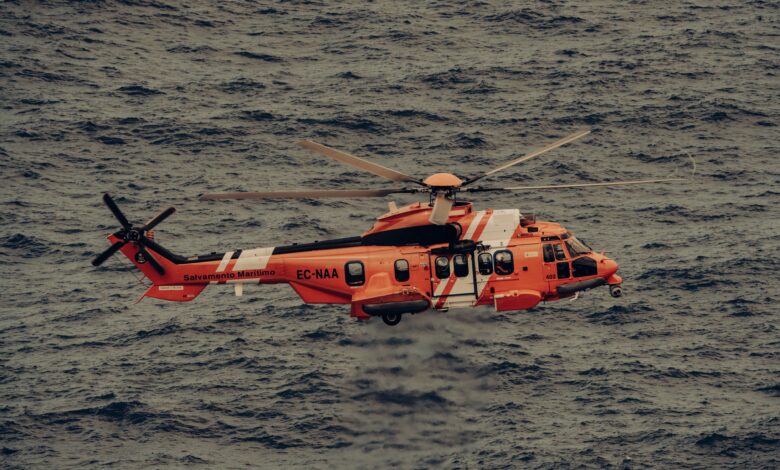
A search and rescue operation was launched immediately, with a debris field located near the island of Nantucket later that day. Rear Adm. Matthew Lake, commander of the U.S. Coast Guard Northeast District, stated that suspending the search was “not an easy decision,” expressing deep condolences to the families of those affected and gratitude to partner agencies who supported the efforts. With the conclusion of the search and rescue phase, Latitude Air Ambulance acknowledged the “heartbreaking reality” that the four members of its team, the patient, and the patient’s family escort are presumed to have died.
Authorities have now identified all six individuals aboard the aircraft. The four crew members were Canadian citizens employed by Latitude Air Ambulance. They were Captain Philip Gregory Childerhose, First Officer Thomas Henry Farquhar, Flight Nurse Sarah Jane Paton, and Respiratory Therapist Jolene Beth Weir. Among the crew is a man from Saskatchewan, Canada, who was confirmed to be among the fatalities. The two passengers were Bermudian citizens: Marilyn Lavonne Bean, 66, and her son, Sergio Wayne Lottimore, 41. Lottimore, who worked in the insurance sector, was described by his alma mater as a scholastic prefect and by colleagues as a respected leader.
The Bermuda Police Service (BPS) confirmed the identities of the two passengers and stated that it had appointed a liaison officer to assist the relatives of Ms. Bean and Mr. Lottimore during this difficult time. The BPS extended its sincere condolences to the families. In a separate statement, Latitude Air Ambulance President Peter Byl paid tribute to the crew, noting that their colleagues “dedicated themselves to helping people at some of the most vulnerable moments of their lives.” Byl emphasized that the company would remember the individuals not only for how they were lost but for how they lived, served, and contributed to their communities.
Investigative focus has already shifted to determining the cause of the crash. The Transportation Safety Board of Canada (TSB) has been designated as the lead agency for the inquiry, a role confirmed by the U.S. Coast Guard. The TSB’s involvement is standard procedure for incidents involving Canadian-registered or Canadian-operated aircraft, allowing for a coordinated international investigation. The U.S. Coast Guard stated it would continue to support its Canadian partners as the investigation proceeds.
Audio recordings from the flight’s final moments offer limited insight into the events leading up to the loss of contact. At approximately 12:46 a.m., an air traffic controller attempted to communicate with the pilot, asking, “You’re coming in blind? Is that what you said?” and inquiring if the pilot was declaring an emergency. The pilot’s response was not audible in the available recordings. The aircraft had taken off from Bermuda at 12:41 a.m. local time, making the loss of contact occur shortly after departure.
The crash of a modern business jet in such a short timeframe after takeoff raises significant questions regarding mechanical integrity, environmental conditions, or operational errors, though no cause has yet been determined. The TSB will likely examine flight data recorders and cockpit voice recorders, if recovered from the debris field, to reconstruct the sequence of events. The incident highlights the risks associated with long-range medical transport missions, where crew and patients are exposed to the same navigational and mechanical vulnerabilities as commercial aviation, but often with different operational profiles and maintenance schedules.
For the families of the six victims, the immediate priority is the confirmation of remains and the ongoing support from both the operating company and national authorities. The suspension of the search marks the transition from emergency response to forensic investigation. Until the TSB releases its preliminary findings, the specific circumstances surrounding the crash of Heartbeat 104 remain unknown. The global aviation community awaits the next phase of the investigation, which will scrutinize the maintenance history of the aircraft, the training and status of the crew, and the meteorological conditions over the Atlantic sector to determine whether the tragedy was due to a single failure point or a combination of factors.