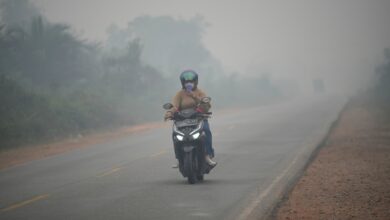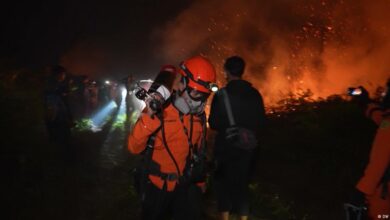

Indonesia sits at the center of the environmental emergency, with fire hotspots detected across Sumatra and Kalimantan. Wildfires have burned an estimated 800,000 hectares in the country this year, a scale of destruction that has forced authorities and conservationists to intervene in fire-ravaged forests to rescue endangered orangutans. The health impact is equally significant, with the fires associated with 175,000 cases of respiratory illness in Indonesia. The firefighting challenge is compounded by El Niño-related dryness, which reduces soil moisture and makes it more difficult to extinguish active fires.
The transboundary nature of the smoke has triggered substantial disruptions in neighboring nations. In Malaysia, the State of Johor has extended school closures through October 16, citing air pollution readings of 170–180 on the Air Pollutant Index. Forecasts indicate that winds may carry further smoke from Kalimantan, exacerbating conditions. Schools in four education districts covering Kuala Lumpur and Selangor were also ordered to close on October 12. To combat the fires, Malaysia and Indonesia are coordinating firefighting assistance, including proposed aerial water-bombing operations and the use of amphibious aircraft.
Singapore, blanketed by the smoke, has seen its 24-hour Pollutant Standards Index (PSI) climb as high as 192, approaching the “very unhealthy” range defined as 201 to 300. In response, the government is preparing contingency measures. Sustainability and Environment Minister Grace Fu stated on October 10 that the government is closely monitoring conditions and has stocks of N95 masks ready. If the 24-hour PSI exceeds 200, authorities plan to distribute masks to eligible residents and activate air-conditioned community shelters equipped with air purifiers. Singapore is also coordinating with Indonesia to support regional cooperation on haze prevention.
The aviation sector has borne significant operational impacts as reduced visibility disrupts flight schedules. Between October 5 and October 11, 16 flights were diverted from Singapore’s Seletar Airport as a precautionary measure due to low visibility. The Civil Aviation Authority of Singapore (CAAS) and Changi Airport Group (CAG) confirmed that while both Changi and Seletar airports remain operational, additional safety measures are being implemented. These include turning on airfield lights during daylight hours to improve visibility and increasing the separation between aircraft landings and take-offs.
Malaysian low-cost carrier Firefly has cancelled all flights between Sultan Abdul Aziz Shah Airport in Subang and Seletar Airport. Initially cancelled from October 10 to 12, the cancellations were extended through October 14. The airline cited prevailing haze and weather conditions as the reason for these “proactive measures.” Passengers on affected routes are being transferred to Malaysia Airlines services between Kuala Lumpur International Airport and Singapore Changi, subject to seat availability, or offered refunds. Similar disruptions have been reported in Indonesia, where Lion Air warned on October 11 that smoke haze and adverse weather could cause delays and cancellations on services connecting Jayapura, Wamena, Manokwari, and Sorong. Earlier in the period, aircraft at Pekanbaru and Palembang returned to departure airports or waited for visibility to improve, while visibility around Batam, an island near Singapore, dropped to two to three kilometers.
Aviation safety and worker protection remain paramount concerns for authorities. CAAS and CAG are working with aviation companies and unions to ensure safe operations. In accordance with Ministry of Manpower guidelines, companies are monitoring PSI levels closely, reviewing non-essential outdoor work activities, and ensuring sufficient stocks of N95 masks for staff. Outdoor workers are strongly encouraged to wear masks if the PSI exceeds 200. Additional measures, such as added water points for airside workers to hydrate regularly, may be activated if conditions worsen.
As the dry season continues, the regional response relies on coordinated firefighting and strict public health protocols. The immediate focus remains on mitigating the health risks posed by hazardous air quality and maintaining essential air connectivity amidst ongoing visibility challenges. The situation highlights the continued vulnerability of the region to transboundary haze, driven by land-use fires that persist despite international cooperation and emergency management efforts.