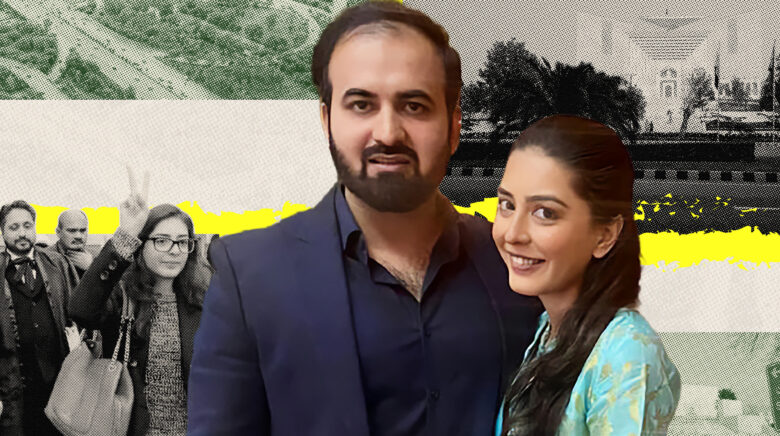
The sudden re-arrest disrupted the legal relief granted by the nation’s highest court. The two lawyers, who are married, were originally arrested on 23 January 2026 and sentenced the following day to terms ranging from 10 to 17 years of imprisonment. Their conviction was based on sections 9, 10, and 26-A of the Prevention of Electronic Crimes Act (PECA), which address the glorification of offences, cyber terrorism, and the dissemination of false information. The charges stemmed from social media posts critical of the authorities and expressing solidarity with Baloch and Pashtun activists.
Despite the Supreme Court’s intervention, the lawyers were produced before an anti-terrorism judge who ordered their remand back to Adila Jail for 14 days. This new detention is linked to a separate case registered on 22 March 2025. In these proceedings, the lawyers are accused of participating in a protest in Islamabad, specifically chanting “anti-government slogans” and blocking roads. The charges under the Pakistan Penal Code include disobedience of lawful orders, wrongful restraint, criminal intimidation, and obstructing public servants, alongside a section of the Anti-Terrorism Act.
Legal experts and international organizations have raised significant concerns regarding the procedural irregularities in the new case. The jurisdiction of the Anti-Terrorism Court was invoked following the addition of an anti-terrorism section to the First Information Report (FIR) by Islamabad Police. While the police initially requested 30 days of physical remand, the court rejected this, issuing a 14-day judicial remand instead. However, further procedural obstacles have emerged in the form of administrative delays within the jail.
According to a joint statement by international civil society organizations, jail authorities failed to facilitate the signing of required powers of attorney (POA), which prevented the lawyers’ legal counsel from filing bail applications in the new proceedings. When the Anti-Terrorism Court returned the bail petitions due to this non-facilitation, legal counsel challenged the obstruction, prompting the court to issue notices to the jail authorities. At a hearing on 24 September, a POA for Hadi Chattha was produced, but its validity was contested by the jail deputy on the grounds of a signature discrepancy. In contrast, the POA for Imaan Mazari-Hazir was not processed at all, raising concerns regarding her whereabouts and well-being within the facility.
In response to the continued failure of jail authorities to have the necessary documents signed and attested, the court issued a contempt notice against the authorities at a subsequent hearing on 26 September. The sequence of events has led international legal bodies to characterize the successive criminal proceedings as a weaponized effort to prolong the arbitrary deprivation of liberty of the two lawyers, despite the Supreme Court’s earlier order granting them relief.
The re-arrest has drawn sharp criticism from human rights advocates. Babu Ram Pant, Deputy Regional Director for South Asia at Amnesty International, stated that the move dispels any pretence that the charges are unrelated to political motivation. He described the new charges, brought for attending a peaceful protest, as an insult to the lawyers’ commitment to human rights. Pant called on the Pakistani authorities to stop misusing the justice system and to release Mazari-Hazir and Chattha immediately and unconditionally, allowing them to resume their work representing victims of human rights violations.
The case highlights ongoing tensions between the judiciary’s protective orders and the executive branch’s ability to initiate new legal proceedings. While the Supreme Court suspended the PECA-related sentences, the new anti-terrorism charges provide a separate legal pathway for continued detention. The next confirmed legal step involves the resolution of the contempt notice issued to the jail authorities and the subsequent processing of the bail applications in the Anti-Terrorism Court, though the outcome remains uncertain given the documented administrative resistance.