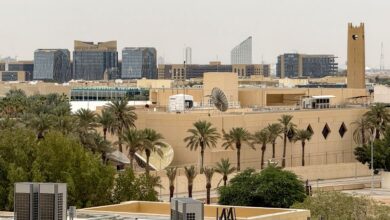
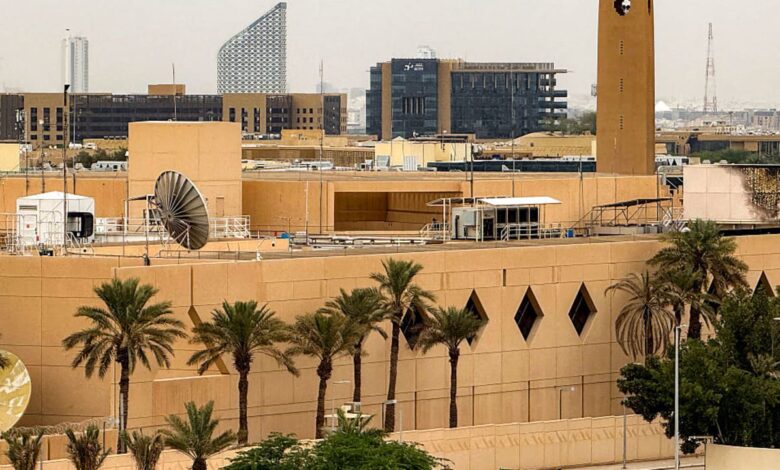
The immediate trigger for the withdrawal order was a series of deadly strikes on Wednesday in Saudi Arabia’s Eastern Province. At King Fahd International Airport in Dammam, an attack killed at least one person and injured eight others. Hours earlier, two people were killed when Saudi air defenses intercepted a drone attempting to hit a facility at Saudi Aramco’s Shaybah oil field. The Saudi Press Agency reported that while the intercept was successful, the operations at the oil field were not affected, a distinction that carries significant weight for global energy suppliers. This escalation marks a widening of the nearly eight-month war triggered by the US-Israeli conflict with Iran, opening another front that directly threatens the stability of the Gulf’s energy exports.
The diplomatic retreat is part of a broader pattern of movement in the region. While the State Department’s public statement limited the scope of the order to Saudi Arabia, Reuters reported that four US officials indicated that Washington also plans to withdraw family members from several other US missions in the region. This follows a period in recent months where the US had returned some diplomatic personnel to the area after pulling them out when Tehran launched attacks on US facilities in late February. The US embassy in Riyadh issued a security alert on Wednesday warning of possible further Houthi attacks, highlighting the persistent threat environment that has made the region’s diplomatic hubs increasingly precarious.
Amidst this physical escalation, the economic undercurrents suggest a potential for further military confrontation. According to The New York Times, citing unnamed US officials, the US and Israeli militaries have drawn up specific plans for renewed strikes on Iran after next month’s midterm elections. The reported planning for a “short but intensive” operation indicates that despite ongoing negotiations between US and Iranian negotiators on Tehran’s nuclear program and the Strait of Hormuz, the military option remains a central part of the strategic calculus. Defense Secretary Pete Hegseth reportedly met with Israeli Prime Minister Benjamin Netanyahu during an unannounced visit to Israel this week to discuss these potential new strikes. While President Donald Trump has repeatedly vetoed plans for a return to major combat this year, the preparation of such plans signals that the threshold for renewed engagement is being actively managed.
The geopolitical tension is already having measurable effects on global oil markets. Brent crude topped $110 a barrel, while West Texas Intermediate gained 1% to $98.12. Despite persistent shipping disruptions in the Strait of Hormuz, data from Kpler indicates that Middle East oil flows through the vital strait have recovered to near pre-war levels. However, the composition of demand is shifting. Muyu Xu, a senior crude oil analyst at Kpler, noted that China’s crude import demand is expected to continue recovering, driven by rising refinery throughput and rapidly declining crude inventories. The war has cut China’s oil stockpiles, with the fastest drawdown on record reaching 1.6 million barrels a day in September. China currently holds 1.1 billion barrels in reserves, equivalent to about 80 days of refinery needs.
As Iranian cargoes outside the US blockade are largely discharged, substantial new crude arrivals in China appear unlikely, according to Kpler. This scarcity is driving Chinese state-owned refiners to seek Middle Eastern barrels with greater urgency to meet higher throughput and inventory-replenishment needs. Independent refiners are also shifting away from Iranian crude, a move that could limit further downside in the Dubai structure. This shift in sourcing reflects how the conflict is reshaping trade flows, forcing buyers to prioritize speed and reliability over traditional cost structures.
Back in Dammam, the aftermath of the airport strike serves as a stark reminder of the human cost of this broader economic and military standoff. The departure of US families and non-emergency staff is not merely an administrative adjustment but a direct response to the tangible risk posed by Houthi missiles and drones. As the US and Israel finalize their military plans and Iran vows to widen its attacks to target data centers and undersea internet cables, the next few weeks will determine whether the region moves toward a negotiated de-escalation or a renewed phase of intense conflict. For the households and businesses in the Gulf, the uncertainty remains the defining feature of the current economic environment, with the price of oil and the safety of infrastructure hinging on decisions made in Washington and Tehran.