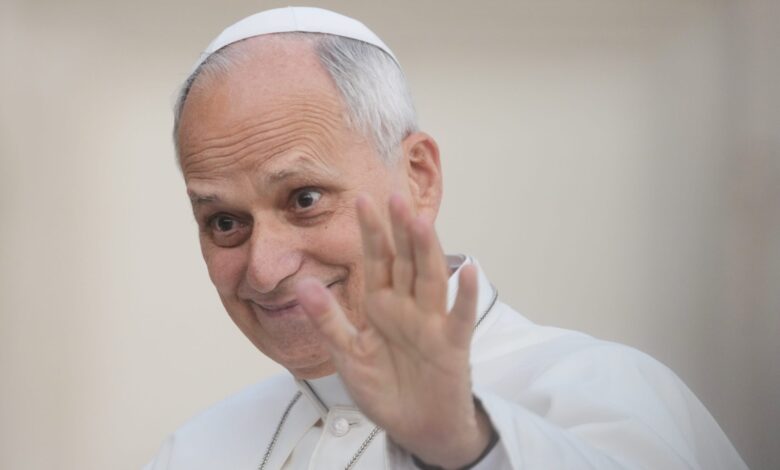
The development is politically significant not for the weight of the single ballot, but for what it reveals about the intersection of the Vatican’s global role and American domestic politics. Leo holds dual citizenship—U.S. and Peruvian—and serves as the head of state of the Holy See, a microstate that is an absolute monarchy with no political elections. Yet, in Illinois, he is registered as a voter in Will County, a suburban area west of Chicago. The Vatican stated that Leo “has exercised his right to vote as a United States citizen” and has done so “whenever he was eligible to do so,” including during his more than 20 years living in Peru as a missionary priest and bishop. “The Holy Father expresses his belief in the right and the duty of citizens to participate in democratic processes,” the statement added.
Records from the Illinois State Board of Elections provide a detailed history of this civic participation. Since 2000, Robert Prevost has voted in five primary elections, requesting Democratic ballots twice and Republican ballots three times. Illinois law requires voters to declare a party preference to receive a ballot in primary elections, where parties select their nominees; no such declaration is required for general elections. The records show that while registered in the heavily Democratic Cook County, Prevost requested Democratic primary ballots in 2008 and 2010. After moving to the more conservative suburban Will County, he requested Republican primary ballots in 2012, 2014, and 2016. He submitted ballots in every general election since 2000, with the exceptions of 2020 and 2022. The specific candidates he supported are not public record, but the shift in his declared party preference for primaries mirrors his geographic relocation from the urban core to the suburbs.
The logistics of this latest vote are shrouded in some mystery. The Chicago Sun-Times first reported that Leo requested a mail-in ballot from the Will County Clerk’s Office on October 3, just 10 days before he underwent surgery to remove a cancerous tumor from his right lung. It is currently unclear how the ballot was returned to the clerk’s office in Joliet, Illinois. His older brother, John Prevost, was in Rome this week accompanying parishioners from St. Jude’s, an Augustinian-run parish in New Lenox, Illinois, where Leo attends Mass and gave a talk in 2024 while still a cardinal. The Vatican has not clarified if family members facilitated the delivery of the ballot, nor has the Will County clerk’s office responded to requests for comment on the process.
This civic act occurs against a backdrop of heightened tension between the Vatican and the White House. Since his election in May 2025, Leo has clashed with President Donald Trump and Vice President JD Vance, a Catholic, over issues including the U.S.-Israel war with Iran and immigration enforcement. In April, following U.S.-Israeli strikes on Iran, the Pope called for peace, stating, “The mission of the Church is to preach the Gospel, to preach peace.” Trump responded critically, saying, “I don’t think he’s doing a very good job… We don’t like a Pope that’s going to say that it’s OK to have a nuclear weapon.” The Pope’s ballot now includes a contest for the U.S. Senate seat vacated by Democratic Senator Dick Durbin, a longtime Catholic, and a House race between Democratic Representative Jonathan Jackson and Republican Christian Maxwell. The election will determine which party controls Congress, significantly impacting the legislative agenda for the final two years of Trump’s second term.
The Pope’s participation highlights a complex duality in his role. As head of the Holy See, he is expected to maintain diplomatic neutrality, yet as a U.S. citizen, he exercises the rights of a voter in a deeply polarized political landscape. The Vatican’s emphasis on his “long-standing practice of civic participation” frames the act not as a political endorsement, but as a fulfillment of democratic duty. However, in the context of the 2026 midterms, where polls suggest Democrats are favored to gain control of the House, the Pope’s vote carries symbolic weight that transcends the single ballot box. It signals that the first American pope remains engaged with the democratic processes of his birth country, even as his global moral authority challenges the foreign policy decisions of the U.S. government. The uncertainty surrounding how the ballot was physically delivered to Illinois adds a layer of procedural opacity to an otherwise straightforward act of citizenship, but the confirmation itself stands as a definitive break from papal precedent.