
The riots in Frankfurt were part of a broader nationwide movement organized by the campaign group “Gen Z regelt” (Gen Z takes charge), which called for protests in more than 30 cities, including Berlin, Hamburg, and Cologne. The demonstrations, held on Saturday, October 31, coincided with Halloween and came weeks after significant unrest in neighboring France. While organizers initially anticipated an attendance of 182,000, official figures suggested the actual turnout was lower. Nevertheless, the scale of the mobilization was significant, with tens of thousands of young people taking to the streets to voice dissatisfaction with the current economic and political trajectory.
The core grievances driving the “Gen Z regelt” movement are specific and politically charged. Participants demanded increased spending on schools, climate protection, and housing, while explicitly opposing government plans to return to mandatory military service. Lina Friedrich, a spokesperson for the movement, articulated this stance in Berlin on Saturday: “We are here today to fight for peace and freedom, rather than for war and coercion. What matters most to us is better support for the health and education systems. We are against compulsory military service and we are in favor of a fairer distribution of the burden.”
Despite these stated goals, the protests featured a complex mix of sentiments. In Berlin, a youth demonstration involving approximately 3,500 people began at Rosenthaler Platz and moved toward Prenzlauer Berg. According to reports, pro-Palestinian and anti-fascist protesters joined the march, with some chanting anti-capitalist, anti-Israeli, and anti-German slogans. Flags and banners calling for the resignation of German Chancellor Friedrich Merz and French President Emmanuel Macron were visible. This convergence of economic demands with broader political and ideological grievances added a layer of complexity to the protests, distinguishing them from purely economic marches.
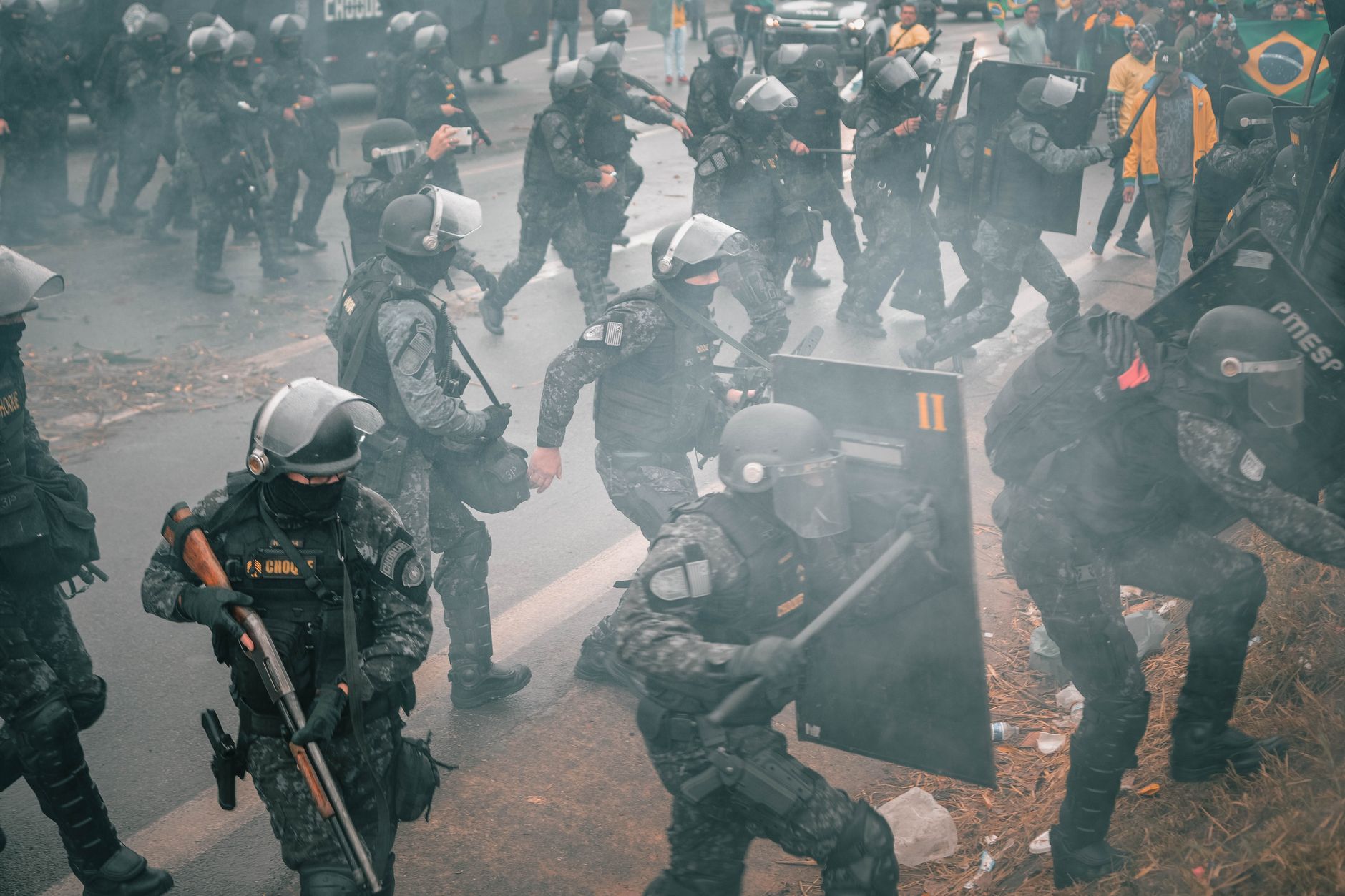
The transition from protest to riot was noted in several major cities. In Frankfurt, police issued urgent warnings on social media, noting that windows had been smashed at several shops and that Molotov cocktails were being thrown at emergency services. Authorities urged bystanders to avoid the city center. In Hamburg, barricades were set on fire, and in Cologne, police used water cannons to disperse crowds. In Berlin, protesters attacked officers with bottles and pyrotechnics. The violence prompted a strong reaction from state leadership. Boris Rhein, the premier of the state of Hesse, which includes Frankfurt, condemned the events on Sunday, stating he was “shocked” and insisting that those responsible would face consequences.
The German unrest does not occur in a vacuum but is part of a wider European trend of social dissatisfaction. In France, where student protests over education last month evolved into broader demonstrations against the cost of living, the Interior Ministry reported a turnout of 320,000 on Saturday. Videos from Paris showed crowds holding banners that read, “We do not need tear gas for our future to be blurry,” while fires burned in Marseille. Roman Poseck, the interior minister for Hesse, had warned ahead of the German protests not to use the French riots as a model, citing images of looting and attacks on police in France. “France must not be held up as a model in this regard,” Poseck said.
Similar tensions are visible in other parts of Europe. In Italy, Prime Minister Giorgia Meloni’s government deployed 500 army troops alongside police in Milan following incidents where masked protesters looted stores and threw projectiles at officers. Tens of thousands also took to the streets in Rome and other Italian cities. This cross-border pattern suggests a shared frustration among European youth regarding housing affordability, educational quality, and perceived political stagnation.

For the German government, the weekend presents a dual challenge: addressing the legitimate economic concerns of a generation facing high living costs, and managing the security implications of protests that have turned violent. The opposition to mandatory military service is particularly significant for Chancellor Merz’s administration, as it touches on core national security and defense policy debates. The fact that the protests were organized under the banner of “Gen Z regelt” indicates a structured, political effort rather than spontaneous unrest, though the participation of various ideological groups complicates the picture.
As police remained on duty in Frankfurt and other cities on Sunday to ensure the area remained calm, the immediate danger had subsided. However, the underlying tensions that fueled the riots have not been resolved. The clashes highlight a growing disconnect between young people and established political structures in Europe, a gap that may continue to widen if economic pressures persist and political responses do not align with the specific demands of this generation.
