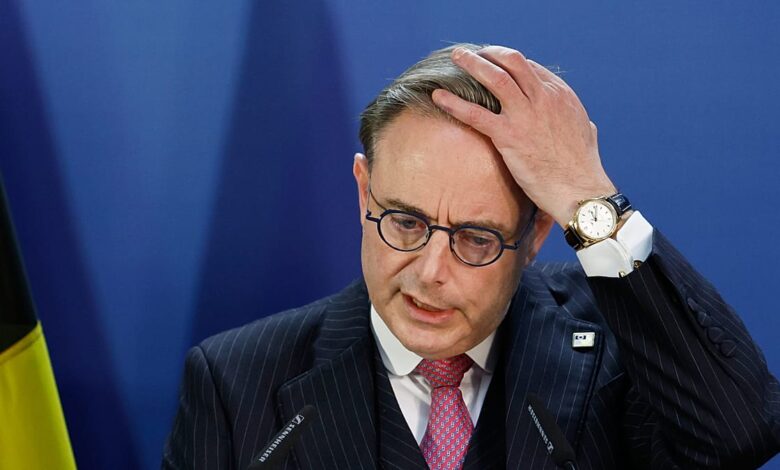
The political impasse had reached a critical point earlier this week. On November 2, Prime Minister De Wever, a Flemish conservative, formally tendered his resignation to the King after coalition partners deadlocked over the scale of tax increases and public spending cuts required to reduce the budget deficit. De Wever had described the breakdown in talks as a “heavy failure” for the government in a speech to the Chamber of Representatives. However, rather than accepting the resignation and triggering a government dissolution, King Philippe placed his decision on hold, initiating a series of consultations with the leaders of the five parties that form the majority.
According to an official statement from the Royal Palace, the King met with the party leaders on Tuesday. The Palace noted that following these discussions, the King observed that each leader wished to conclude the budget negotiations “as soon as possible.” Crucially, the statement highlighted that the King received a “formal commitment from the five leaders that their parties are prepared to make concessions in order to reach an agreement within the government.” This commitment to compromise appears to be the central rationale behind the King’s decision to retain De Wever in his role, signaling that the institution views the coalition as still capable of functioning if its members adhere to their newly stated willingness to yield.

The core of the disagreement remains the method for plugging a €10 billion budget gap by 2029. The coalition’s composition presents a stark ideological divide. The Flemish Socialist party, Vooruit, has pushed for measures that would require the highest earners to contribute more to the public coffers. Conversely, the French-speaking center-right Reformist Movement has ruled out such measures and has also opposed reforming the value-added tax. These opposing positions created the deadlock that led to De Wever’s initial resignation. By rejecting the resignation, the King is effectively pressing the parties to bridge this specific gap through the concessions they have now formally promised.
The stakes of this budget crisis extend beyond parliamentary procedure to the mechanics of national governance. De Wever, who had previously ruled out starting the new year with an emergency budget, confirmed this week that the country would have no choice but to fall back on it again. Under this system, the government is restricted to spending one-twelfth of the preceding year’s budget per month, a mechanism that severely limits fiscal flexibility and policy implementation. The King’s emphasis on establishing a “sound budgetary path for the next three years” underscores the urgency of moving away from this stopgap measure to a sustainable fiscal framework.
The constitutional role of the Belgian monarch in such crises is pivotal. The King does not legislate or command policy, but he acts as a neutral arbiter who can assess the viability of a government. By declining the resignation, Philippe has placed the burden of resolution squarely back on the political actors, but with the institutional weight of the Crown behind the demand for a solution. The Palace statement emphasized the King’s view that a balance must be struck between preserving social cohesion and supporting economic growth, a reminder to the parties that their fiscal choices have broader societal implications.

De Wever is now expected to implement the King’s directive. The Royal Palace confirmed that the Prime Minister will report back to the King on Monday, November 16, regarding the progress made in the resumed negotiations. This timeline provides a concrete deadline for the coalition to demonstrate that the formal commitments made to the monarch are more than rhetorical. If the parties fail to reach an agreement by then, or if the concessions promised do not materialize, the political uncertainty surrounding the government’s stability will likely intensify, potentially leading to a renewed call for elections or a formal acceptance of the resignation.
For now, the political landscape has shifted from an imminent government collapse to a high-pressure negotiation period. The King’s refusal to accept the resignation serves as a final institutional check on the fracturing of the coalition. The coming days will test whether the five party leaders can translate their stated willingness to compromise into a concrete budgetary agreement, thereby averting a prolonged period of emergency spending and ensuring the continuity of governance in Belgium.