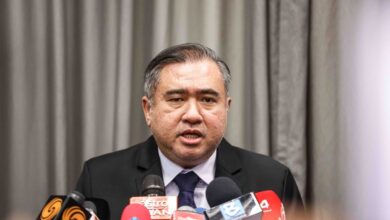
The election was characterized by a deliberate strategy of executive detachment. President Abelardo de la Espriella and his Interior Minister, Rodrigo Lara Restrepo, chose to remain on the sidelines, avoiding direct involvement in the selection process. This approach was a calculated response to recent political friction, specifically the government’s earlier defeat in the election of the Senate president, where an alliance between the Centro Democrático and the opposition Pacto Histórico secured victory. By abstaining from direct intervention, the executive branch sought to prevent further confrontation with the opposition, which Lara Restrepo had publicly labeled an “enemy of the government.”
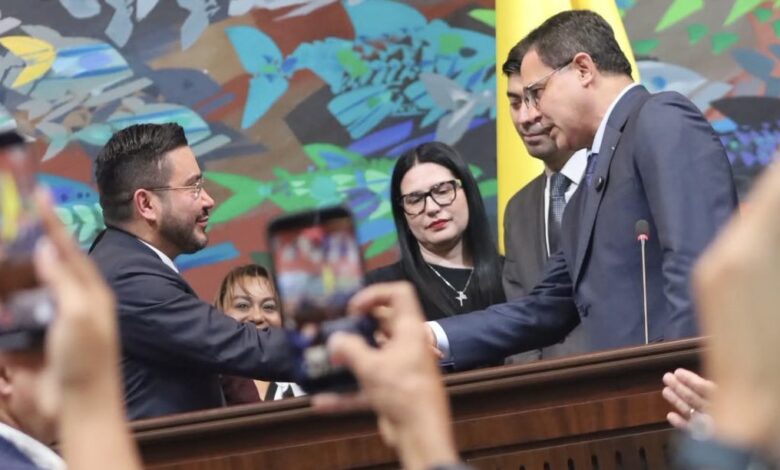
Laverde, a lawyer with deep ties to the Partido Liberal, secured the position with broad support that transcended traditional partisan lines. His candidacy was endorsed by a coalition of parties supporting the new government, including the Centro Democrático, Partido Conservador, Partido de la U, and Cambio Radical. In a joint letter, these groups praised Laverde for his “highest professional, technical and personal qualifications,” citing his extensive career and deep knowledge of public affairs. Crucially, the Pacto Histórico, the main left-wing opposition force led by former President Gustavo Petro, also announced its support hours before the vote. The bloc stated that its decision was driven by the need for an independent and transparent oversight body that firmly defends public resources.
The vote itself reflected this consensus. Of the 286 members of Congress, 269 participated in the session, comprising 95 senators and 174 representatives. The remaining 17 lawmakers either did not attend or abstained from voting. Laverde’s election is particularly significant because the Contraloría holds the authority to monitor the management of public resources across all branches of government, including the executive branch headed by De la Espriella, as well as Congress and the judiciary. The officeholder is responsible for determining fiscal liability when resources are misused and pursuing proceedings to recover state funds, making the role a critical check on the new administration’s policies.
Laverde brings more than a decade of experience within the legislative branch to the role. Since 2015, he has served as secretary of the Senate’s Sixth Committee, which oversees public services, transportation, education, communications, and technological development. Prior to his congressional career, he worked as a judicial attorney at the Procuraduría Regional de Risaralda and served as a member of the Caldas Departmental Assembly. This background provides him with an intimate understanding of how the legislative branch operates, a factor that adds complexity to his new mandate. As the head of the Contraloría, he will now lead the institution responsible for overseeing the use of public resources, including those administered by the very branch where he spent the last ten years of his career.
Upon his election, Laverde outlined a vision for an institution that operates with technical rigor and political neutrality. “We will adopt global standards to pursue assets and fight corruption anywhere in the world,” Laverde stated. He emphasized that the Contraloría would be “the home of transparency and a technical institution at the service of the Colombian people.” Laverde pledged to defend all citizens under a premise of “zero political persecution, zero impunity,” asserting that the office would not serve as a political weapon but would possess the “resolve and authority necessary to punish, without distinction, anyone who touches public funds.”
The appointment serves as a test for Colombia’s system of separation of powers. In a political landscape where no single force holds a sufficient majority to dominate legislation, the necessity for cross-party agreements remains acute. The successful election of Laverde suggests that despite ideological differences, there is a shared interest in maintaining a robust fiscal oversight mechanism. However, the sensitivity of the position is heightened by the fact that the current administration has allies in Congress but lacks a unilateral majority. This dynamic requires ongoing negotiation for major institutional decisions, making the independence of the Contraloría a critical factor in ensuring that public spending is managed efficiently and transparently.
As Laverde prepares to take charge, the focus shifts to how the new Comptroller General will navigate the delicate balance between enforcing fiscal discipline and maintaining institutional harmony. The Contraloría’s mandate extends to ensuring that public assets are managed with transparency, and its actions will likely influence the broader political climate by setting the tone for accountability under the new government. The coming months will reveal whether the bipartisan support for Laverde translates into a period of stable fiscal oversight or if political pressures begin to erode the independence of the office.
The next formal step in this process will be Laverde’s official assumption of duties, during which he is expected to outline specific initiatives for asset recovery and corruption prevention. The political market will watch closely for any early signs of the Contraloría engaging with the executive branch’s budgetary decisions, as the institution’s stance will be a key indicator of the health of Colombia’s checks and balances system in the 2026–2030 term.