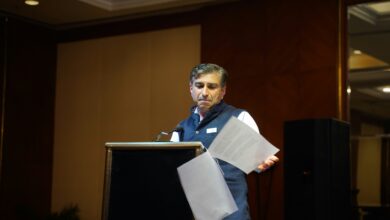
Clavijo explained during a press conference that the JNE has established clear criteria for proclaiming regidores who will assume mayoral positions when their predecessors are impeded from exercising the office. The core of the new directive is that any individual who served as mayor during the immediately preceding municipal term is barred from receiving credentials or assuming the mayoral role again, even if they headed the list of regidores. This restriction applies regardless of whether the party wins the election outright or if the mayor’s position becomes vacant due to suspension or removal in the future. In such cases, the office will pass to the next eligible regidor on the list, effectively neutralizing the strategy of using the regidor position as a stepping stone back to the mayor’s office.
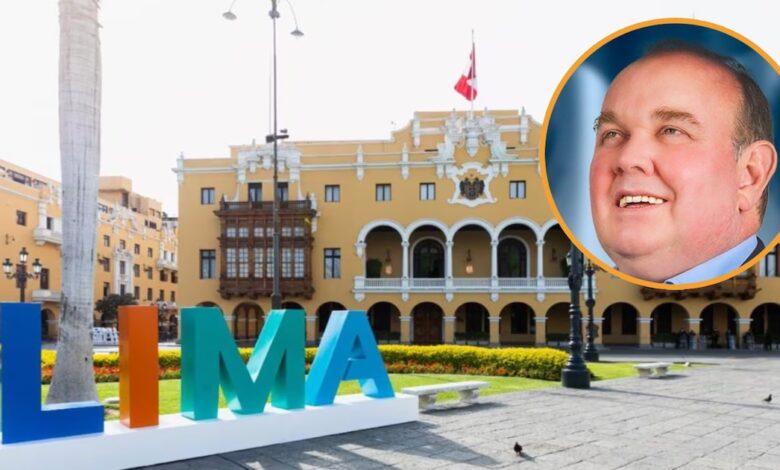
The political significance of this decision is profound, particularly for Lima, where López Aliaga’s potential return had been a central point of political debate. By running as a regidor, candidates have sought to bypass the constitutional prohibition on consecutive reelection. However, the JNE has clarified that this interpretation violates the Constitution, which it is mandated to uphold. Clavijo stated, “What the National Electoral Jury has established is that it will respect the Constitution… those citizens, men or women, who exercised the office in the previous period, having postulated as regidores, cannot receive the credential or exercise the office. The office will be assumed by the next able regidor of that list.”
This ruling is not limited to Lima. The JNE’s first stage of review covers 427 cases across the country, with the process continuing through November. The body has already identified six specific jurisdictions where initial proclamations by special electoral juries will be modified to reflect these new criteria. These districts are Marca in Recuay (Áncash); San Jerónimo de Tunán in Huancayo (Junín); La Esperanza and Víctor Larco Herrera in Trujillo (La Libertad); Zapatero in Lamas (San Martín); and the province of Condorcanqui in Amazonas. In each of these locations, the mayoralty will be assumed by the second able regidor because the individuals who originally headed the lists had previously served as mayors.

The JNE’s approach was initially reactive, addressing specific appeals, exclusion requests, and precautionary measures filed by candidates seeking to re-enter office. Clavijo noted that there was no previous express disposition prohibiting a former mayor from postulating as a regidor. Consequently, banning their participation entirely would have violated the right to political participation. Instead, the JNE allowed the candidacy but restricted the assumption of the mayoral office. This distinction is crucial in Peru’s electoral system, where municipal elections are conducted through closed, blocked lists. Voters cast ballots for the political organization rather than individual candidates, meaning the order of the list determines who assumes office if the head of the list is ineligible or unable to serve.
Beyond the six cases involving potential indirect reelection, the JNE’s resolution includes three other corrections that do not relate to reelection. In the Provincial Municipality of Trujillo, a correction was made regarding the application of the divisor figure (cifra repartidora). In the districts of Colquioc and Huallanca, both in the Bolognesi province of Áncash, the first regidores are permitted to assume the mayoralty. In these instances, initial proclamations were hindered by incomplete lists, but there are no impediments to their assumption of the office, as they do not fall under the reelection restriction.
The JNE has emphasized that all 100% of proclamations made by the 91 special electoral juries will be reviewed by the central body to ensure uniform application of these guidelines. Clavijo stated that while the special juries are responsible for the initial proclamations, the JNE will supervise all decisions to guarantee compliance with the constitutional framework. This centralized oversight aims to prevent inconsistencies in how the ban on reelection is interpreted across different regions.

The decision also extends to future political prospects. Clavijo clarified that a former mayor who assumes the office through succession by suspension or vacancy starting in 2027 will also be barred from running for that same office in the 2030 municipal elections. This long-term restriction underscores the JNE’s intent to close all pathways for immediate or near-term political re-entry for those who have already served a term.
For Rafael López Aliaga and other former mayors who adopted this strategy, the ruling effectively ends the possibility of returning to their previous seats via this route. While they remain elected as regidores, the specific office of mayor is closed to them for the duration of the term resulting from the 2026 elections. The next political development will hinge on how the special electoral juries in Lima and other affected districts implement these corrections, leading to the official handover of credentials to the second regidores in the identified jurisdictions. This process marks a significant enforcement of electoral integrity in Peru, prioritizing constitutional limits on tenure over tactical electoral maneuvers.