
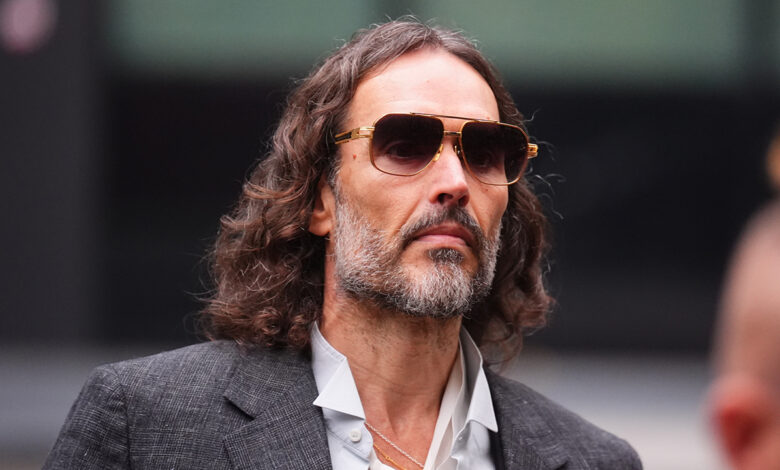
The conviction stems from allegations brought by six women regarding incidents that occurred between 2004 and 2009, a period coinciding with Brand’s transition from the UK stand-up circuit to mainstream television and Hollywood stardom. A jury of eight men and four women deliberated for more than eight hours over two days, beginning on November 3. They found Brand guilty of one count of rape and three counts of sexual assault involving four of the six accusers. He was acquitted of two additional counts of rape and one count of attempted indecent assault. Throughout the proceedings, Brand maintained his innocence, asserting that all sexual encounters were consensual.
The legal significance of the sentencing lies not only in the punishment but in the judicial reasoning that contextualized the crimes within the power dynamics of celebrity. Judge Bennathan described Brand’s behavior as driven by “staggering arrogance,” noting that the defendant showed a “casual and arrogant disregard” for any woman’s ability to say no. The judge explicitly rejected Brand’s trial defense that he had never touched a woman without consent, stating, “In light of the jury’s verdict, that was one of a series of lies you told.” This finding underscores the evidentiary weight placed on the consistency of the victims’ accounts over the defendant’s claims of consent.
The sentencing structure reflects the specific legal findings. Brand was sentenced to nine years in prison for the rape count, a sentence reduced by one year from the maximum potential due to his lack of prior criminal record and his documented work helping others with addiction. For the three counts of sexual assault, he received a total of 35 months, with the longest individual sentence being 18 months. The judge ordered that the sexual assault sentences run concurrently with each other but consecutively to the rape sentence, resulting in the total term of 10 years and six months. Under UK law, Brand is required to serve at least two-thirds of this time in custody, with the possibility of release under supervision if he displays good conduct.
During the sentencing hearing, the court heard from the survivors, whose statements illustrated the long-term impact of the convictions. One victim, speaking behind a privacy screen, described carrying an “undeserved feeling of shame” for 20 years. Another stated that the trauma was “something I carry with me every day and it often feels never-ending.” A third described Brand as a “sexual predator who has no remorse.” These testimonies served to contextualize the gravity of the offenses for the court, reinforcing the judge’s characterization of the crimes as predatory rather than merely criminal.
Brand’s legal team, represented by Ian Winter, argued that the defendant is a “fundamentally different person today” who has recovered from past addictions to drugs and alcohol. Brand, who had presented himself during the trial as a newly devout Christian, showed little emotion during the sentencing. When the guilty verdict on the rape count was read earlier, he closed his eyes but displayed no visible reaction. Upon the denial of a bail request, which the judge rejected due to the risk of flight, Brand gestured to his lawyers and repeatedly stated, “I’m good, I’m good, I’m good,” before being taken into custody.
The judge acknowledged the impact of the immediate detention on Brand’s children, stating, “I regret the hardship caused to the children, of course. But the hardship has been caused by serious criminal offending by their father.” The refusal of bail highlights the procedural priority given to preventing flight in cases involving significant prison terms, despite personal pleas for family contact.
Broader institutional responses have followed the conviction. UK Prime Minister Andy Burnham issued a statement praising the “determination and bravery” of the survivors and affirmed the government’s commitment to improving support for victims, including ensuring every police station has a sexual assault response team. The Metropolitan Police, which began investigating Brand in 2023 after multiple news reports, has indicated that the case is not closed. Detectives are currently investigating two other alleged rapes, one involving a then-16-year-old girl, and the head of the force has noted that he “wouldn’t be surprised if many more came forward.”
Brand’s trajectory from a prominent figure in British media to a convicted felon illustrates the legal system’s approach to high-profile sexual violence cases. Previously pleaded not guilty to all seven charges, Brand’s acquittal on three counts and conviction on four others reflects the jury’s careful assessment of the evidence presented. The case highlights the distinction between allegations, which require proof beyond a reasonable doubt, and judicial findings, which are based on the reliable testimony of multiple independent witnesses. As Brand begins serving his sentence, the ongoing police investigations signal that the legal process surrounding his conduct may continue, with further charges potentially emerging as new evidence is gathered.