
Federal Case: Jury Deadlock in Farwell Trial
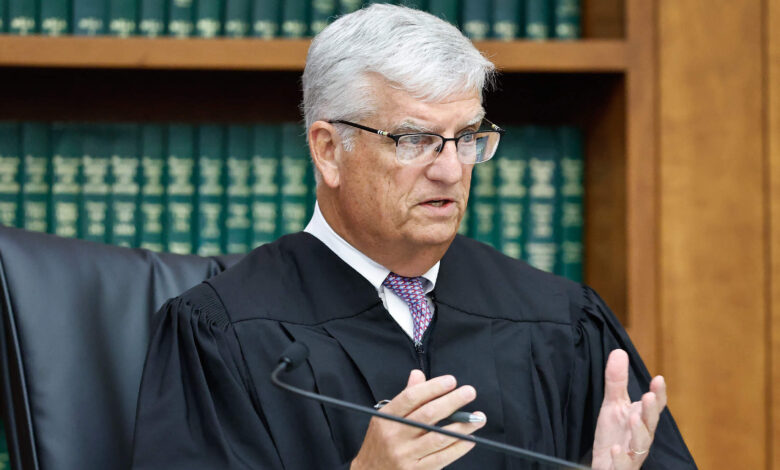
The federal trial of Matthew Farwell, a 41-year-old former Stoughton police detective, entered a critical juncture on Monday evening when the jury informed U.S. District Court Judge Denise Casper that it had reached an impasse. After deliberating for more than ten hours, the jurors sent a note to the court stating that they were “deadlocked” and that the impasse “won’t change anytime soon.” Judge Casper instructed the jury to adjourn for the day and return to court in the morning.
Farwell is accused of killing Sandra Birchmore and her unborn child. Prosecutors have argued that in 2021, Farwell strangled Birchmore, who was 23 and pregnant, in her Canton apartment. The government contends that Farwell staged the scene to appear as a suicide to prevent Birchmore from reporting that she had been sexually abused by him starting at age 15. The alleged abuse occurred while Birchmore was a member of the Stoughton Police Department’s youth explorers program, where Farwell volunteered as an instructor.
Farwell’s defense has contended that Birchmore took her own life, citing her history of mental health struggles and a previous suicide attempt. The state medical examiner’s office initially ruled the death a suicide but later changed the manner of death to undetermined. Farwell faces federal charges of killing a witness or victim and causing the death of an unborn child. If convicted on these counts, he faces a maximum sentence of life in prison without parole. The next formal step in this proceeding is the jury’s return to court in the morning to continue deliberations or, if directed, receive further instructions from the judge.
State Case: Motions Denied in Clancy Retrial Proceedings
In a separate matter in Plymouth County, Judge William Sullivan denied three motions filed in advance of a hearing scheduled for next week regarding a potential retrial for Lindsay Clancy. Clancy was previously charged with killing her three children. The defense had sought to dismiss the case on double jeopardy grounds, arguing that the original trial should not have ended in a mistrial.
The defense argued that when the first jury reported an inability to reach a unanimous decision on first-degree murder charges, Judge Sullivan should have further questioned the jurors rather than declaring a mistrial. Specifically, the defense pointed to a note from the jury’s foreperson indicating that one juror could not follow instructions regarding reasonable doubt. The defense contended that the judge could have appointed another juror, thereby avoiding a mistrial. Under this theory, a retrial would violate Clancy’s constitutional rights against being tried twice for the same crime.
Judge Sullivan rejected this argument, stating that jurors can only be dismissed under specific criteria that were not met in this instance. In his written ruling, Sullivan acknowledged the “frustration of the defendant and the jurors” but emphasized that the court’s primary concern is protecting the fairness of the proceedings and avoiding the possibility of a coerced verdict. He noted that while a party may desire a procedure that increases the odds of a favorable outcome, the integrity of the judicial process takes precedence.
The judge also denied a defense request for a “limited inquiry” into the holdout juror, which sought to preserve juror records, including selection questionnaires. It was later discovered that the holdout juror had a pending restraining order against him, and other jurors publicly stated he had used his cellphone during deliberations. Sullivan ruled that further investigation into the juror would constitute an “improper intrusion” into his privacy and would discourage future citizens from serving on juries.
Finally, Sullivan denied a motion from the prosecution for a gag order on defense attorney Kevin Reddington. Prosecutors had argued that Reddington created a “carnival atmosphere” during the first trial and should be barred from making media comments that could prejudice a future jury. Sullivan ruled that the Commonwealth failed to meet the burden of justification required for the “extreme remedy” of a prior restraint on speech.
Procedural Path Forward
The immediate next step in the Clancy case is a hearing scheduled for Monday in Plymouth. During this hearing, Plymouth County District Attorney Tim Cruz is expected to outline how the prosecution intends to proceed. Cruz has not yet confirmed whether he will seek a full retrial or modify the charges. If the prosecution opts for lesser charges, such as second-degree murder or manslaughter, the defense may request a bench trial without a jury. Until such a hearing occurs, the legal status of the charges remains subject to the discretion of the district attorney’s office and the court’s oversight.
Both cases highlight the complex procedural mechanisms at play in high-stakes criminal trials. In the Farwell case, the deadlock represents a failure to reach a unanimous verdict, a standard requirement in federal criminal trials, which may lead to a mistrial unless the judge can persuade the jury to continue. In the Clancy case, the denial of the double jeopardy motion keeps the option of a retrial legally viable, subject to the prosecution’s decision on charging strategy.