The central development emerged when the Maharashtra state cabinet, led by the Bharatiya Janata Party (BJP), approved a proposal to appoint five government-nominated directors to Gokul’s managing committee. Crucially, four of these appointees were granted voting rights. This procedural shift effectively altered the balance of power within the 25-member committee, tilting the majority in favor of the ruling coalition’s interests despite their electoral loss. The move was implemented shortly after the Mahayuti’s 12 elected members abstained from the meeting convened to elect the chairman, a tactic that the Bombay High Court’s Kolhapur bench later termed “unwarranted,” directing the administration to hold the election on November 10.
The political significance of this development lies in the tension between elected mandates and executive oversight in India’s cooperative sector. Gokul is one of Maharashtra’s largest and most influential dairy cooperatives, ranking as the country’s second-largest after Amul. Control over such an institution translates into influence over an extensive network of milk producers and cooperative societies across the region. By amending the Maharashtra Cooperative Societies Act to empower the state to appoint directors with voting rights, the government has intervened in what critics describe as a democratic process, while proponents frame it as a safeguard against mismanagement or external capture.
The opposition has framed the government’s action as a “hostile takeover.” Satej Patil, who led the winning panel, alleged that the move is part of a conspiracy to sell Gokul to Amul, citing claims that a Gujarat-based organization, the Sardar Milk Federation, plans to expand into 20 states. Patil stated, “There is a conspiracy to sell Gokul to Amul. Despite our panel winning the highest number of director seats, the government is trying to steal our votes.” Lok Sabha Leader of Opposition Rahul Gandhi echoed these sentiments, accusing the BJP of changing the rules after losing the election to secure a majority. “In Gokul, milk producers defeated the BJP. So the BJP changed the rules after the election – brought in four directors and increased the strength from 12 to 16 to steal the majority,” Gandhi said on social media, warning that farmers would not forget the incident.
Defending the decision, Maharashtra Minister Hasan Mushrif rejected the characterization of the appointments as political patronage. He stated that the new provision does not mean political leaders or their relatives will be appointed, emphasizing that the roles are intended for “expert directors.” “My son or anyone else will not become an expert director,” Mushrif said, asserting that the government is acting in the interest of institutional stability. The BJP-led government has generally argued that tightening control over cooperative institutions with an annual turnover exceeding ₹500 crore is necessary to ensure professional management and prevent the capture of these entities by local political factions or external commercial interests.
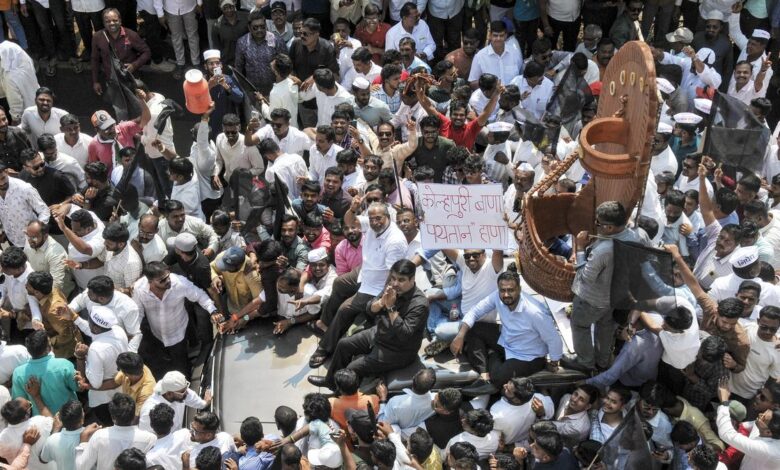
<However, the legitimacy of the state’s intervention faces considerable legal and expert scrutiny. Before the amendment was finalized, the state government sought the opinion of former Chief Justice of India B.R. Gavai on November 3. Gavai argued against granting voting rights to government-nominated directors for key office-bearer posts, contending that such a measure would effectively undermine the mandate of the elected majority. He further warned that the amendment would be vulnerable to judicial scrutiny on the grounds of arbitrariness. Despite this caution, the government proceeded with the appointment, leading the Congress and allied parties, including the Shiv Sena (UBT) and NCP (SP), to announce protests. A protest march by Gokul members and farmers took place in Kolhapur on November 9, signaling the depth of discontent among the cooperative’s base.
The dispute also reflects broader anxieties within the cooperative sector regarding the balance of power between member-elected bodies and state regulatory authority. The opposition has pointed to the transfers of other dairy cooperatives, such as Madhya Pradesh’s Sanchi, as evidence of a pattern aimed at consolidating the market under major national brands like Amul and Mother Dairy. While the government maintains that its actions are based on merit and institutional health, the timing of the amendment—immediately following a close electoral defeat—has fueled allegations that the state is seeking to overturn a democratic outcome through legislative maneuvering.
As the political standoff continues, the immediate focus shifts to the legal challenges that are expected in the courts. The Congress has announced it will challenge the decision, and the Bombay High Court’s earlier intervention in the chairman election suggests that judicial oversight will play a decisive role in determining the final composition of Gokul’s leadership. The resolution of this case will set a precedent for the autonomy of large cooperative institutions in Maharashtra, with implications for how the state manages the delicate balance between regulatory oversight and the democratic rights of cooperative members. For now, the controversy remains unresolved, with the government standing by its appointments and the opposition mobilizing both legal and public pressure to restore what it views as the rightful mandate of the milk producers.