
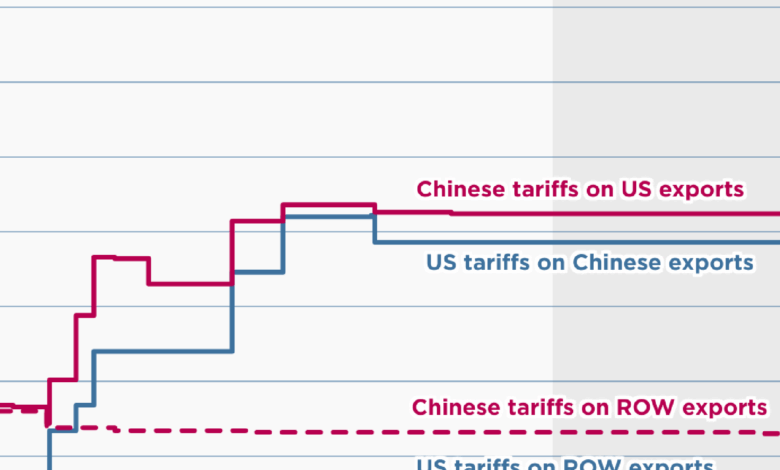
US tariffs have risen by 14.4 percentage points since January 2025, while Chinese tariffs have increased by 10.7 percentage points over the same period. The current rates follow a volatile trajectory that saw US average tariffs on Chinese imports spike to 126.1 percent in early May 2025. However, these peaks were subsequently reduced after US and Chinese officials met in Geneva in May 2025. Both sides agreed to convert their cumulative bilateral tariff increases from April into a 10 percent rate, effective May 14. This agreement caused the average US tariff to drop from 126.1 percent to 51.7 percent, although the precise reduction was less than 115 percentage points due to sectoral carveouts.
The initial escalation in 2025 began with China-specific 10 percentage point increases implemented on February 4 and March 4. This was followed by broader tariff hikes on steel, aluminum, derivative products, automobiles, and automobile parts. A sharp increase occurred between April 5 and April 10, 2025, when the US raised tariffs on Chinese imports by a cumulative 125 percentage points across three separate actions. While some sectoral carveouts were implemented on April 11, the overall trajectory led to the historic peak in May before the Geneva agreement partially reversed the measures.
The tariff measures have been imposed under various legal authorities, including Section 301 of the Trade Act of 1974, the International Emergency Economic Powers Act (IEEPA), Section 232 of the Trade Expansion Act of 1962, and Sections 201, 122, and 338 of other trade acts. The current 35.2 percent average US tariff rate indicates that the post-May 2025 reduction was not permanent, as rates subsequently increased to a higher level following the initial de-escalation. The data highlights the complex interplay of multilateral and bilateral trade policies affecting global production and supply chains, with the US covering nearly nine-tenths of goods and China covering all goods under its tariff regime.




One Comment