
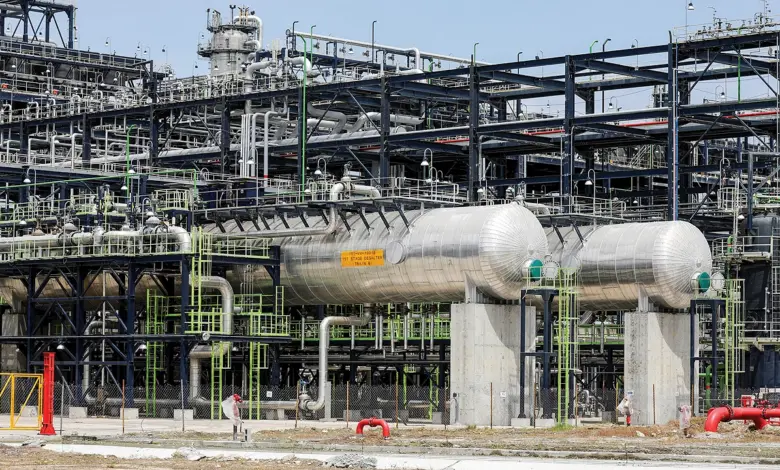
The initial public offering (IPO), which opened on 14 September, offers 4.1 billion ordinary shares at ₦525 per share. With a minimum subscription of 10 shares costing ₦5,250 (approximately $0.40 at prevailing rates, though exchange rate fluctuations affect this value), the structure is explicitly designed to lower barriers to entry for retail investors alongside institutional participants. If fully subscribed, the offer is expected to raise approximately ₦2.15 trillion. The shares are scheduled for listing on the Nigerian Exchange in November, subject to regulatory approvals and the completion of the allotment process. The offer is set to close on 13 October.
The significance of this capital raise extends beyond the refinery itself. For the Nigerian economy, the IPO represents a critical test of the depth of the domestic capital market. The refinery’s role is pivotal: it seeks to reduce Nigeria’s historical dependence on imported petroleum products, thereby saving foreign currency and stabilizing the exchange rate. By producing fuel domestically, the facility aims to insulate the local economy from global crude oil price volatility to some degree, although it remains exposed to the cost of crude inputs.
However, financial analysts urge caution in interpreting the IPO’s success as a broad indicator of macroeconomic health. While an oversubscribed offer would demonstrate investor confidence in a major industrial asset and the Dangote brand, it does not necessarily reflect the condition of the wider economy. Demand is likely to be driven by a mix of motives, including national pride, the scarcity of large, liquid assets in the Nigerian market, and speculative expectations of post-listing price appreciation. Pension funds, asset managers, and insurance companies are expected to participate, but the presence of traders seeking quick resale profits means that headline subscription figures may not fully capture the structural health of the financial sector.

Operational stability has also been a point of recent flux. Earlier in 2026, the refinery announced a controversial transition to dollar-denominated pricing for its products, invalidating previously issued naira invoices. Under that brief regime, Automotive Gas Oil (diesel) was priced at $1.087 per litre, Aviation Turbine Kerosene (ATK) at $0.942 per litre, and petrol via coastal delivery at $1,044.62 per metric tonne. This move created uncertainty in the downstream petroleum market, forcing many independent marketers to source supplies from private depots.
Following a week of economic uncertainty, Dangote Petroleum Refinery reversed this decision, resuming sales in naira. The new ex-depot (gantry) price for Premium Motor Spirit (PMS) was fixed at ₦1,215 per litre. This represents an increase of ₦140 per litre, or 13.02%, from the previous naira price of ₦1,075. The return to local currency pricing was framed as a measure of relief for marketers and consumers, restoring predictability to the supply chain. The refinery resumed accepting orders for coastal loading shortly after notifying clients of the new conditions on Tuesday, following the initial transition notice dated 9 July 2026.
The expansion to 1.4 million bpd is a monumental engineering and commercial undertaking. Dangote stated that the expansion reflects confidence in Nigeria’s future and a commitment to energy independence for the continent. If successful, the refinery would not only meet domestic demand but also position Nigeria as a net exporter of refined products, shifting the country’s role in the global oil trade from a crude exporter to a refined product supplier. This shift has significant implications for trade balances and diplomatic relations, as Nigeria could potentially supply fuel to neighboring West African nations, reducing their own import dependencies.

Nevertheless, the project carries inherent risks. The refinery’s performance is intrinsically linked to the availability and cost of crude oil. Reports of crude shortages at the facility have occasionally forced adjustments in operations, including increased fuel exports to manage inventory. The transition from a single-train distillation system—one of the largest globally—to a higher-capacity operation requires precise management of feedstock logistics. Any disruption in crude supply could constrain output, affecting the refinery’s ability to meet the domestic demand that underpins the investment case.
For investors, the key metrics to watch in the coming weeks are the final amount raised, the level of oversubscription, and the allocation between retail and institutional investors. Foreign and diaspora participation will also be closely monitored, as it indicates international confidence in Nigeria’s financial infrastructure. The post-listing share price will be the ultimate arbiter of market sentiment, potentially validating the ₦525 valuation or revealing over-optimism.
The Dangote Refinery’s trajectory offers a microcosm of Nigeria’s broader economic challenges: the tension between private sector dynamism and public policy support, the struggle to diversify away from crude oil exports, and the need to build resilient domestic financial markets. While the IPO and capacity expansion are major steps forward, their long-term success will depend on sustaining operational efficiency, managing currency risks, and integrating into a stable regulatory framework that supports industrial growth.