
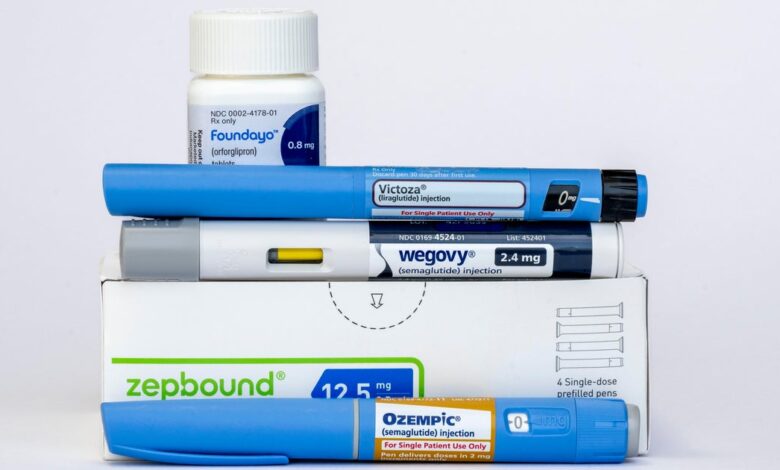
The decision requires manufacturers of approximately a dozen injectable or pill-based drugs—including blockbuster brands like Ozempic, Wegovy, Zepbound, and Mounjaro—to update their labeling to disclose the potential risk of vision loss. The condition, often referred to as an “eye stroke,” is characterized by a decrease in blood flow to the optic nerve, which can result in painless but significant vision impairment in one eye. In severe cases, the vision loss may become permanent.
The Evidence Behind the Warning
The FDA’s decision follows a comprehensive review of data from more than 125 clinical trials involving over 134,000 patients, as well as reports from the agency’s electronic adverse event monitoring system. According to the FDA, the incidence of NAION was approximately 6 cases per 100,000 patients who took a GLP-1 medication for at least one year. In contrast, the rate among individuals taking a placebo or other types of glucose-lowering medications was less than 4 cases per 100,000.
This statistical difference highlights a potential increased risk associated with the drug class. The FDA noted that while the association is clear, the underlying biological mechanism causing the decreased blood flow is not yet fully understood. The agency emphasized that NAION cases have been reported for all currently marketed GLP-1 receptor agonist products, suggesting a class-wide effect rather than an issue isolated to a single brand.

The regulatory action was prompted in part by a 2024 medical paper linking the condition to patients taking semaglutide, the active ingredient in Novo Nordisk’s Ozempic and Wegovy. Dr. Joseph Rizzo, a neuro-ophthalmologist at Massachusetts Eye and Ear and a co-author of that study, stated that he and his team had been collaborating with the FDA to gather data for some time. “I wasn’t surprised it chose to add the warning,” Dr. Rizzo told CBS News, noting that while the evidence indicates an increased risk, the medicines have been “profoundly beneficial to a large number of people.” He did not discourage patients from continuing their treatment.
Context and Clinical Significance
It is crucial to contextualize this risk within the broader prevalence of NAION. According to the American Academy of Ophthalmology, the condition affects between 2 and 10 out of every 100,000 adults over the age of 50, regardless of medication use. Therefore, while the FDA analysis suggests a slight elevation in risk for GLP-1 users, the absolute probability of developing the condition remains low for most individuals.
A May review by the American Academy of Ophthalmology previously found that semaglutide-based GLP-1s may be tied to “about a two-fold increase in relative risk of NAION.” However, regulatory and medical experts caution against interpreting relative risk in isolation without considering the baseline absolute risk. The FDA’s new labeling is intended to ensure that both healthcare providers and patients are aware of this symptom profile, particularly because there is currently no treatment for NAION.
Symptoms of the condition include blurred vision, blind spots, distorted colors, and other visual disturbances. The FDA advised that anyone experiencing these symptoms while on GLP-1 therapy should contact a healthcare professional immediately. The agency also noted that patients with a history of NAION are at an increased risk of recurrence.

Industry Response and Legal Landscape
Novo Nordisk, the maker of Wegovy and Ozempic, responded to the announcement by stating that it “continues to believe the data do not establish a cause-and-effect relationship and we remain confident in the benefit-risk profile of our GLP-1 medicines.” The company acknowledged the profound impact NAION can have on patients and their families, reiterating that patient safety is a top priority.
The warning comes amid a growing legal landscape, with lawsuits filed against drugmakers by patients who claim their vision loss was caused by the medications. Jason Goldstein, a lawyer representing some of these patients, has described cases where individuals wake up with significant vision loss, including peripheral vision deficits. These legal actions underscore the seriousness with which some patients and legal representatives view the emerging data, even as the scientific community continues to debate the strength of the causal link.
With nearly 30 million Americans currently taking weight-loss drugs, the FDA’s move to standardize this warning across the entire GLP-1 class represents a significant step in pharmacovigilance. It serves as a reminder that even with rare side effects, large-scale usage can reveal subtle safety signals that require transparent communication to the public and the medical community.