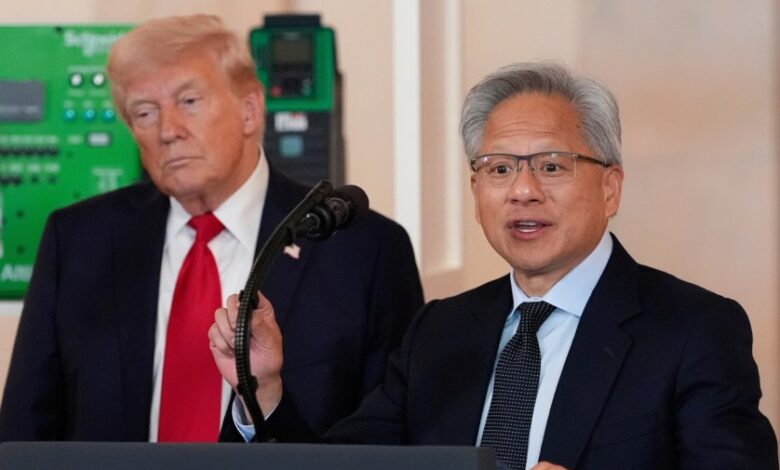
The President’s quick support for Huang has drawn attention not only to the specific allegations but to the broader political dynamics at play. According to reports, tech observers and lawmakers described Trump’s defense as expected, citing the President’s established pattern of tight allyship with major industry leaders. However, this consistent support has raised questions among political analysts about whether such close ties could undermine institutional safeguards or create perceptions of bias in how national security matters involving prominent corporate figures are handled.
The central development here is the visibility of the President’s backing for a private sector leader during a period of heightened security scrutiny. The allegations surrounding Huang suggest a potential breach of security protocols, given the involvement of an alleged spy. While the specific details of the alleged affair and the spy’s identity remain subject to ongoing investigation and public reporting, the political significance lies in the executive branch’s immediate response. By publicly supporting Huang, the administration has signaled a priority on protecting its allies in the technology sector, a group increasingly critical to U.S. economic and strategic interests.
Understanding this move requires looking at the structure of the relationship between the White House and the tech industry. In recent years, the administration has cultivated strong ties with leaders of major technology firms. This alliance is often framed as a partnership to strengthen American innovation and competitiveness. However, critics argue that the intensity of these alliances can blur the lines between advocacy and impartial governance. When a CEO of a major defense-adjacent technology company faces allegations involving espionage, the President’s defense is viewed by some as a test of how far the administration will go to shield its allies from public scrutiny or legal consequences.

Principal actors in this scenario include the President, who is seeking to maintain loyalty among his key business supporters and project stability within the tech sector. Jensen Huang, as the CEO of Nvidia, is at the center of the controversy, with his reputation and the company’s standing potentially affected by the scandal. Lawmakers and national security observers represent the opposing institutional check, raising concerns that the President’s involvement could complicate any impartial investigation into the alleged security breach. These groups are seeking assurance that national security protocols are being enforced rigorously, regardless of the political connections of those involved.
The political process surrounding such incidents typically involves multiple layers of oversight, including federal law enforcement agencies and congressional committees with jurisdiction over intelligence and security. However, the President’s public stance adds a layer of political complexity. By defending Huang, the administration may be perceived as influencing the public narrative around the case. This raises questions about the independence of investigative processes when high-profile figures are involved. The governance implications extend beyond the individual case, touching on the broader principle of whether executive allies receive different treatment in matters of national security.
The effect on the public and on policy is still unfolding. For voters, the incident highlights the ongoing debate about the influence of big tech in Washington and the potential conflicts of interest that can arise from close government-business ties. For policymakers, it underscores the need for clear boundaries in how the administration interacts with corporate leaders in sensitive sectors. The scandal also serves as a reminder of the vulnerabilities in security systems when personal relationships intersect with professional duties, particularly in an era where technology companies hold vast amounts of sensitive data and play key roles in national defense infrastructure.
Opposing positions in this matter are distinct. On one side, supporters of the President’s actions argue that it is appropriate for the executive to stand by a major American entrepreneur and that the allegations may be unfounded or exaggerated. They view the defense as a sign of strength and unity between the government and the private sector. On the other side, critics and some lawmakers argue that the President’s involvement compromises the integrity of the investigation and sets a dangerous precedent. They contend that national security concerns must be handled with strict impartiality, free from political influence, to ensure that all parties are held to the same standard. The disparity in these views reflects a deeper divide over the role of the executive branch in overseeing private sector conduct that has security implications.
What remains uncertain is the outcome of the investigation into the alleged spy and the extent of Huang’s involvement. There is no verified confirmation of the spy’s identity or the specific nature of the alleged breach. Furthermore, it is unclear whether the President’s defense will have any tangible impact on legal proceedings or congressional inquiries. The political consequences of the incident are also unresolved, as it is still too early to determine whether this will lead to broader reforms in how the administration manages relationships with tech leaders or if it will be viewed as an isolated incident.
As the scandal continues to unfold, the focus remains on the balance between protecting national security and maintaining the political alliances that the administration has prioritized. The President’s initial defense of Jensen Huang has set the tone for how this issue is being addressed, with the next steps likely to involve further scrutiny from both the executive branch and legislative oversight committees. The resolution of the case will not only determine the fate of the individuals involved but also signal the administration’s approach to accountability in the tech sector, a critical area for both economic growth and national defense.