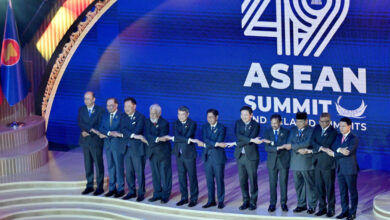
The joint decision, adopted at the summit in Manila, states that ASEAN may consider the “gradual restoration” of Myanmar’s status if the country demonstrates “sustained and concrete progress” in implementing the bloc’s five-point consensus (5PC). The 5PC, agreed upon in 2021, calls for an immediate end to violence, constructive dialogue among all parties, ASEAN mediation, and humanitarian assistance. For five years, the plan has yielded little visible result, with civil war continuing between the military and pro-democracy and ethnic armed groups. According to the United Nations, the conflict has killed approximately 100,000 people and displaced more than 3.5 million.
The decision reflects a pragmatic pivot driven by diplomatic pressure and the realities of regional stability. For years, the strategy of exclusion has been the bloc’s primary tool. Yet, in recent months, several member states, most notably Thailand, have stepped up bilateral engagement with Myanmar. This outreach has created new pressure on the collective body to ease the ban, as individual nations sought to maintain influence and manage cross-border issues without waiting for a unanimous regional breakthrough. The new joint decision explicitly encourages “constructive engagement” by individual member states with all relevant stakeholders, provided it is done in consultation with the ASEAN Chair.
Philippine President Ferdinand Marcos Jr., whose country currently holds the rotating ASEAN chair, framed the decision as a search for practical solutions. “What more can we do for Myanmar?” he asked at the leaders’ retreat, urging the bloc to find ways to advance the peace plan and support an inclusive process. The statement emphasizes a “phased and progress-based approach,” taking into account developments on the ground. This language moves the discourse from static exclusion to dynamic conditionality, acknowledging that while restrictions remain for now, the door is no longer fully shut.

The geopolitical context of Myanmar’s crisis has evolved significantly since the 2021 coup. Min Aung Hlaing, the former coup leader, took office as civilian president this year following elections that international monitors dismissed as a sham. Despite the lack of democratic legitimacy in the eyes of many Western observers, his administration has gained increasing international recognition. The military has received support from China, India, and Russia, and reports indicate secret talks between Myanmar’s officials and the US administration, suggesting a reversal of years of isolation by Washington.
This shifting landscape complicates ASEAN’s position. The bloc must balance its normative commitments to democracy and human rights with the strategic necessity of engaging a neighbor that is increasingly embedded in the geopolitical orbit of major powers. The summit in Manila also addressed other pressing regional issues, including trade, security, and energy disruptions caused by the war in Iran. Leaders discussed sharing fuel supplies to cope with these disruptions, highlighting the economic interdependence that drives ASEAN’s foreign policy.
Other diplomatic milestones underscored the summit’s focus on regional architecture. Australia and the Philippines signed a defense agreement on Sunday, while Canada and the Philippines announced they had concluded free trade negotiations on Saturday. However, a proposed code of conduct for the South China Sea remains unresolved. Philippine Foreign Secretary Theresa Lazaro stated that negotiations between ASEAN and China were 80% complete, but diplomats told AFP that a deal was unlikely in Manila. Chinese Premier Li Qiang represented Beijing at the summit, while US President Donald Trump is expected to arrive on Tuesday to meet with the leaders of India, Japan, and Australia, the other members of the Quad.
The arrival of President Trump adds another layer of complexity. His visit is expected to precede talks with Chinese President Xi Jinping and Russian President Vladimir Putin in Shenzhen on Thursday. Activists in the Philippines have planned to march against Trump’s visit, citing concerns over a US-backed industrial project north of Manila that they say could displace Indigenous families. These domestic protests highlight the tension between high-level geopolitical maneuvering and the immediate human consequences of policy decisions.
As the Philippines hands the rotating ASEAN chair to Singapore next year, with Thailand due to take over in 2028, the “calibrated engagement” strategy will face its first real test. The success of this phased approach depends on whether Myanmar’s government can translate diplomatic access into tangible steps toward peace, or whether the civil war continues to deepen despite the diplomatic overtures. For now, the restrictions remain, but the path back to the table has been formally mapped out, contingent on progress that has yet to materialize.