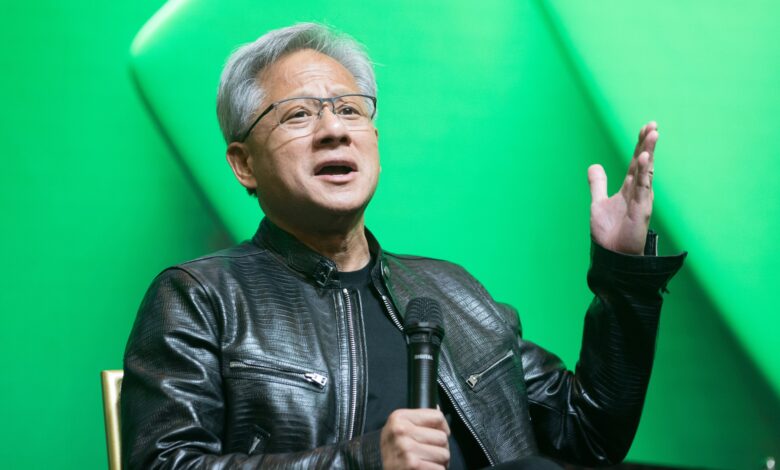
The push for Huang’s return is driven in part by concerns over the fragility of Nvidia’s supply chain relationships. On November 14, Elon Musk posted on X that Huang had “driven supply chain brilliantly at Nvidia,” warning that many critical deals were based on “a handshake with Jensen, not a written contract.” Musk argued that without Huang, “at least some of those critical deals will be lost,” citing past experiences where compute delivery was secured on personal trust before formal purchase orders were issued. In an environment where demand frequently outruns supply, as Huang noted in August with a 70% delivery confidence rate, the personal relationships he cultivated are viewed by some as a critical asset. However, others argue that this reliance on individual discretion rather than institutional processes poses a significant operational risk.
Opposing this view, a coalition of tech investors and commentators, including Atreides Management’s Gavin Baker, have signed a petition demanding “due process, not mob justice,” yet Fortune’s analysis characterizes this defense as misguided. Critics argue that the circumstances surrounding Huang’s departure are materially different from past executive comebacks, such as those of Steve Jobs or Sam Altman. The primary objection centers not only on the personal conduct allegations—specifically, workplace affairs with direct subordinates that violate Nvidia’s code of conduct—but on deeper structural issues regarding export compliance.
U.S. Treasury Secretary Scott Bessent has publicly stated that the board should look outside the company for a successor, calling for a “dramatic shakeup.” Bessent suggested that if a bank exhibited similar non-compliance, federal regulators like the OCC would intervene immediately. His comments highlight a “culture of noncompliance” regarding chip export restrictions to China, a concern that has escalated into a potential national security issue. Evidence cited by the Wall Street Journal and Culper Research indicates that a significant portion of Nvidia’s revenue was tied to shipments to China through a customer called Megaspeed. Shipment records reviewed by the WSJ tie Megaspeed to nearly $12 billion in orders of Nvidia’s most advanced chips for Chinese buyers between early 2024 and mid-2025, despite the company’s balance sheet showing only $33 million in related receivables in 2023.
The implications of these findings are severe. Documents reviewed by Bloomberg show that a company founded by Alice Huang, Jensen’s wife, told China’s central-bank credit registry that it held servers carrying banned H100, H200, and H800 chips in a Shanghai data center. Some of these chips were originally sold to an official Nvidia cloud partner in Singapore before being diverted to China. Furthermore, a former OpenAI researcher’s forensic analysis of GPU “fingerprinting” suggests that six AI models from leading Chinese labs were initialized on Nvidia Blackwell chips, which are barred from export. Reuters has also reported that Northwestern Polytechnical University, a blacklisted institution involved in missile and aircraft research, purchased two Nvidia H200s last month. These findings suggest that U.S. frontier technology may be inadvertently supporting Chinese military and AI capabilities.
Nvidia has faced criticism for its public statements on these matters. In May 2025, Huang told Bloomberg there was “no evidence of any AI chip diversion,” and in October, he declared the company’s AI-chip business “100% out of China.” Nvidia later stated it placed Megaspeed on an internal block list in June 2025, but spokespeople continued to vouch for the customer for months afterward. This discrepancy between public assurances and the documented paper trail has fueled calls for stricter oversight. The company’s Q2 FY27 revenue stood at $96.221 billion, with Data Center revenue at $89.023 billion, and it guided Q3 to $108.0 billion. With a market cap of $3.932 trillion and $279.0 billion in supply commitments, the scale of these operations makes the governance question critical for shareholders and regulators alike.
As the board navigates this crisis, the upcoming earnings report due on November 17 will be the first major test of whether Nvidia can meet its financial targets without Huang. The outcome of the outside counsel’s review and any statement from the board on the CEO search will determine the next phase of the company’s leadership. Whether Huang returns or an outside executive takes the helm, the focus will remain on how Nvidia manages its complex global supply chain and navigates the increasing friction between commercial interests and national security regulations.