
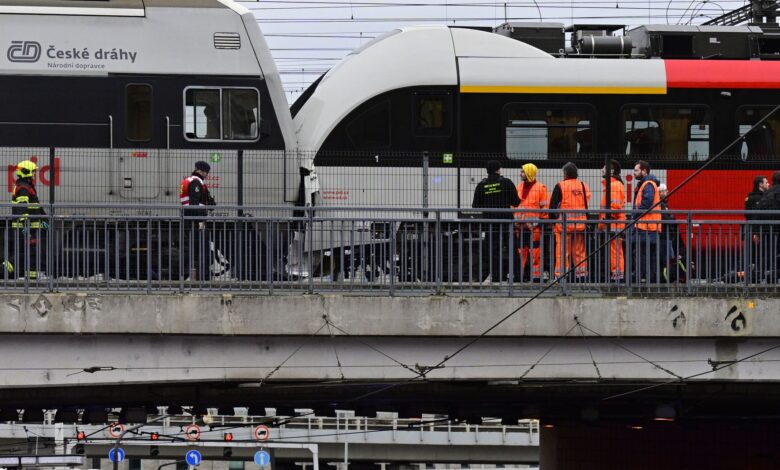
The human impact of the crash was quickly cataloged by diplomatic and local authorities. The Ministry of Foreign Affairs of Ukraine confirmed that among the injured were 15 Ukrainian citizens. This specific demographic detail, provided by the Ukrainian Embassy in the Czech Republic, underscores the significant role of international mobility in the region’s rail network. The ministry stated that no calls had been received on its hotline at the time of the report, suggesting that the injuries were indeed minor and that immediate life-threatening situations were not reported among the Ukrainian passengers. However, the embassy indicated it would continue to monitor the situation closely, a standard protocol in cases involving foreign nationals in foreign jurisdictions.
Scientific and engineering analysis of such incidents typically focuses on the mechanics of the collision, signaling failures, or human error, though the specific cause of the Prague crash was not detailed in the immediate reports. The event serves as a stark reminder of the inherent risks in rail transport, where the mass and momentum of trains make even minor operational or mechanical failures potentially dangerous. The location near the main station is particularly significant, as these areas are often characterized by complex switching operations, high passenger volumes, and tight scheduling margins, all of which can contribute to the likelihood of accidents if safety protocols are not strictly adhered to.
This incident in Prague does not occur in isolation but rather within a broader context of recent rail safety concerns across Europe. Just weeks prior, on October 28, a far more catastrophic event occurred in Spain. Near the town of Urda in the province of Toledo, two trains collided, resulting in the deaths of 69 people and injuries to many others. The Spanish disaster, which involved over 540 passengers, was preliminarily attributed to human error during the response to a signaling system malfunction. The severity of the Urda crash led Spanish investigators to seek assistance from the European Rail Agency on November 4, highlighting the transnational nature of rail safety standards and the need for coordinated investigative efforts.
The juxtaposition of the Prague incident with the Urda tragedy raises questions about the systemic resilience of Europe’s rail networks. While the Prague collision resulted in minor injuries, the potential for disaster in such high-traffic areas remains a critical concern for policymakers and safety regulators. The presence of Ukrainian nationals among the injured in Prague adds a layer of geopolitical and humanitarian complexity, as the country is currently heavily impacted by conflict, making the safety of its citizens abroad a sensitive issue for the Ukrainian government.
As investigations into the Prague crash proceed, the focus will likely turn to the technical and procedural factors that allowed the collision to occur. Whether it was a signal failure, a braking issue, or an operational error, the findings will contribute to the broader body of knowledge on rail safety in Europe. The Ukrainian Embassy’s continued monitoring reflects the ongoing concern for its citizens, while the international community watches for any implications for cross-border rail travel and safety standards.
The scene near Prague’s main station, once a hub of routine transit, now serves as a site of inquiry and reflection. The 46 injured passengers, including the 15 Ukrainian citizens, have been treated for their minor injuries, but the incident leaves a lasting imprint on the collective memory of those involved. As the dust settles, the rail authorities and diplomatic missions continue to navigate the aftermath, ensuring that the lessons from this event, and the more tragic one in Spain, are incorporated into future safety protocols. The next verified development will likely involve the release of preliminary findings from the Czech investigative bodies, which may shed light on the specific causes and potential preventive measures.