
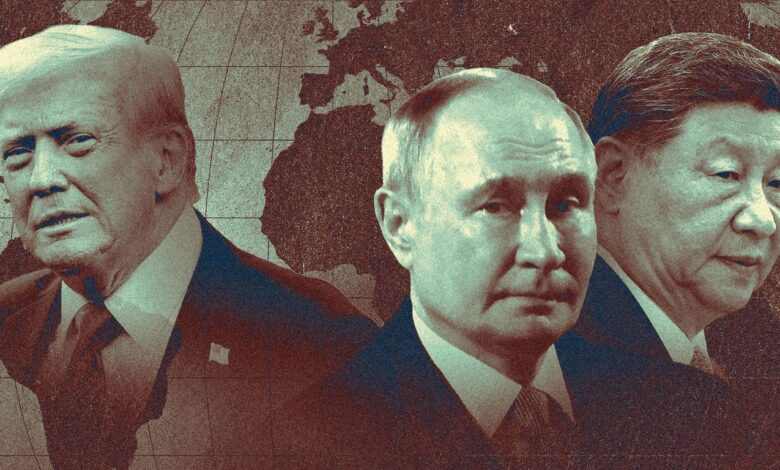
Despite the stated focus on nuclear talks, significant anxiety persists among U.S. allies regarding the optics and potential outcomes of the encounter. A European diplomat told Axios, “We know that every time President Trump talks to or sees Putin, it translates into bad news for Ukraine and for Europe. We brace for anything.” Concerns are not limited to Europe; Japanese officials have also privately relayed worries to U.S. counterparts that the summit could project a shift in Washington’s stance on Taiwan. German Chancellor Friedrich Merz, speaking after closed-door talks in Dublin, urged, “Our message to the U.S. before Trump meets Putin is: No surprises, please.”
Trump has downplayed the likelihood of the summit addressing sensitive geopolitical conflicts, noting that while he will discuss “my favorite subject, Ukraine,” earlier U.S. and Chinese officials had stressed the meeting would not deal with the war. The president also mentioned briefly discussing Iran, claiming the U.S. has Iran “in very good shape,” and floated the possibility of a separate meeting with North Korean leader Kim Jong Un. Analysts suggest the leaders have divergent motivations: Han Lin, China managing director for the Asia Group, noted that Putin seeks recognition of Russia’s indispensability, while Xi aims for acknowledgment of China’s central role in global diplomacy. Trump, by contrast, is viewed as seeking a stage for personal deal-making.

Before heading to Shenzhen, Trump’s itinerary in the Philippines includes a meeting with the Quad—comprising the U.S., Australia, India, and Japan—which is the first gathering of these leaders since his return to the White House. He is also scheduled to sign a trade deal with Thailand and attend an ASEAN summit as the “guest of honor.” These engagements serve as a counterweight to domestic challenges, including a series of high-profile technology outages affecting major U.S. corporations and a controversy surrounding Nvidia CEO Jensen Huang, whom Trump said did not put the U.S. at risk despite allegations involving an alleged Chinese agent.
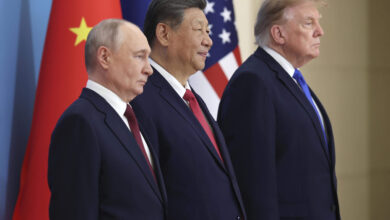
The diplomatic landscape is further complicated by the fact that neither China nor Russia initially showed enthusiasm for discussing denuclearization, with China eventually agreeing after Russian lobbying. As the leaders prepare for their sit-down in Shenzhen, the immediate focus remains on whether the conversation will stay within the bounds of nuclear policy or spill into broader regional security issues that could alter the strategic balance in Asia and Europe.



One Comment