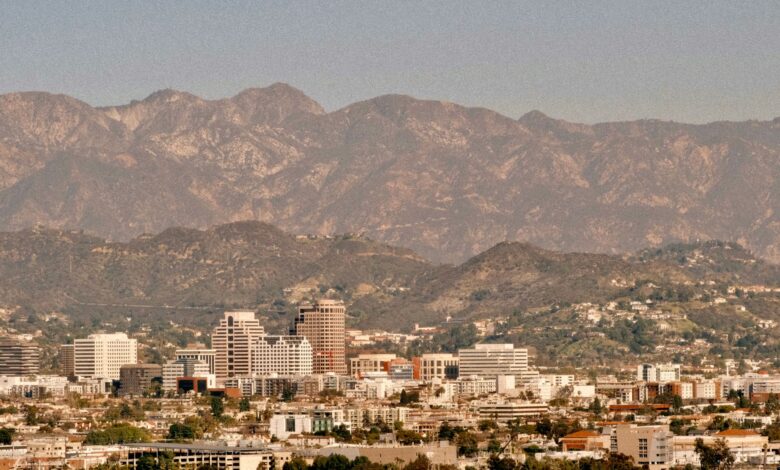
The immediate aftermath of the quake was characterized by a widespread sense of alert rather than chaos. While there were no immediate reports of serious injuries or major structural damage, residents reported feeling the shaking across a broad swath of the county. Social media reactions indicated that the tremor was perceptible in areas stretching from Marina Del Rey and Hawthorne in the south to Van Nuys and Pico Rivera in the east and north. This broad reach underscored the sensitivity of the region’s infrastructure to even moderate seismic activity, as light shaking was reported throughout Los Angeles County.
In response to the event, the Los Angeles Fire Department (LAFD) activated its earthquake alert protocols. The department issued a statement confirming that it had entered a state of heightened readiness, a standard procedure designed to proactively identify potential hazards before they escalate. “Personnel from all 106 neighborhood fire stations conduct a strategic survey by land, air and sea of their districts, examining critical infrastructure and areas of local concern across our 470 square mile City of Los Angeles jurisdiction,” the LAFD stated. This comprehensive approach ensures that any subtle signs of stress on buildings, roads, or utilities are detected and addressed swiftly, even in the absence of catastrophic failure.

City leadership also monitored the situation closely, particularly regarding the impact on major economic and transportation hubs. Mayor Karen Bass confirmed that there were no reports of operational impacts, including at Los Angeles International Airport (LAX). This lack of disruption to one of the world’s busiest airports is a significant indicator of the resilience of the region’s critical systems, suggesting that the 4.4-magnitude event did not compromise the structural integrity of major infrastructure or halt essential logistical flows.
The scientific data provided by the USGS offers a precise picture of the event’s parameters. The earthquake was initially measured at a magnitude of 4.2 before being revised upward to 4.4, a common adjustment as seismologists refine their calculations with more complete data. The epicenter’s proximity to Commerce, a dense urban area situated about a mile northwest of the city center, meant that the shaking was likely most intense in the immediate vicinity. However, the depth of 10.5 miles (approximately 16 kilometers, as noted in some reports) acted as a buffer, dissipating the energy before it reached the surface with enough force to cause widespread destruction. The absence of any tsunami warnings further confirmed that the quake’s energy was released in a way that did not displace significant volumes of water, a distinction that is crucial for coastal communities along the Pacific.

This event highlights the persistent seismic reality for millions of residents in the Los Angeles Basin. While a magnitude 4.4 earthquake is not considered large in global terms, in a densely populated and highly monitored urban center, it serves as a significant test of emergency response systems and public preparedness. The fact that no injuries were reported and that critical infrastructure remained operational is a testament to the stringent building codes and emergency planning that have been implemented in the region over the decades. Nevertheless, the event serves as a reminder that the San Andreas Fault system and associated faults in Southern California remain active, and that seismic activity is an ongoing environmental factor that requires continuous monitoring and adaptation.
As the early hours of the morning gave way to day, the focus shifted from immediate reaction to verification. Emergency services continued their sweeps of the city, ensuring that any hidden damage to older buildings or utility lines was identified. For the residents who woke to the memory of the shaking, the event was a brief but sharp reminder of the geological forces at play beneath their feet. With no further significant updates regarding damage or injuries, the Los Angeles area returned to its daily rhythm, having weathered another seismic test without major consequence.