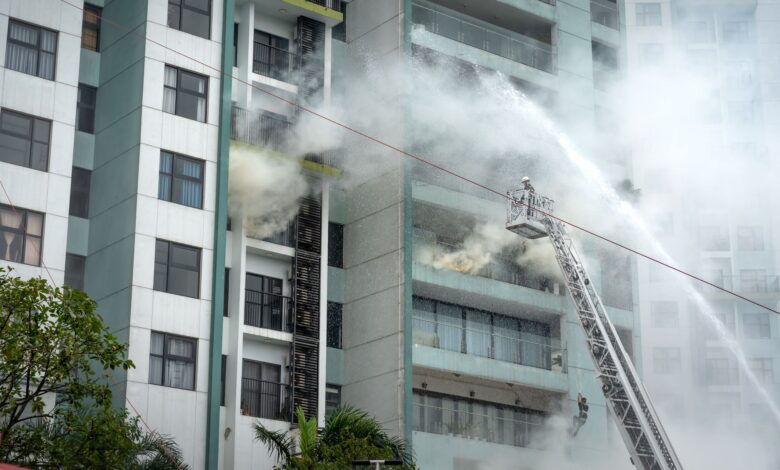
Ihor Terekhov, the mayor of Kharkiv, stated that a “reactive enemy drone” hit the building of the higher education institution. Oleksandr Syniehubov, the head of the Kharkiv Regional Military Administration, initially reported one death but later clarified that an 86-year-old woman was killed. He confirmed that a 75-year-old man, a 53-year-old woman, and a 66-year-old woman suffered burns and are receiving medical care. An 18-year-old woman experienced an acute stress reaction. Syniehubov later added that two more men, aged 75 and 52, were injured in the Kyiv district, bringing the total number of injured to six. Terekhov separately noted a strike on an energy object in the city.
In Zaporizhzhia, Artem Kysko, the head of the regional police department, confirmed the deaths of four officers who were on duty at the time of the attack. The victims were Lieutenant Colonel Ruslan Syroukh (40), Major Kateryna Reznikova (36), Captain Oksana Rysiey (32), and Captain Yevhen Smykov (38). Kysko stated that three officers died at the scene, while their supervisor died the following day after doctors fought to save his life for over 24 hours. Kysko did not specify the exact location or time of the Zaporizhzhia strike in his statement but noted that the border between the front line and the rear has effectively eroded, placing all police officers at risk.
President Volodymyr Zelensky addressed the escalating threat in a statement following a security council meeting. He reported that Russian forces are completing preparations for a new massive strike, with intelligence indicating targets will include energy, logistics, and life-support infrastructure in cities and communities. Zelensky highlighted the particularly difficult situation with energy infrastructure in Dnipro, the Dniprovskyi district, Pavlohrad, Odesa, Kharkiv, and Konotop. He emphasized that repair teams are working around the clock and that reserve equipment is available.
The President also stated that he is awaiting a report from the Ministry of Foreign Affairs regarding communications with partners on the supply of air defense systems. He identified interceptors for “Patriot” and “NASAMS” systems as a key priority. Additionally, Zelensky issued directives to military units defending the Kostiantynivskyi direction in the Donetsk region. No independent verification of the specific weapon types used in the Kharkiv and Zaporizhzhia strikes was provided in the official statements.