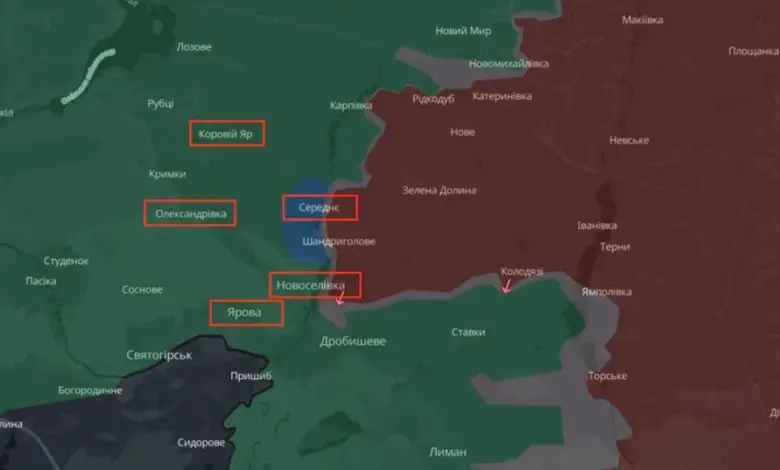
These strikes are part of “Operation Vivaldi,” a counteroffensive aimed at clearing Russian infiltrations and restoring Ukrainian control over the sector. The corps publicly confirmed the operation on September 15, reporting that it had cleared 75 square kilometers of Russian infiltration and liberated an additional 10 square kilometers, including the settlement of Serednie. Other areas recovered during the operation include Novoselivka, Oleksandrivka, Yarova, and the outskirts of Korovyi Yar. Brigadier General Andrii Biletskyi, commander of the 3rd Army Corps, described the current gains as the first “season” of the operation, indicating that further phases are planned.
Return of Heavy Armor
The successful deployment of tanks in this sector marks a significant tactical shift after a period in which drone dominance largely precluded the use of heavy armor near the front line. Ukrainian forces employed a phased approach to reintroduce tanks, including British Challenger 2s, into the Oleksandrivka axis. This strategy began with precision strikes on Russian logistics nodes located up to 160 kilometers from the front line, effectively disrupting the supply chain for Russian drones and artillery batteries. Electronic intelligence operations, including the interception of Russian communications, further degraded Russian command and control capabilities, while drone teams targeted Russian crews to force withdrawals.

Once the immediate threat from Russian drones was mitigated, Ukrainian infantry advanced on foot to clear defensive lines, creating a secure path for tank units to follow. In the Oleksandrivka sector, this combined arms approach facilitated the recapture of approximately 746 square kilometers of territory. The effectiveness of this tactic was recently demonstrated in Kharkiv Oblast, where the 475th Assault Regiment released video of two tanks attacking Russian positions in Vilkhuvatka. Supported by Heavy Vampire strike drones, FPV drones, and reconnaissance assets, the tanks crossed light mine barriers and engaged Russian infantry in buildings before withdrawing undamaged despite constant drone attacks.
Electronic warfare has been a critical component of Operation Vivaldi, with Ukrainian units disrupting more than 20,000 Russian drone missions. Analysts note that the strategy confirms the continued importance of heavy armor when logistics in the kill zone are effectively disrupted. Russian forces in the sector reported operating with significant communication disruptions, limiting their ability to coordinate defenses or report Ukrainian advances to higher command. In May alone, Ukrainian forces executed over 200 strikes on Russian logistics vehicles at distances up to 160 kilometers, a tactic described by defense researchers as destroying the enemy’s ability to sustain combat effectiveness.

The counteroffensive near Lyman is now creating operational challenges for Russian forces attempting to advance on Sloviansk, as Ukrainian troops push toward Zarichne and Myrne. Russian command may be forced to redeploy troops to protect their flanks, potentially slowing their main axis of advance. The integration of long-range strikes, electronic warfare, and armored assault units represents a refined Ukrainian tactical doctrine designed to neutralize Russian drone advantages and restore territorial control.