
Procurement Risk Resurfaces
The cancellation of the F126 program has highlighted a critical structural risk within the defense industry: the ultimate customer is invariably a sovereign government, whose financial priorities are subject to political discretion and shifting military needs. Analysts noted that while the geopolitical landscape has driven a multi-year rally in defense equities, the assumption of guaranteed procurement is flawed. JP Morgan analysts, led by David Perry, emphasized that the news serves as a reminder that governments “can and do change their minds.” This distinction separates the defense sector from other industries where demand is driven by consumer market forces rather than legislative and executive decisions.
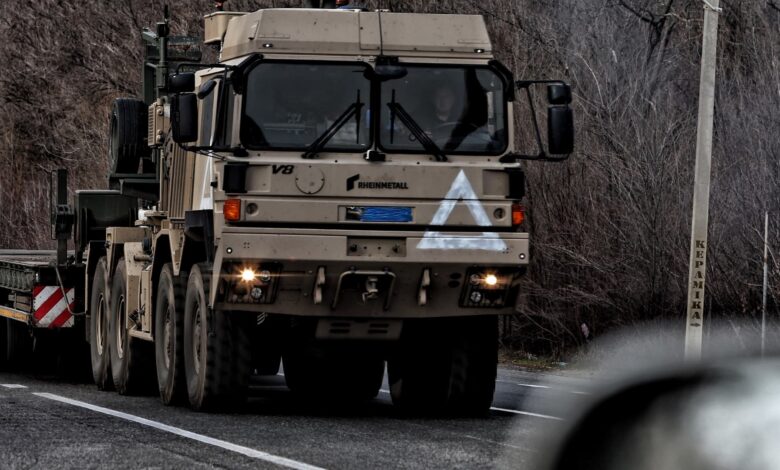
“We are absolutely convinced that Germany will spend a lot of money on defence procurement in the next 5+ years and that it will buy significant amount of land vehicles and ammunition from [Rheinmetall],” Perry said.
Despite the short-term shock, the long-term fiscal trajectory for European defense remains robust. Germany has transformed its role as a global military spender. In 2020, the country was the seventh-largest military spender worldwide, trailing nations such as Saudi Arabia, India, and the United Kingdom. By 2024, Germany had risen to become the fourth-largest spender, positioned behind only the United States, China, and Russia. This shift underscores a fundamental reorientation of European security policy in response to prolonged geopolitical tensions, including the ongoing conflict in Ukraine, which has entered its fifth year.
Budget Expansion and Industrial Scale
The German government has outlined plans to increase its military budget to 152 billion euros by 2029. This represents a near-doubling of the 86 billion euros spent in 2025. In 2024, military expenditure accounted for 3.93% of total German government spending, a figure that is set to rise as these new allocations are implemented. Rheinmetall is positioned to benefit from this expansion, having secured contracts for land vehicles, artillery, and ammunition. The company’s product portfolio, which includes the Leopard 2 tank, the Caracal tactical vehicle, and the RCH 155 self-propelled howitzer, has seen significant demand, with various systems supplied to Ukraine and other NATO allies.
Furthermore, Rheinmetall’s strategic expansion into shipbuilding, finalized with the acquisition of Naval Vessels Lürssen in February 2026, adds another layer of diversification. Although the F126 cancellation removes a major anticipated contract, the company’s order backlog remains at significant levels, providing visibility into future earnings. The expansion of manufacturing capacity to meet rising demand for military equipment suggests that the company is scaling operations to capitalize on the broader European rearmament trend.
Investors are now navigating a complex landscape where strong macroeconomic tail winds—driven by increased NATO compliance and national security concerns—coexist with specific project-level risks. The market reaction to the F126 decision serves as a cautionary indicator that while aggregate defense spending is rising, individual contract awards are not immune to political recalibration. The sector’s resilience will depend on the government’s ability to redirect funds toward alternative modernization projects, such as land vehicles and ammunition, where demand remains consistently high.
The next critical watchpoint for the sector will be the release of updated procurement schedules from the German Ministry of Defense, which will clarify how the funds allocated for the F126 program are to be redeployed. Investors will also closely monitor Q1 earnings reports from major European contractors to assess whether the cancellation has materially impacted near-term revenue guidance or if the broader order book remains intact.