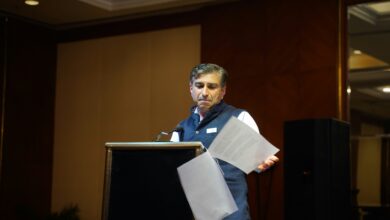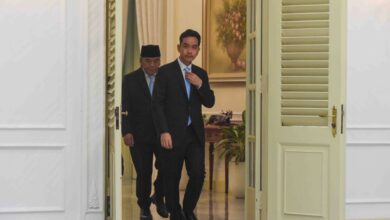
Commission X chair Hetifah Sjaifudian emphasized in a statement on Sunday, August 25, 2025, that the clarification issued by UGM Rector Ova Emilia should be treated strictly as an academic matter, not a politicized one. Rector Emilia’s statement, released via UGM’s official YouTube channel over the weekend, confirmed that Jokowi officially graduated from the Faculty of Forestry on November 5, 1985, and was inaugurated as a graduate on November 19, 1985. “Academic credibility must be safeguarded institutionally,” Sjaifudian stated. “Therefore, Commission X encourages the public to honor the university’s official clarification and use it as the main reference.”
The parliamentary intervention aims to reinforce transparency and accountability in higher education governance. Sjaifudian noted that the case serves as a valuable lesson for Indonesia’s education sector, particularly in the systematic management of academic records. By urging stakeholders to rely on official university statements, the Commission seeks to curb speculation and restore public trust in academic institutions. This move coincides with recent legal developments where a court dismissed a lawsuit against Jokowi regarding charges of political dynasty and nepotism, further insulating the former president from specific legal challenges related to his political legacy.
UGM, a public university and the alma mater of President Jokowi, has become a focal point for discussions on both academic integrity and national symbolism. The university is currently constructing a “spiritual area” comprising houses of worship for all six of Indonesia’s officially recognized religions: Islam, Protestantism, Catholicism, Hinduism, Confucianism, and Buddhism. In late October 2023, the Student Activities Unit (UKM) announced that this facility would be ready soon, a project initially outlined in a 2017–2022 masterplan released by then-Rector Professor Panut Mulyono.

The establishment of worship facilities for all recognized religions is a significant symbolic gesture, distinguishing UGM from other state universities in Indonesia where mosques are typically the only non-Islamic worship spaces established on campus. The project aligns with the national ideology of Pancasila, which emphasizes religious pluralism. While the original masterplan targeted completion by 2022, the project faced various difficulties, including logistical and community discussions, with dialogues hosted by the Intellectuals Club at UGM involving students, religious communities, and university management to address these challenges.
Political and ceremonial ties between Jokowi and UGM remain strong, as evidenced by his recent attendance at the 62nd Anniversary Celebration of the UGM Faculty of Forestry on October 17. Accompanied by Forestry Minister Raja Juli Antoni and UGM Rector Ova Emilia, Jokowi attended the Open Senate Meeting as a 1980 alumnus. During this event, Minister Antoni highlighted the government’s digital transformation efforts in the forestry sector, including the development of a national platform for public access to forestry permits and mapping data. He also underscored the commitment to mitigating climate change through social forestry programs and carbon markets, aiming to shift the industry paradigm from logging to planting.
Despite the formal clarifications from both the judiciary and the legislature regarding Jokowi’s status and credentials, the intersection of personal legacy and institutional history at UGM continues to draw scrutiny. The university’s role as a symbol of national unity, through initiatives like the spiritual area, and its status as the educational foundation of a former president create a complex narrative that balances academic transparency with political symbolism. As the government pushes for data-driven forestry policies and the House of Representatives reinforces academic credibility, UGM remains a central institution in Indonesia’s ongoing efforts to navigate the relationship between state power and public knowledge.