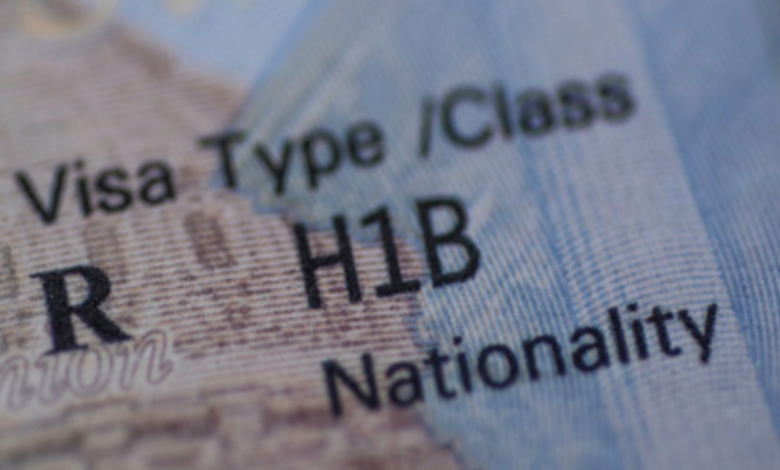
The proposal, published on September 11, seeks to remove the discretionary buffer that currently allows eligible H-1B workers up to 60 days after the end of their employment to find new work, change their immigration status, or arrange their departure. Under current regulations, this protection applies not only to H-1B holders but also to workers in L-1, O-1, and TN visa categories, as well as their dependents. If finalized, the rule would require affected workers to leave the country immediately upon job termination unless they possess another legal basis to remain, such as a pending application for a different visa category.
DHS officials have defended the measure by arguing that temporary immigration status should remain strictly tied to the specific employment that initially qualified the worker for admission. The department stated that the existing grace period “is not mandated by statute” and creates administrative burdens for immigration officials. According to DHS data, federal authorities had to determine the applicability of the grace period in more than 1.9 million petitions and applications submitted between October 2017 and May 2026. The department estimated that an average of 65,752 foreign workers lost or changed jobs annually between fiscal 2021 and 2025, with approximately 3,795 of those workers having petitions filed by new employers during the grace period each year. While DHS acknowledged that eliminating the protection could lead to financial instability and potential removal proceedings for affected individuals, it maintained that the current system complicates enforcement of immigration laws.
The potential impact is disproportionately significant for Indian nationals, who represent the largest demographic among H-1B beneficiaries. According to the U.S. Citizenship and Immigration Services (USCIS) fiscal 2025 report, approximately 70% of the 406,348 approved H-1B petitions involved individuals born in India, while Chinese nationals accounted for about 12%. For professionals in technology, engineering, and other specialized industries in India, the removal of the grace period would significantly compress the window available to secure alternative employment, exacerbating the challenges posed by recent immigration restrictions.

This regulatory tightening is part of a broader series of actions taken by the Trump administration to restrict legal immigration pathways for highly skilled workers. In September 2025, the administration imposed a $100,000 fee on new H-1B visa applications, a substantial increase from the previous cost of around $5,000. Although the administration later narrowed the scope of this fee to applications filed outside the United States, the initial announcement had a chilling effect on employer participation. A March court filing revealed that most companies opted not to apply for visas for candidates subject to the high fee. Consequently, DHS recorded collecting fees for only 85 qualifying H-1B applications between the September 2025 proclamation and February 15, 2026, and reported processing 87% fewer applications for taxed H-1B visas than the prior year.
The financial and legal uncertainty has driven major technology firms to alter their global hiring strategies. According to a report by IEEE Spectrum, U.S. tech companies, including Apple, Google, Microsoft, and Walmart, have begun rerouting jobs and building offices abroad to circumvent the escalating costs and bureaucratic hurdles associated with U.S. immigration. When IEEE Spectrum contacted 25 U.S. tech companies to discuss these adaptations, all either declined to comment or did not respond. This silence reflects a cautious approach to public statements regarding immigration compliance, but the shift in operational planning is evident in the relocation of development roles to countries with less restrictive labor migration policies.
David Bier, an immigration scholar at the Cato Institute and former congressional advisor, described the cumulative effect of these policies as an “unrelenting barrage of government-sponsored propaganda against highly-skilled workers in the U.S.” He noted that whether or not specific regulations are fully implemented, the perception of hostility toward skilled immigrants is influencing corporate decision-making. Julia Gelatt, a sociologist at the Migration Policy Institute, suggested that some jobs might be relocated abroad, while others could be filled by domestic workers or by immigrants utilizing alternative visa pathways, such as the L-1 visa for intra-company transfers or the O-1 visa for individuals with extraordinary ability.

The public reaction to the grace period proposal has been notably more robust than to other pending DHS regulatory changes. A separate proposal, which sought to impose fees of $70,000 for initial Optional Practical Training (OPT) and $30,000 for subsequent training, had received 8,947 comments by Tuesday night, with the comment period closing on Monday. Another proposal, aiming to eliminate the practice of deferring to previous USCIS decisions in extension applications with unchanged circumstances, had garnered 686 comments, with submissions accepted through November 13.
As the comment period for the grace period elimination continues, the tension between administrative efficiency goals and the rights of foreign workers remains unresolved. The policy landscape for skilled immigration in the United States has shifted rapidly over the past 19 months, with measures including the cancellation of visa extensions, reduced interview opportunities, and the imposition of high application fees. For the hundreds of thousands of foreign professionals currently working in the U.S., particularly those from India, the impending loss of the 60-day safety net represents a significant vulnerability. The finalization of this rule would mark a decisive break from the previous administrative practice of allowing a transition period, potentially accelerating the trend of tech companies looking beyond U.S. borders for their engineering and technical talent.