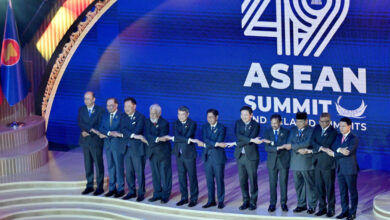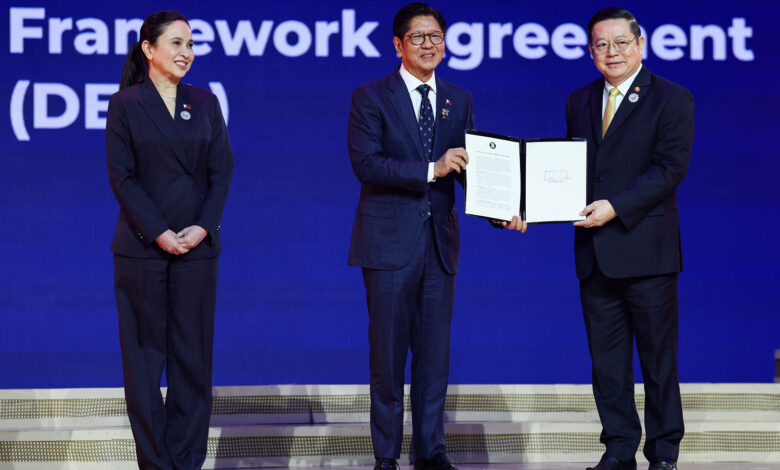
For three days, the heads of state of the 11-nation bloc have convened to address what Philippine President Ferdinand Marcos Jr. described as problems reshaping the region faster than any single country can handle. The agenda is dominated by the world’s most troubling conflicts, including the war in the Middle East, the civil war in Myanmar, and longstanding disputes in the South China Sea. According to drafts of post-summit communiques seen by The Associated Press, the leaders are expected to renew calls for self-restraint and peaceful resolutions, emphasizing the freedom of navigation and overflight in the South China Sea.
Central to the summit’s geopolitical significance is the timing of President Trump’s arrival. Scheduled to land in Manila on Tuesday afternoon, after the main ASEAN meetings conclude and the rotating presidency is handed over to Singapore, Trump’s visit is viewed as a critical diplomatic maneuver. His trip brings U.S. Secretary of State Marco Rubio and serves as a reassurance to Asian allies that the United States remains engaged, even as the Republican administration grapples with the political fallout from its defeat in the U.S. midterm elections.
Geopolitical analysts suggest that Trump’s presence in Manila is a strategic pause before his more consequential meeting with Chinese President Xi Jinping in Shenzhen. Greg Poling, a U.S.-based geopolitical analyst, noted that the short stop in Manila helps reassure allies that they are “not being forgotten” before Trump focuses on the U.S.-China dynamic. However, Poling warned that the midterm electoral setback has politically weakened Trump, potentially making the Chinese side less interested in making compromises. Consequently, the administration has been trying to lower expectations, with no substantive progress anticipated in the Trump-Xi meetings. China, represented in Manila by Premier Li Qiang, is thus positioned as a key variable in the region’s stability, balancing its economic ties with ASEAN against its strategic rivalry with the United States.
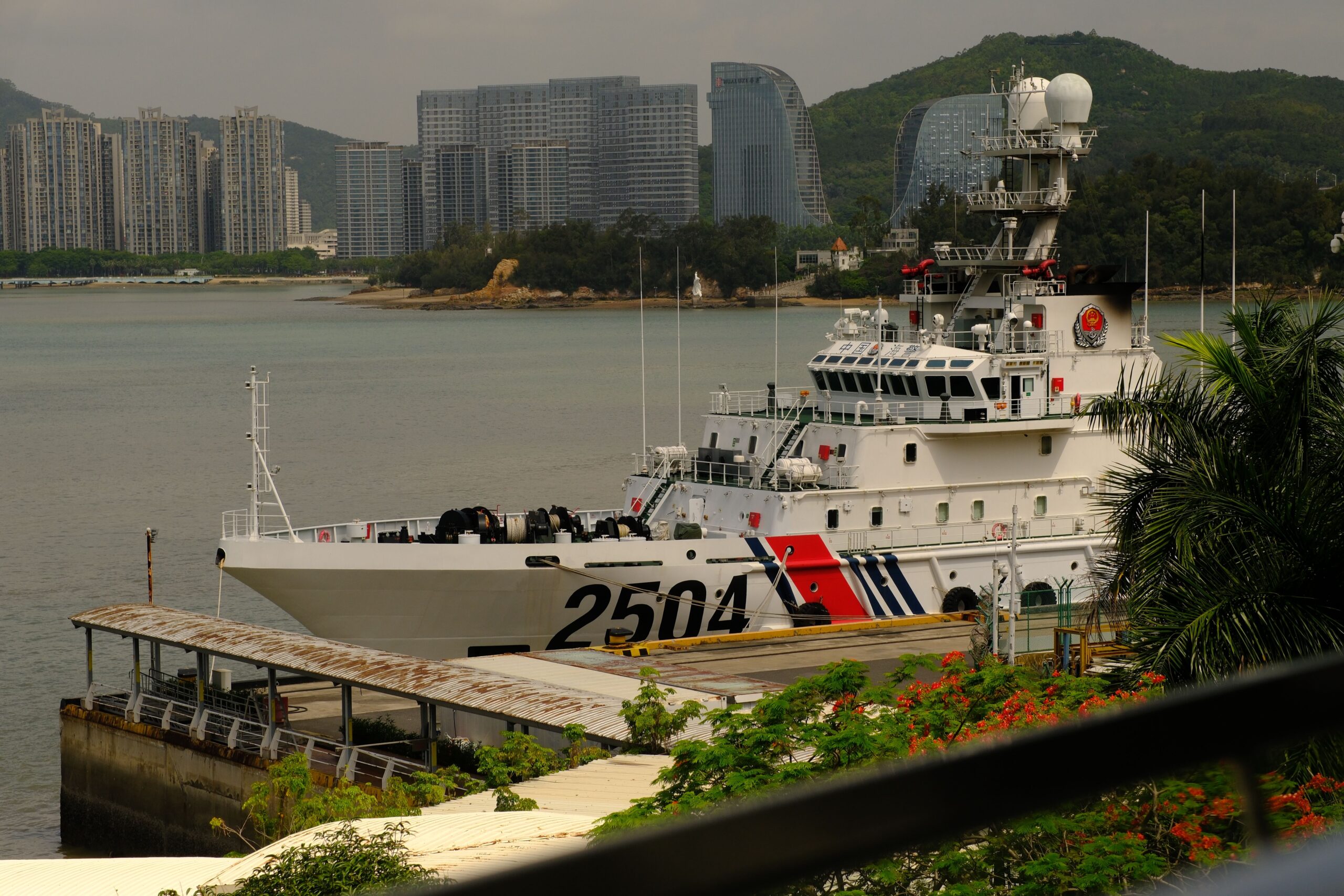
Amid these high-level strategic concerns, tangible diplomatic progress has been made regarding the South China Sea. Philippine Foreign Secretary Theresa Lazaro announced following a series of ASEAN ministerial meetings that roughly 80 percent of the draft code of conduct is complete. This development marks a significant step in a long-standing negotiation process. However, a Chinese expert noted that meeting the year-end deadline depends on Beijing and regional claimants finding common ground on key concessions. The draft statement’s emphasis on upholding international law and the right of transit passage in straits used for international navigation underscores the delicate balance ASEAN seeks to maintain between its diverse members, many of whom are aligned with either the United States or China.
The internal dynamics of ASEAN remain a challenge. The bloc is a diverse mix of democracies and authoritarian states, and it has historically been known more for photo-ops projecting unity than for effectively resolving regional conflicts. Marcos acknowledged this reality in his opening remarks, stating that the commitment to unity matters even more as the “waters around us turn on shifting tides” due to geopolitical tensions, economic uncertainty, and transnational threats. Despite the diversity, the leaders have reaffirmed their shared commitment to a rules-based order, a stance that contrasts with the aggressive territorial claims and military posturing that have defined the South China Sea dispute for decades.
Trump’s schedule in Manila includes participation in the Quadrilateral Security Dialogue (Quad) meeting with Japan, Australia, and India, a grouping largely viewed as a counterweight to China. He is also expected to hold a special cocktail summit with ASEAN leaders. On Wednesday, he will meet privately with Marcos, who will host a state luncheon at the presidential palace. The two are expected to renew their commitment to the decades-old treaty alliance between the U.S. and the Philippines. This bilateral meeting is crucial for the U.S. strategy in the Indo-Pacific, which relies heavily on its alliance network to check Chinese influence.
The protests outside the venue, condemning U.S. policies and the cost of living, highlight the gap between high-level diplomatic maneuvering and the daily realities faced by citizens in the region. The “Pax Silica” initiative, a U.S.-led effort to secure AI supply chains, has drawn criticism, suggesting that geopolitical alignments have direct economic consequences for local populations. As the summit concludes, the handover of the rotating presidency to Singapore signals a transition in regional leadership, but the core issues—conflict resolution, economic security, and the balance of power between Washington and Beijing—remain unresolved.
The next major development will be Trump’s flight to Shenzhen for the APEC summit, where he will face Xi Jinping. The outcome of that meeting will likely define the tone of U.S.-China relations for the remainder of the year, with implications for the entire ASEAN region. For now, the leaders in Manila have set the stage by asserting their agency in a fragmented global landscape, but the durability of their commitments will be tested by the actions of the great powers in the days to come.