The announcement, made on Friday, marks the fourth round of negotiations brokered by the current U.S. administration, following the most recent session in Geneva in February. U.S. presidential envoy Steve Witkoff secured this latest commitment after shuttling between the two capitals this week. A Kremlin spokesman indicated that the next round of talks is likely to be held in Abu Dhabi, the capital of the United Arab Emirates, around mid-November. Yet, beneath the diplomatic surface, the fundamental obstacles to ending the war remain starkly unresolved.
The core of the disagreement lies in territory and security. Russia continues to demand full control of four Ukrainian regions it annexed months after the start of its full-scale invasion in 2022: Donetsk, Luhansk, Zaporizhzhia, and Kherson, in addition to Crimea, which Moscow seized in 2014. Although Russia currently occupies approximately 20% of Ukraine, it has not captured all the territory within these regions over which it claims sovereignty. Moscow’s demands extend beyond borders; it requires Ukraine to withdraw forces from all four annexed regions, renounce its bid to join NATO, reduce the size of its military, and lift restrictions on the Russian language and a Moscow-affiliated branch of the Orthodox Church.
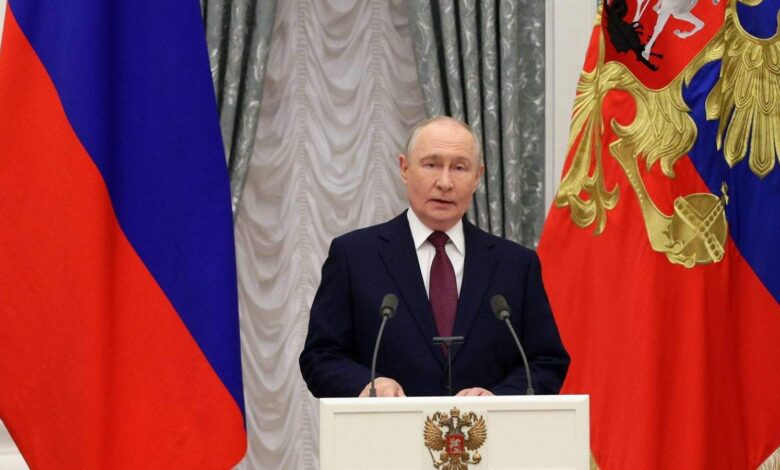
President Vladimir Putin, speaking on state television late Thursday, stated that Moscow remains “ready to negotiate and seek solutions to this difficult, complex situation.” However, he added a caveat that underscores the rigidity of his position: “But if some prefer a different path, so be it. In any case, all the objectives of the special military operation will be achieved.”
Ukraine’s position is anchored in the necessity of security guarantees. President Volodymyr Zelenskyy has argued that ceding land would leave the country more vulnerable to future attacks. Kyiv insists that any agreement must include ironclad guarantees against another invasion. For months, Zelenskyy has publicly advocated for peace talks, reaffirming support for a ceasefire that would freeze front-line positions, followed by negotiations on the conditions for ending the war. Moscow, conversely, has rejected a break in hostilities until a comprehensive agreement on its specific terms is reached.
The diplomatic landscape is further complicated by shifting alliances and internal pressures. U.S. President Donald Trump’s relationship with Zelenskyy has strained, with Trump accusing the Ukrainian leader of being an obstacle to peace. This tension is evident in recent U.S. policy shifts, including a deal for Russia to supply the U.S. with diesel and the rejection of new Russia sanctions. These moves have bolstered Moscow’s position. Conversely, Kyiv has faced disruptions in satellite support for its drones after rejecting a U.S. call to halt strikes on Russian oil infrastructure. Ukrainian leaders fear these developments will embolden Putin, reducing his incentive to compromise at the negotiating table.
During his visit to St. Petersburg, Witkoff secured the release of an American who had been jailed for more than four years on charges of fighting as a mercenary in Ukraine. The envoy described Putin as a “humanitarian” during their meeting, a remark that met with consternation in Ukraine. While Witkoff’s shuttle diplomacy has yielded the commitment to talk, the substantive gap between the two sides remains wide.
The debate over security guarantees is central to the impasse. Ukraine believes that guarantees backed by Western allies are essential to sustain a peace deal. Ideally, Kyiv seeks NATO membership, an option Putin has rejected. With the U.S. administration currently ruling out NATO membership for Ukraine, attention has turned to alternative frameworks. Zelenskyy has described the need for direct guarantees from the United States in an “Article 5-like format,” referencing the NATO charter’s mutual-defense clause which establishes that an attack on one member is an attack on all. Other options being discussed include backing from the European-led 30-country alliance known as the Coalition of the Willing.
“All of these guarantees are possible on the basis of a strong Ukrainian army — in terms of both numbers and quality — with clear funding, and not a small amount. Our colleagues in Europe and America know this,” Zelenskyy told reporters Thursday at a briefing. He emphasized that Ukraine expects to rely heavily on its own army as the main security guarantee, supported by financial backing from allies.
Despite the diplomatic signaling, the battlefield reality of daily long-range strikes continues. Within hours of Putin saying he agreed “in principle” to restart talks, Russia launched a deadly barrage of ballistic missiles and drones on Kyiv. On the same day, Moscow claimed it had destroyed more than 800 Ukrainian drones heading toward its cities. Zelenskyy argued that only increased Western pressure on Moscow would change its calculations about future peace talks.
“It is important to keep trying to find the right solutions to end this war,” Zelenskyy wrote in an online post. “But when Russia responds to negotiations with ballistic missiles, real pressure on Russia is needed to bring about different steps — steps toward ending the killing.”
As the parties prepare for the potential November session in Abu Dhabi, the focus returns to the immediate humanitarian corridor in Kherson. The success of this local ceasefire will be the first test of whether the broader diplomatic momentum can translate into tangible relief for stranded communities. However, without a breakthrough on the fundamental questions of territorial sovereignty and security architecture, the talks risk becoming another cycle of procedural engagement without substantive resolution. The next critical data point to watch is whether the mid-November talks in Abu Dhabi produce any movement on the definition of security guarantees, or if the disparity between Moscow’s annexation demands and Kyiv’s sovereignty requirements continues to dictate the terms of the standoff.