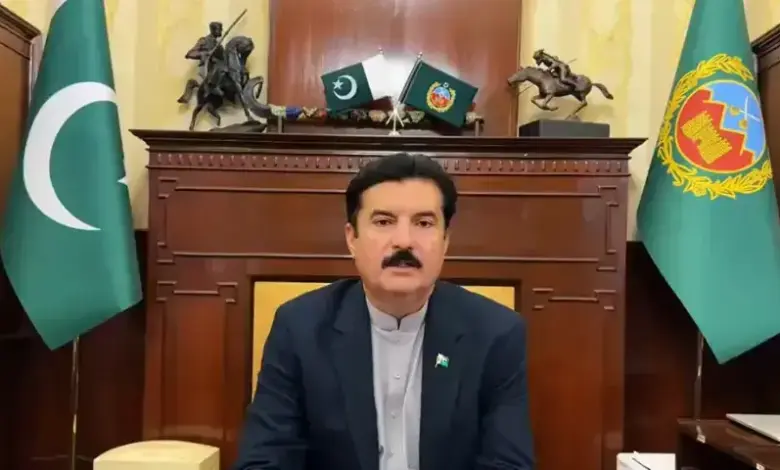
Khyber Pakhtunkhwa Governor Faisal Karim Kundi stated on Wednesday that if the Prime Minister and President deemed it necessary to impose emergency or governor’s rule to “save the province,” it would be enforced. Speaking on a Geo News programme, Kundi argued that past instances, such as the imposition of rule in Balochistan by the Pakistan Peoples Party (PPP) to restore law and order, validate the measure. He emphasized, “We have to save the province, we have to establish peace in the province,” when pressed on the sustainability of such an action.
The federal government’s consideration of these measures is driven by security concerns and allegations that the PTI-led provincial government is facilitating terrorism rather than cooperating on counter-terrorism operations. Federal ministers have repeatedly cited the deteriorating security situation in KP as a primary reason for reviewing the province’s political status. The PTI’s march, which is being led by Chief Minister Sohail Afridi, has further exacerbated tensions between the provincial and federal governments.
The march was originally announced on September 27 but commenced on October 4 from the city of Lakki Marwat. By late Sunday, the procession had reached Karak district, approximately 256 kilometres from Islamabad. The march is a demand for the release of PTI founder and former Prime Minister Imran Khan, who is currently in jail. The federal government has characterized the march as a potential security threat, with Interior Minister Mohsin Naqvi calling on Governor Kundi to discuss the political and security landscape amid speculations of imminent governor’s rule.
On Sunday, Kundi met with Interior Minister Naqvi in Peshawar to address the growing unrest. Also present at the meeting were KP Inspector General of Police Zulfikar Hameed and the KP Chief Secretary. In a statement, the Governor’s House reported that the two leaders expressed concern that the march could facilitate terrorists in crossing security checkpoints. The statement accused the KP government of adopting an “enmity” toward the people and the province during negotiations over counter-terrorism operations. It further stated that if the President and Prime Minister decided to impose rule to protect the province from “terrorism and destruction,” the Governor’s House would fulfill its constitutional role.
On social media, Governor Kundi reiterated that the security of the people remains the foremost priority. He stated, “Khyber Pakhtunkhwa has sacrificed enough, and every institution must work together to protect our people and defeat terrorism.” Kundi also warned participants in the march, noting that if an emergency were imposed, he alone would be sufficient to address the situation. He claimed that PTI workers were currently “hiding and getting themselves arrested.”
The PTI, the main opposition party in the Centre, maintains that the march is a peaceful democratic right to demand the release of its founder. However, federal authorities view the movement as a destabilizing force that complicates security operations in the region. The deadlock between the PTI and Islamabad has left the province on the brink of a constitutional crisis, with the federal government holding the power to dismiss the provincial administration if it determines that the current government is unable to maintain law and order or protect national security interests.
As the march continues toward Islamabad, the political standoff intensifies. The federal government’s signals suggest that it is prepared to override provincial autonomy to address what it describes as a national security threat. The next steps will likely involve further deliberations between the President and Prime Minister, who hold the constitutional authority to declare an emergency or impose governor’s rule in a province.