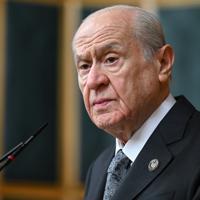
Under Türkiye’s current constitution, the presidency is limited to two terms. Erdoğan was first elected president in 2014 under the former parliamentary system and was subsequently reelected in 2018 and 2023 after the country transitioned to an executive presidential system. Election authorities previously allowed Erdoğan to run in 2023 on the basis that his initial term under the previous system did not count toward the limit under the new constitutional framework. Consequently, without an intervening early election, Erdoğan would not be eligible to seek another term in 2028. Bahçeli’s proposal effectively seeks to reset this eligibility period by triggering a new electoral cycle before the scheduled 2028 vote.
The MHP leader defended the proposal on economic and stability grounds, stating that holding elections again within 2028 would not undermine stability or predictability. “Unnecessary debates will end, uncertainty will disappear and economic confidence will increase,” Bahçeli said. He characterized the potential third term as a period of significant development for the country, the region, and the world, arguing that the “resolve and experience” required to manage such a difficult process resides within the institutional structure of the ruling People’s Alliance.
This stance aligns with recent shifts in the rhetoric of Erdoğan’s allies, who have increasingly raised the possibility of the president seeking another term. Although Erdoğan himself had previously described the 2024 local elections as his “final election,” the political calculus within the ruling coalition appears to be evolving. Bahçeli summarized the MHP’s vision for the next five-year period with the slogan: “Erdoğan in the executive, MHP in the legislature, the People’s Alliance in Türkiye and the Turkish century in the world.”
The proposal highlights the intricate relationship between the ruling Justice and Development Party (AKP) and its junior coalition partner, the MHP. By positioning the early election as a means to ensure continuity and stability, Bahçeli is leveraging the MHP’s parliamentary influence to shape the future of the executive branch. The political process involved requires a parliamentary decision to call for early elections, a step that must be weighed against constitutional constraints and the potential for opposition backlash. While the MHP leader asserts that the legal basis exists, the actual implementation would depend on the willingness of the parliament to invoke such mechanisms and the broader political consensus required to legitimize the move.
The next scheduled presidential and parliamentary elections in Türkiye are set for 2028. Any discussion of an earlier vote remains at the proposal stage, contingent on further political negotiations and potential legal interpretations. The political landscape in Türkiye is currently focused on managing economic pressures and regional security challenges, with the ruling coalition emphasizing the need for experienced leadership to navigate these complexities. The opposition parties, however, have yet to respond publicly to Bahçeli’s specific legal arguments regarding term limits and the necessity of an early electoral reset.