
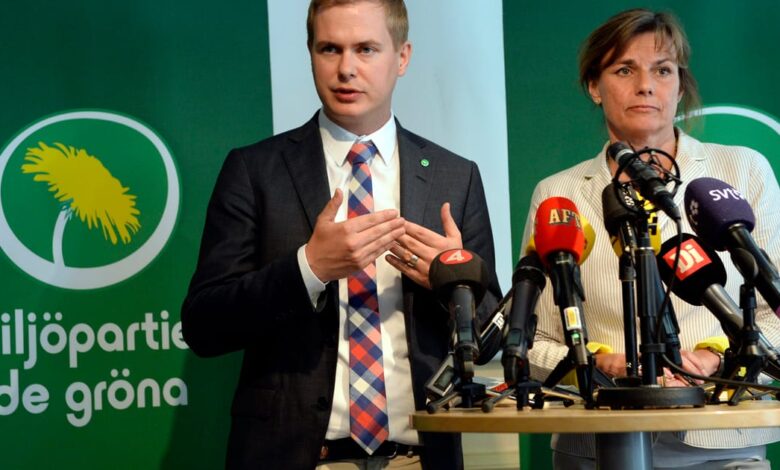
The decline in support is stark when measured against the party’s recent history. In 2014, the Greens secured 7 percent of the vote, a result that facilitated their entry into the coalition with the Social Democrats. Today, that support has halved. Party Secretary Amanda Lind, who is tasked with coordinating a political comeback, acknowledges the severity of the situation. She argues that the party must effectively communicate its daily efforts to address climate change to a skeptical electorate. “We are a party based on ideas and radical politics and the voters have to understand what we fight for every day in government,” Lind stated. “There is a need for green voices to raise these issues in the debate.”
Institutional Challenges for a Junior Partner
The Swedish Greens’ struggle illustrates the broader risks associated with small parties entering coalition governments. As a junior partner, the party has faced criticism for a perceived lack of impact on key government policies, particularly in the areas of energy, transport, and immigration. Analysts suggest that the party has faltered in two primary areas. First, high-profile missteps by individual ministers have created a public impression of a party struggling to adapt to the realities of governing. This impression was cemented last year when two Green ministers were forced to resign.

Niklas Bolin, a political scientist at Mid Sweden University, describes the challenge as serious, noting that the party must now demonstrate tangible political results to justify its place in the coalition. The current polling figures suggest that the electorate has not yet credited the party with sufficient policy successes to offset the negative perception created by these internal governance issues.
Sweden is now a rare case of a Green Party holding ministerial positions in Europe, alongside coalitions in Greece, Latvia, and Luxembourg. This distinction makes the Swedish experiment a significant test case for the broader viability of Green politics in executive power. The party’s trajectory is being watched closely by environmentalists across the continent who believe climate change is the most significant challenge facing humanity. However, recent electoral results for Green parties in Europe have been mixed, complicating the narrative of a unified green surge.
A European Context of Mixed Fortunes
While the Dutch Green party emerged as a stand-out success story in March’s elections, other national movements have faced headwinds. In Germany, once a stronghold for Green politics, the party’s star has faded, although it has retained its grip on the state government of Baden-Württemberg. In France, the Greens struggled to make a significant impact during this month’s presidential campaign. These varying outcomes highlight the difficulty of translating environmental urgency into consistent electoral support across different national political landscapes.

For the Swedish Miljöpartiet, the immediate focus is on the upcoming conference where strong messages about climate action and governmental work are expected. The party aims to force environmental questions back up the political agenda, arguing that the current debate lacks sufficient emphasis on ecological crisis. Yet, the path to reversing the polling collapse remains uncertain. The party must bridge the gap between its radical ideological foundations and the pragmatic demands of coalition governance, all while competing for the attention of voters who may be disillusioned by previous missteps.
The next few months will be critical. If the Greens cannot regain public confidence before the election in the second half of next year, they risk disappearing from the Swedish parliament entirely. Such an outcome would not only be a setback for the party but would also signal a significant shift in the European political map, potentially weakening the institutional presence of environmentalist parties in national governments.