
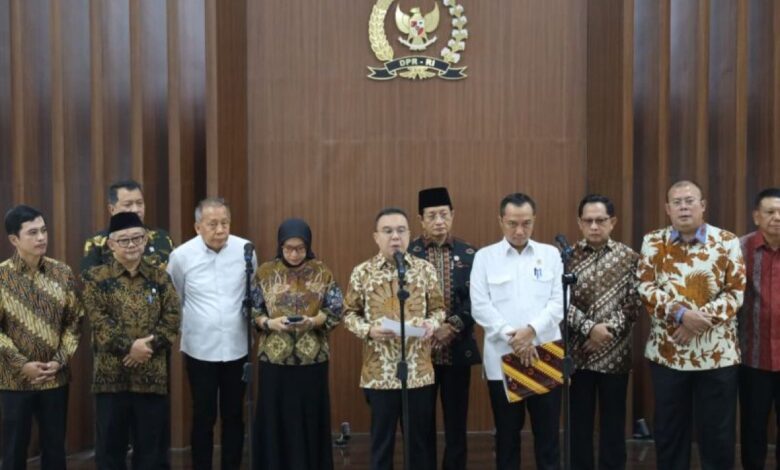
The agreement signals a concerted effort to regularize the employment status of a substantial portion of the public workforce. For years, PPPK workers have occupied a distinct category within the Indonesian bureaucracy, hired through contracts rather than the traditional permanent civil servant (PNS) status. While they perform similar duties to permanent staff, their contractual nature has often left them vulnerable to job insecurity and limited career progression. The new framework seeks to bridge this gap, offering these workers a more stable and recognized position within the state apparatus.
Politically, this move reflects a broader strategy to strengthen the administrative capacity of the government while addressing social expectations for fairer labor treatment in the public sector. The DPR RI, as Indonesia’s legislative body, plays a crucial role in shaping labor laws and public sector regulations. By aligning with the government on this issue, the legislature is responding to pressures from public service unions and political constituencies that have long advocated for the rights of contract workers. The decision underscores the intertwining of labor policy with political accountability, as the government seeks to demonstrate its commitment to social welfare and institutional stability.
The mechanism of this change involves a reclassification of roles rather than a simple administrative update. In Indonesia’s civil service system, the distinction between PNS and PPPK is fundamental. PNS positions are typically reserved for candidates who pass a rigorous national examination and are granted lifetime employment subject to performance reviews. PPPK roles, conversely, are filled through a separate recruitment process based on specific contract lengths. The upgrade to full-time status likely implies a transition to a more secure tenure, potentially involving the conversion of contracts into permanent appointments or a new category of long-term employment that offers comparable benefits to PNS holders.

This development is not occurring in isolation but is part of a larger initiative to overhaul Indonesia’s civil servant recruitment and retention strategies. Reports indicate that the government is simultaneously launching a massive recruitment drive for civil servants. This dual approach—upgrading existing contract workers while expanding the overall workforce—suggests a recognition of the growing demand for public services and the need for a larger, more stable administrative base. The recruitment drive aims to fill vacancies in various sectors, from education and health to infrastructure and public administration, ensuring that the state can meet the needs of its population.
The implications of these changes extend beyond individual employment contracts to the broader governance structure. A more stable and permanent workforce is generally associated with higher institutional memory, continuity in policy implementation, and reduced turnover costs. For the public, this could translate into more consistent and reliable government services. However, the scale of the upgrade and recruitment raise questions about fiscal sustainability. Converting a large number of contract workers to full-time status, along with hiring new civil servants, will increase the state’s long-term expenditure commitments. The government and DPR RI will need to balance these labor costs with other budgetary priorities, including infrastructure development and social programs.
Opposing positions to this expansion are not prominently featured in the immediate reports, but historical context suggests that concerns over bureaucratic bloat and fiscal discipline have been recurring themes in Indonesian political discourse. Critics of large-scale civil service expansion often argue that it can lead to inefficiency, rigid hierarchies, and a strain on the national budget. Conversely, supporters argue that the current reliance on short-term contracts creates a two-tier system within the civil service, where contract workers receive lower wages and benefits despite performing similar tasks. The agreement to upgrade PPPK workers addresses this disparity, promoting a more equitable internal labor market.
The process of implementing this upgrade will require detailed regulatory adjustments. The Ministry of Administrative and Bureaucratic Reform (MAN) and the Ministry of Finance will likely play key roles in drafting the technical guidelines for the transition. These guidelines will determine the criteria for eligibility, the process for evaluation, and the timeline for the conversion. Given the size of Indonesia’s civil service, the logistical complexity of this transition is substantial. It will involve processing millions of records, conducting performance assessments, and updating legal frameworks to reflect the new employment status.

Uncertainty remains regarding the exact scale of the upgrade and the specific benefits that will accompany the full-time status. While the agreement to upgrade the status is clear, the details of how this will affect salaries, pension contributions, and other entitlements are yet to be fully detailed in the initial reports. The government has indicated that the move is part of a comprehensive reform package, but the pace of implementation may vary across different ministries and regional governments. Regional disparities in administrative capacity could also affect how quickly and effectively the upgrade is executed on the ground.
As the Indonesian government prepares to launch the massive recruitment campaign alongside the upgrade of existing workers, the focus will shift to the practicalities of integration. The success of this policy will depend on the government’s ability to manage the transition smoothly, ensuring that the new full-time employees are properly onboarded and that the fiscal impact is managed responsibly. The political significance of this move lies in its potential to redefine the relationship between the state and its workforce, moving from a model of temporary, flexible labor to one of permanent, committed public service. This shift has the potential to enhance the professionalism and stability of Indonesia’s bureaucracy, provided that it is implemented with transparency and fiscal prudence.
The next phase of this political development will involve the passage of specific implementing regulations and the announcement of detailed recruitment quotas. The DPR RI will continue to monitor the process, ensuring that the agreement is honored and that the rights of the upgraded workers are protected. For the millions of PPPK workers across Indonesia, this agreement represents a tangible step toward greater security and recognition within the public sector, marking a pivotal moment in the evolution of Indonesia’s civil service.





One Comment