
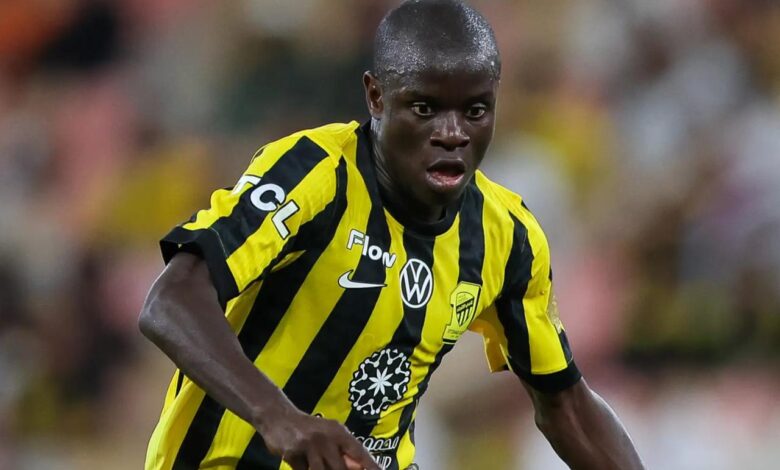
Kante, a 34-year-old international widely regarded as one of the premier midfielders of his generation, had been Fenerbahce’s primary acquisition target for the mid-season window. The player had given his consent to join the Istanbul-based side, yet the negotiation with his current club, Saudi Arabian champions Al-Ittihad, dragged on for nearly a month. Reports indicated that Al-Ittihad applied pressure on Kante to extend his contract, using the delay as leverage to prolong discussions and potentially secure better terms or additional time for alternative arrangements.
The situation reached a tentative resolution earlier this week when both clubs agreed to a swap deal. Under the terms, Fenerbahce’s 28-year-old Moroccan striker Youssef En-Nesyri was to move to Al-Ittihad, accompanied by an additional transfer fee, in exchange for Kante’s release. However, the finalization of the deal was jeopardized by procedural failures within the Saudi side. Al-Ittihad was slow to enter Kante’s details into FIFA’s Transfer Matching System (TMS), acting only at the last minute before the window closed in Saudi Arabia. Although both clubs secured an extension from FIFA and the Saudi Football Federation to allow for these delays, the Saudi club subsequently submitted incorrect data, causing the transfer to technically collapse.
Following the breakdown, Fenerbahce issued a statement via social media confirming the reports and placing the blame squarely on Al-Ittihad. “Despite the efforts, the opposing club failed to complete the process without providing any justification,” the club stated. The announcement triggered significant backlash among Fenerbahce supporters, who took to social media to express frustration over what they perceived as deliberate obstruction. Accusations of bad faith against the Saudi outfit became prevalent, with fans demanding accountability for the failure to honor the agreed-upon swap.
The incident also attracted widespread attention in European media, particularly within France, where the blocked move was characterized as a breakdown resulting from procedural manipulation. It was against this backdrop of public scrutiny and diplomatic tension that Erdogan stepped in. The President was in Riyadh on Tuesday for a meeting with Crown Prince Mohammed bin Salman, who heads the Public Investment Fund (PIF) that owns Al-Ittihad. During this visit, Erdogan mediated between the parties, facilitating the final steps required to complete the transfer.
“I express my gratitude to our President Recep Tayyip Erdogan, on behalf of myself and our club, for the critical support he provided in ensuring a positive outcome for a process that will benefit both Fenerbahce and Turkish football,” Saran said.
The intervention highlights the increasingly complex landscape of high-profile international transfers, where financial interests, national diplomatic relations, and regulatory frameworks intersect. For Kante, the move represents a significant chapter in his career, bringing him to a club with a passionate fanbase and a prominent place in European football. For Fenerbahce, securing the signing of a player of Kante’s caliber strengthens their midfield considerably, addressing a key area of need for the remainder of the season.
The resolution of the Kante saga also underscores the importance of the TMS in modern football administration. The initial collapse of the deal due to data errors and delayed submissions demonstrates how technical compliance can override athletic and financial agreements. The involvement of a head of state in resolving a club-level transfer dispute is unusual but reflects the high stakes involved when major global players and state-owned entities are part of the football ecosystem. With the paperwork now finalized, Kante is cleared to join his new teammates, bringing a definitive end to the month-long uncertainty that surrounded his future.
The next competitive challenge for Kante and Fenerbahce will be as they integrate the new signing into their squad for the upcoming fixtures. The successful conclusion of the transfer allows the club to focus on on-field performance, with the midfield reinforcement expected to provide stability and quality in critical matches. The diplomatic resolution sets a precedent for how similar disputes between clubs in different jurisdictions may be handled in the future, particularly when state-owned entities are involved.