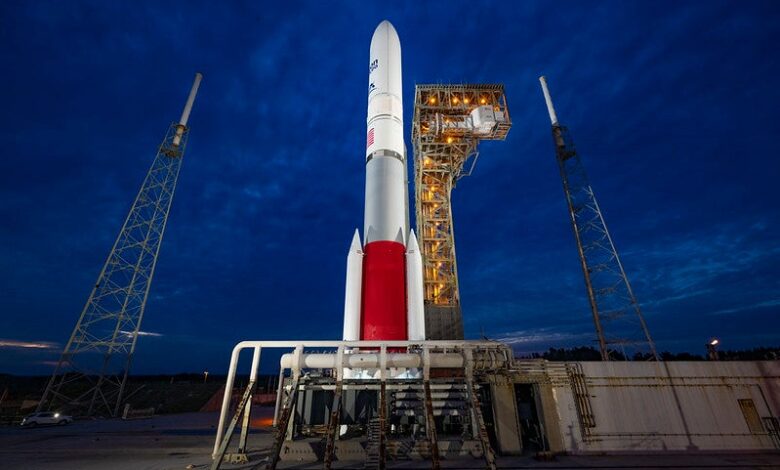
The mission was a return-to-flight test for the Vulcan rocket, which had been out of service since February following an anomaly with Northrop Grumman solid rocket motors. The launch had already been delayed twice: first from Friday due to a power interruption in the air liquide gaseous nitrogen plant, and then from Saturday due to a network communication issue between ground equipment and the launch vehicle. On Sunday, controllers called a hold at T-minus 20 seconds due to an unknown technical issue, which was resolved before the launch window closed.
Early flight telemetry indicated the mission was proceeding as planned. The solid rocket boosters, which had caused issues on previous tests, jettisoned normally approximately one and a half minutes into the flight. The booster engine cut off successfully, and the upper stage engine ignited around five minutes into the mission. The payload fairing was also jettisoned as scheduled. The launch broadcast ended before the anomaly was officially announced, but ULA later confirmed the failure. The anomaly occurred during the burn of the hydrogen-powered Centaur upper stage engines, which were scheduled to fire for a planned 12.25 minutes. The next critical milestone, Centaur first main engine cut off, was expected at around 17 minutes into the mission, meaning the failure occurred before this point.
ULA has not yet released specific technical data regarding the cause of the anomaly. In a statement, the company noted, “Every flight generates data, and every flight teaches us something. Since the anomaly just occurred, we don’t have any specific data yet to understand what occurred today.” ULA committed to working closely with Amazon and other appropriate organizations to determine the cause and corrective actions. The company emphasized its commitment to transparency and stated it aims to return to flight as quickly as possible.
The failure has immediate implications for Amazon’s Leo internet network, which relies on a regular launch cadence. Amazon stated, “we believe [that ULA will] learn from this mission and deliver on their long-term plans.” Additionally, Delta Air Lines, which has selected Amazon Leo for its next-generation inflight Wi-Fi system, may face delays. Delta’s rollout is not scheduled until 2028, but this incident, combined with a separate rocket failure earlier this year, raises questions about the timeline for the airline’s connectivity upgrade. ULA’s Atlas V rocket has been historically reliable, but the Vulcan program, which is more powerful and complex, is now under review by engineers and may face a grounding pending the investigation.