
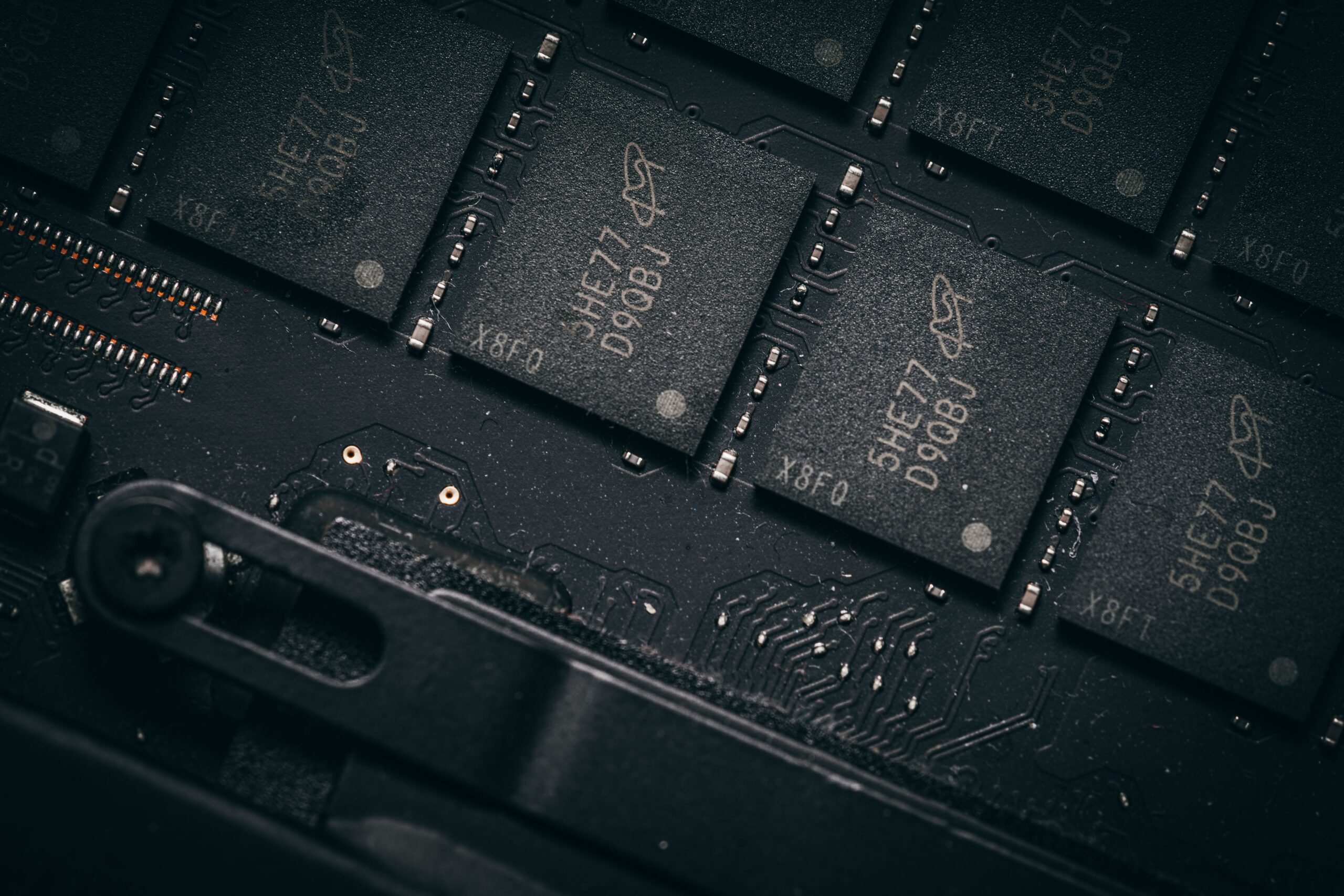
The financial strength of ASML’s balance sheet is underpinned by a dual demand engine from both logic foundries and memory manufacturers. Logic producers require extreme ultraviolet (EUV) tools to advance leading-edge nodes, while memory makers are scaling production of high-bandwidth memory and dynamic random-access memory (DRAM) specifically for AI servers. Management guided full-year 2026 total net sales to between EUR 43 billion and EUR 45 billion, with gross margins expected to remain between 54% and 56%. This outlook reflects the company’s significant pricing and allocation power, as its equipment remains scarce and central to customer roadmaps. However, this concentration also exposes the business to geopolitical policy decisions, particularly regarding export controls on China.
As ASML navigates these commercial headwinds, a new report has intensified scrutiny on the effectiveness of current export restrictions. A study published in late September by the Centre for Technology & Statecraft (CTS), a Washington-based research group, revealed that Chinese semiconductor manufacturers have amassed an estimated 343 immersion deep ultraviolet (DUV) lithography systems by early 2026. These systems, worth billions of dollars, represent a significant stockpile that challenges the efficacy of current regulatory frameworks.
The DUV Loophole
The report, co-authored by former US export control official Nicholas Brown and Saif Khan, a former White House and Commerce Department technology policy adviser, argues that while DUV tools are less advanced than EUV systems, they can be adapted to manufacture 7-nanometer logic chips and advanced memory for AI processors. This technical capability means that the stockpiled equipment could support advanced chip production for years, effectively neutralizing the impact of export bans on new shipments. The findings have prompted calls from former US officials and think tanks for Washington and its allies to impose a total blockade on further exports of immersion DUV tools to China.
This technical debate has already sparked diplomatic friction. The Dutch government has objected to proposed US legislation that would restrict ASML’s China exports, highlighting the tension between national security objectives and the commercial viability of a key Dutch industrial asset. For ASML, the issue is not merely whether China remains a large revenue contributor in any single quarter, but whether restrictions expand in ways that affect DUV tool shipments, service activity, or the economics of future upgrades.
Investors and analysts are now watching the quality of orders more closely than headline revenue. The key variables include whether EUV demand remains broad across both logic and memory sectors, and whether High-NA EUV adoption moves from early production milestones toward wider customer deployment. A higher contribution from service revenue would make earnings more resilient to cyclical fluctuations, but it would also raise the importance of export-rule clarity, as upgrades and field support can become part of the policy debate.
The strategic landscape for ASML hinges on two factors moving in tandem: sustained AI-driven semiconductor capital expenditure and the company’s ability to protect margins while allocating limited lithography supply across customers and regions. If non-China AI and advanced-node demand fully absorbs constrained ASML capacity, export controls may represent a manageable shift in revenue mix. Conversely, if China restrictions tighten while memory or foundry demand softens, the revenue and margin cushion would narrow significantly.
As the company continues to invest in technology development and maintain capital return programs such as share repurchases and dividends, the next critical test will be the durability of the current AI infrastructure buildout. The potential for a gap between capacity investments and realized revenue remains a risk, but for now, ASML’s financial results indicate that the demand for advanced lithography remains robust, even as the geopolitical boundaries of that market continue to shift.