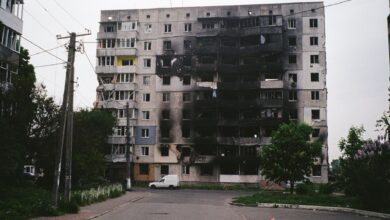

The most significant targets of the night were two defense industrial facilities located in the Tula and Voronezh regions. Zelenskyy described these strikes as the application of “sanctions” against the Russian war machine, implying a strategic intent to disrupt the production or maintenance of military hardware essential to Russia’s offensive operations. While specific details regarding the type of equipment manufactured at these sites were not disclosed, strikes on defense industries aim to degrade the adversary’s capacity to sustain prolonged combat operations by hitting the supply chain rather than just the front line.
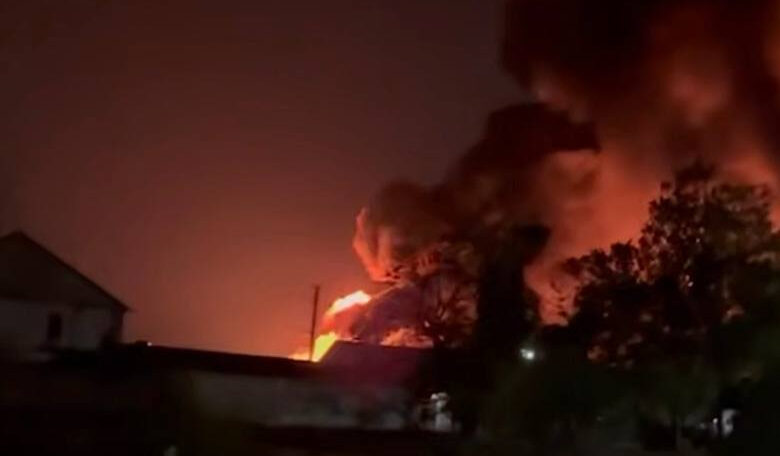
Simultaneously, units from Ukraine’s Security Service (SSU) carried out operations targeting oil infrastructure in Krasnodar Krai. Earlier that night, drones attacked the “Edelweiss-95” fuel depot in the region, triggering a large-scale fire. Attacks on fuel depots are a recurring element of Ukraine’s strategy to constrain the Russian military’s logistical reach, as fuel is a critical resource for armored vehicles, aviation, and long-range artillery.
The campaign extended to the Bryansk, Kaluga, and Oryol oblasts. In Bryansk Oblast, Ukrainian forces targeted Russian military units. Additionally, Russian authorities reported that a drone attack in the same region caused the partial collapse of a section of a railway bridge, resulting in the derailment of several cargo train wagons. Railways are vital arteries for the movement of troops and materiel in modern warfare, and damage to such infrastructure can create significant bottlenecks in Russian logistics.
In the Kaluga and Oryol oblasts, strikes were directed at facilities that Zelenskyy stated are used by Russia to launch drone attacks on Ukrainian territory. By targeting these launch sites or production hubs, Ukraine seeks to reduce the volume of long-range drone strikes it faces, addressing the root cause of the threats rather than solely relying on air defense interception.
Zelenskyy also announced that a target was struck in the Black Sea, though he did not specify the nature of the object hit. Maritime operations in the Black Sea have been a focal point of the conflict, with both sides engaging in naval skirmishes and drone attacks on ships and port infrastructure to control sea lanes and project power.
The operations reflect a broader tactical and operational shift in the conflict, where Ukraine is increasingly utilizing long-range drones and missiles to strike targets hundreds of kilometers behind the front line. This approach aims to impose a strategic cost on Russia by disrupting its industrial base, energy supply, and logistical network. The simultaneous nature of the attacks across six different regions suggests a coordinated effort to overwhelm Russian air defense systems and force the diversion of resources to protect rear-area assets.
While Ukraine has confirmed the launches and the general nature of the targets, independent verification of the extent of damage to the defense plants and the fuel depot is currently limited. Russian authorities have confirmed the fire at the Krasnodar fuel depot and the railway damage in Bryansk, but have not released detailed assessments of the impact on defense manufacturing in Tula and Voronezh. The effectiveness of these strikes will ultimately depend on the degree to which they disrupt production schedules and supply lines, a factor that remains under assessment.
These strikes underline the persistent vulnerability of Russian rear-area infrastructure despite extensive air defense deployments. As Ukraine continues to expand its long-range strike capabilities, the pressure on Russian industrial and logistical hubs is likely to intensify, complicating Moscow’s efforts to sustain its military operations and secure its internal energy and transport networks.