
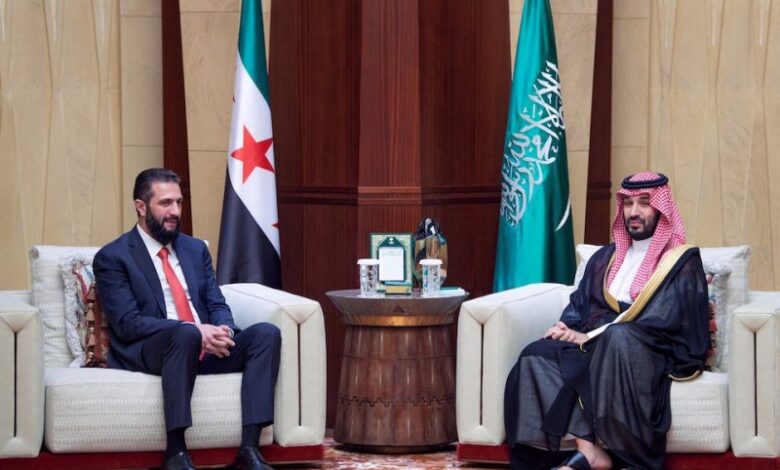
The deliberations come as Saudi Arabia seeks international support to counter a renewed wave of attacks. According to a US official, Riyadh has specifically requested that Syria deploy forces to combat the Houthis. The diplomatic push follows a visit by Syrian President Ahmed al-Sharaa to Riyadh on Tuesday, where he met with Saudi Crown Prince Mohammed bin Salman. The two leaders discussed several topics, including the prospect of Syrian military involvement in the Yemen conflict.
Despite the ongoing talks, the Syrian government has indicated that its primary focus remains on domestic stability and reconstruction after 14 years of civil war. A Syrian diplomat stated that while Damascus stands firmly with Saudi Arabia in the face of Houthi aggression, the government’s main priority is national recovery. The diplomat emphasized that any military cooperation or exchange of expertise would be conducted exclusively through official channels and within the framework of existing bilateral agreements governing relations between the two countries.
“Should Saudi Arabia request any military cooperation or exchange of expertise, this would take place exclusively through official channels and within the framework of the bilateral agreements governing relations between our two brotherly countries,” the Syrian diplomat said.
The potential involvement of Syria marks a significant development in the regional security landscape. Saudi Arabia has sought aid from the United States, European nations, and other Middle Eastern states to bolster its defense against the Houthis, who have launched sustained missile and drone campaigns targeting key infrastructure, including the King Khalid airport in Riyadh. The Houthi movement, backed by Iran, has claimed responsibility for ballistic missile attacks on Saudi soil, prompting Riyadh to step up its counter-campaign in Yemen.
Analysts note that Syrian participation could shift the balance on the ground in Yemen, where Saudi-backed forces have been engaged in protracted fighting against Houthi-controlled areas. However, the extent of Syrian support remains uncertain, as Damascus has not formally committed to deploying troops or providing specific defensive assets. The Syrian military has historically been focused on internal security and rebuilding infrastructure, making any external deployment a complex logistical and political consideration.
The discussions highlight the evolving nature of regional alliances in the Middle East. Syria’s potential alignment with Saudi Arabia in the Yemen conflict could signal a broader diplomatic normalization and security cooperation between the two nations. This development occurs against a backdrop of shifting dynamics in the region, where various actors are navigating the complexities of the Yemen war and Iran’s influence.
The next expected step involves formal diplomatic exchanges to determine the specific scope and nature of any military cooperation. Until official agreements are reached and publicized, the extent of Syria’s role in the Yemen conflict remains under active consideration and subject to further diplomatic negotiation.