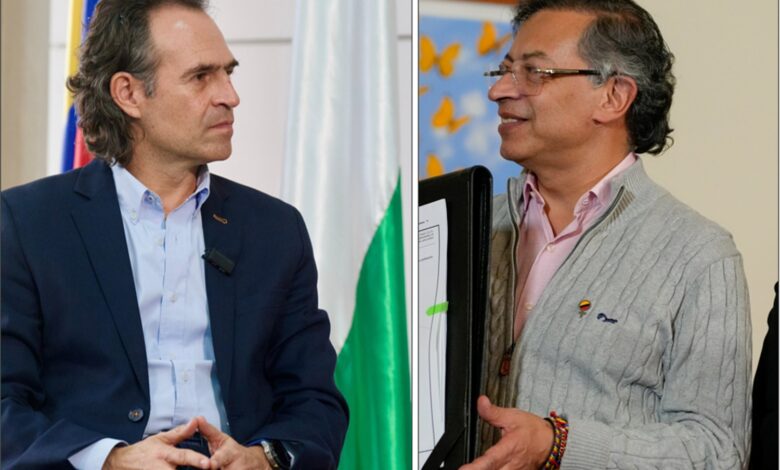
The clash between the mayor and the president is rooted in deep ideological opposition. Gutiérrez, who has governed Medellín for nearly two and a half years, recently took to the social media platform X to criticize Petro’s four-year tenure, accusing the president of failing to deliver on promises. “Petro, nearly four years of your misgovernment have gone by saying ‘I would do’ — and you did not do what you were supposed to,” Gutiérrez wrote. He contrasted this with his own administration’s achievements, citing a historic education budget of 8 trillion pesos (approximately US$2.15 billion) and the renovation of 421 public educational institutions. Gutiérrez also highlighted zero child deaths from acute malnutrition among children aged 0 to 5 under his watch, a metric he presented as evidence of effective local governance despite national challenges.
The tension was further exacerbated by comments from Petro’s presidential ally, Senator Iván Cepeda, who described Antioquia—the department where Medellín is located—as a “cradle of paramilitarism, drug trafficking, and state violence.” These remarks led the Antioquia departmental assembly to declare Cepeda persona non grata. In response, Gutiérrez expressed hope for a future president who “truly cares about Antioquia and the different regions of the country,” implicitly distancing his own political project from the national administration’s rhetoric.
Beyond the political rhetoric, Gutiérrez has moved to solidify Medellín’s standing on the international stage by strengthening ties with the United States. In a meeting with John McNamara, the interim U.S. ambassador to Colombia, the mayor discussed cooperation in security, trade, and job creation. Gutiérrez emphasized that the city has benefited from coordination with U.S. law enforcement agencies, including the FBI and Homeland Security Investigations, which have helped bring criminals responsible for child sexual exploitation to justice. “These joint efforts have given very good results,” Gutiérrez said, noting that several offenders are already serving life sentences abroad.
The diplomatic overture comes amid a crackdown on organized crime in the Parque Lleras entertainment district, a hub for tourism and nightlife. Gutiérrez stated that investigations have revealed the presence of criminal groups from Asia, the Balkans, Italy, Central America, and Mexico, operating alongside local outfits such as “La Terraza” and “Robledo.” Authorities have already extradited a suspect known as “El Mexicano” to Mexico and are advancing asset seizures and the closure of establishments linked to money laundering and human trafficking. “Medellín will not be a refuge for transnational mafias,” Gutiérrez declared, urging the concentration of efforts to dismantle these networks permanently.
Gutiérrez’s strategy appears to be a deliberate effort to align his municipal government with U.S. interests, a stance that contrasts sharply with the national government’s current posture. He noted that while the national government has weakened relations with Washington, the city-to-city relationship remains vital for security and commerce. This pragmatic approach resonates with voters in Antioquia, a region that has historically been a stronghold for center-right politics. Gutiérrez, who served as mayor from 2016 to 2019 and is now a pre-candidate for the presidency, has been associated with the right-wing coalition Equipo por Colombia, though he is also backed by the Liberal Party, which has signaled its support for his center-right platform.
The mayor’s administration has also faced internal scrutiny, with several public officials removed from their posts while under investigation for potential irregularities. Gutiérrez stated that where irregularities are verified, the information is immediately forwarded to the Attorney General’s Office. This commitment to accountability, paired with his aggressive anti-crime stance, forms the core of his political message. As the election date approaches, Gutiérrez’s ability to maintain high approval ratings—previously reaching up to 96% during his first term—and his clear differentiation from the national government’s policies will be critical factors in determining his electoral prospects.
The next formal step in this political dynamic will be the first round of voting on May 31. The outcome will determine whether Gutiérrez can advance as a presidential candidate and whether the center-right coalition he represents can challenge the incumbent administration’s influence in key regions like Antioquia. The coming weeks will likely see further intensification of the political battle, as both sides compete for voter confidence in a nation grappling with security challenges and economic uncertainty.