
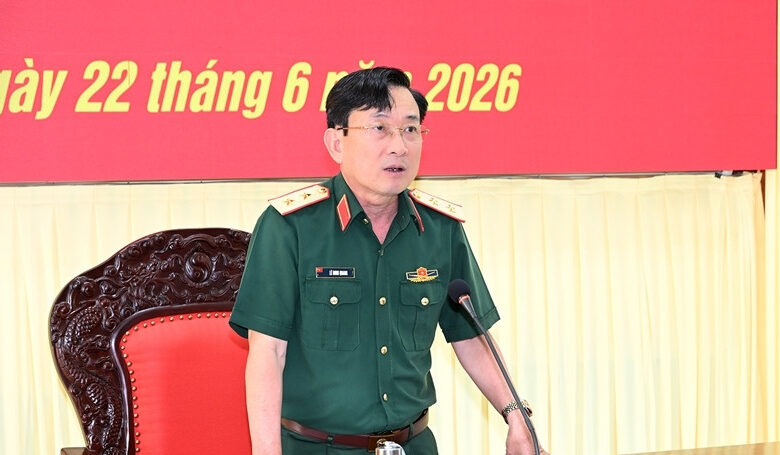
The decision to move a navy chief of staff into a land-based industrial role suggests a cross-service integration of resources and expertise. While the sources do not specify the operational rationale for this specific transfer, it aligns with a broader trend in modern militaries to centralize defense industry management under unified command structures. The General Department of Defense Industry is tasked with maintaining the technical integrity of the army’s equipment base, a function that has become increasingly critical as modern warfare demands complex maintenance and supply chains. By appointing Bach, the leadership ensures that the industrial sector is led by a senior commander with experience in large-scale operational planning and staff coordination.
Concurrently, the Prime Minister’s orders addressed the leadership of the General Department of Logistics and Technical Services, a department vital to the army’s sustained operational readiness. Major General Huynh Tan Hung, previously the Deputy Director of this department, has been appointed as its Political Commissar. In the Vietnamese military structure, the dual leadership model of a Director and a Political Commissar is standard, with the latter ensuring ideological alignment and political loyalty within the unit. The appointment of Hung to this role solidifies the department’s political command, while the operational leadership remains under the purview of the Director.
Significant attention was given to the tenure of Lieutenant General Tran Minh Duc, the current Director of the General Department of Logistics and Technical Services. The Prime Minister extended his active-duty service, allowing him to remain in his position through the end of November 2027. This extension is notable as it defers the natural turnover of a key logistical leader, potentially providing stability to the department during a period of potential modernization or increased operational demand. The logistics department is responsible for the supply, repair, and maintenance of all military equipment, making its leadership a critical factor in the army’s overall combat effectiveness. By retaining Duc, the command structure maintains institutional knowledge at the top of the logistical chain.
The personnel shuffle also impacted the regional military command structure. Colonel Le Van Son, formerly the Deputy Chief of Staff of Military Region 2, was appointed to the role of Deputy Commander and Chief of Staff of the same region. This internal promotion within a specific military region suggests a focus on strengthening the staff capabilities of that particular geographic area. Military Regions in Vietnam are responsible for defense and security within their designated territories, and the Chief of Staff is the key operational planner for the region. Elevating Son to this dual role consolidates his authority over both staff planning and command execution.
Further transfers occurred in the southern military zones. Major General Tran Minh Trong, previously the Deputy Political Commissar of Military Region 5, was transferred to become the Political Commissar of the 34th Army Corps. This move shifts a senior political officer from a regional command to a specific operational unit, potentially enhancing the political oversight of the corps’ troops. The 34th Army Corps is a major formation, and its political leadership plays a crucial role in maintaining morale and discipline among its personnel.
The decisions also included the extension of service terms for several other senior officers, a common practice in the Vietnamese military to retain experienced leaders until they reach the statutory retirement age. Major General Tran Van Xuan, Deputy Political Commissar and Director of the Political Department of the Vietnam Coast Guard; Major General Le Van Long, Deputy Commander of Military Region 3; and Major General Dam Xuan Tuan, Deputy Commander of the Vietnam Coast Guard, all had their terms extended. These extensions ensure that the coast guard and regional commands retain continuity in their leadership structures, which is essential for maintaining border and maritime security in a geographically complex country.
Amidst these appointments and extensions, the retirement of two Lieutenant Generals marked a generational shift within the senior echelons of the army. Lieutenant General Do Van Thien, who served as Political Commissar of the General Department of Logistics and Technical Services, is set to step down from his post effective November 1, ahead of his official retirement on January 1, 2027. His departure paves the way for the new leadership structure, with Major General Huynh Tan Hung assuming the Political Commissar role. Additionally, the Prime Minister approved the retirement of Lieutenant General Ho Quang Tuan, Director of the General Department of Defense Industry, effective October 1. Tuan’s retirement clears the path for Rear Admiral Nguyen Van Bach’s appointment, completing the transition of leadership in the defense industry sector.
These personnel changes collectively indicate a strategic realignment of Vietnam’s military leadership, with an emphasis on strengthening the logistical and industrial foundations of the armed forces. The transfer of a naval officer to head the defense industry and the extension of the logistics director’s term highlight the priority placed on sustaining combat readiness through robust support systems. The involvement of the Coast Guard in the personnel adjustments also underscores the dual focus on land and maritime security. While the specific operational objectives behind these moves are not detailed in the public decisions, the pattern of retaining experienced logistical leaders and cross-pollinating staff officers from different branches suggests a focus on systemic efficiency and long-term strategic capability. The next phase of this restructuring will likely involve the implementation of these new leadership teams in their respective roles, with the General Department of Defense Industry and the Logistics and Technical Services Department playing central parts in the army’s future modernization efforts.