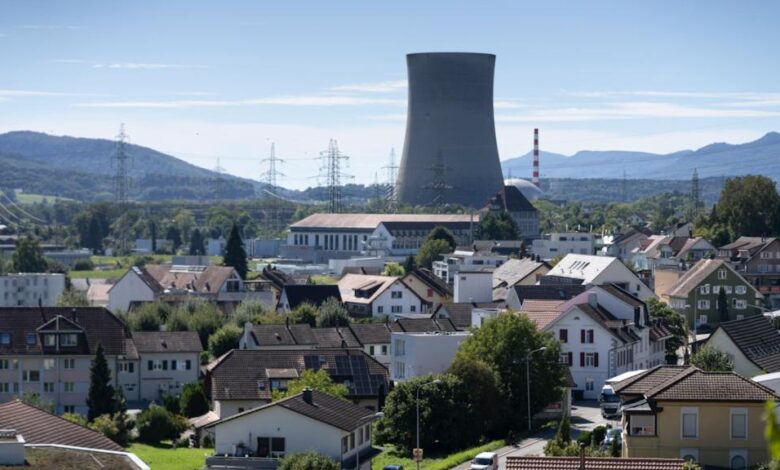
The incident occurred at 6:40 a.m., when the plant’s safety systems triggered an automatic shutdown (scram). According to the operator, Kernkraftwerk Gösgen-Däniken AG (KKG), the cause was identified as low voltage on the control busbars. KKG stated that all safety-related systems responded as intended during the procedure. Crucially, the operator confirmed that no additional release of radioactivity occurred and that the plant is now in a safe condition. The Swiss Federal Nuclear Safety Inspectorate (ENSI) has been notified of the event, and the plant will remain offline until ENSI grants approval for a restart.
This immediate operational disruption comes against the backdrop of a significant policy shift in Switzerland. The Federal Council recently adopted a report commissioned by a Senate postulate, which concludes that operating the Gösgen and Leibstadt nuclear power plants for up to 80 years is technically feasible and, under most scenarios, economically profitable. This marks a notable extension from previous assessments, which had generally considered an operational life of 60 years as the economic limit. The Swiss Federal Office of Energy had already confirmed in 2024 the technical and economic feasibility of operation up to 60 years; the new report primarily addresses the conditions required for safe operation beyond that threshold.
The analysis, conducted by Frontier Economics and Siempelkamp NIS, estimates that the investments required for technical upgrades to ensure long-term operation between 60 and 80 years would amount to between CHF0.7 billion and CHF1.2 billion (approximately USD0.9–1.5 billion). The report notes that the Federal Council does not currently consider financial support or subsidies necessary for this extension, provided that operators can recoup these investments profitably based on realistic future electricity price assumptions. Matthias Rey, a senior manager at the Swiss Nuclear Forum, emphasized that this “Swiss model of long-term operation” is intrinsically linked to significant financial investment, noting that operators have historically poured billions into maintenance and modernization, often exceeding original construction costs.
Switzerland currently relies on four nuclear reactors—two at Beznau and one each at Gösgen and Leibstadt—to generate approximately one-third of its electricity. These plants operate under unlimited operating licenses, meaning they can continue as long as safety standards are met. The new report highlights that long-term operation could help address potential electricity shortages during winter months, provided operators make necessary renovations. However, the report also flags non-economic risks, including political and regulatory uncertainties. Specifically, it cites the risk of potential early decommissioning or stricter safety requirements as factors that could undermine the business case for such long-term investments. A stable regulatory framework is deemed essential for operators to commit to the required capital expenditure.
The energy market and political landscape are actively engaging with these findings. Axpo, the electricity group that owns the Beznau plant and holds stakes in Leibstadt and Gösgen, has voiced support for the longevity of the fleet. Thomas Sieber, head of Axpo, stated that an operational lifespan of up to 80 years is “conceivable” for the plants. This stance contrasts with Axpo’s 2024 announcement to decommission the Beznau plant after approximately 60 years, a decision likely influenced by the specific age and condition of those particular units compared to Gösgen and Leibstadt.
Political momentum for nuclear expansion is also building. A popular initiative is pending that seeks to lift the ban on the construction of new nuclear reactors. Furthermore, a Swiss parliamentary committee recently supported lifting this construction ban, signaling a broader shift in energy policy. The report notes that maintaining specific technical knowledge and skills is a challenge for long-term operation, particularly as the workforce ages. Operators must ensure that the expertise required for safe, extended operation is preserved and transferred effectively.
For Gösgen, the immediate path forward is clear: the plant must be restarted following ENSI’s approval. However, the longer-term trajectory is now subject to a critical decision point. A determination must be made by 2029 regarding whether to keep Gösgen running beyond its previously assumed 60-year horizon or to proceed with planned decommissioning. This decision will hinge on the outcome of the political debates surrounding the construction ban, the finalization of the regulatory framework for long-term operation, and the operator’s assessment of the profitability of the required upgrades against future market prices.
The technical distinction between installed capacity and actual generation remains relevant here. While the nameplate capacity of the Gösgen and Leibstadt plants remains unchanged by the report, the reliability of this output over the next two decades depends on the execution of the outlined maintenance and retrofitting programs. The report does not guarantee extended operation but rather establishes the technical and economic boundaries within which such a decision can be made. For Swiss energy security, the potential extension of these plants’ lives offers a hedge against winter supply risks, but only if the political and financial conditions stabilize in the coming years.
The next major milestone will be the restart of the Gösgen unit following ENSI review, followed closely by the political resolution of the popular initiative regarding new reactor construction. The 2029 deadline for the Gösgen decommissioning decision looms as the ultimate test of whether Switzerland’s aging nuclear fleet will be retained as a cornerstone of its energy mix for another generation.