The most immediate symbol of this tension is the village of Majd al-Krum in the Galilee, where residents recently confronted a settler outpost established on village land. The incident highlights a broader shift in strategy by far-right figures, particularly Finance Minister Bezalel Smotrich, who is campaigning on a promise to “Judaise” the Galilee and the Naqab (the Negev).
The Al-Rus Precedent
The confrontation in Majd al-Krum began on September 13, when settlers from the occupied West Bank began building an outpost on a pine-covered hilltop known as al-Rus. The settlers cited a grazing permit issued by the Jewish National Fund (JNF) to justify their presence, though local lawyer Hussein Mannaa noted that no livestock was present. Within a week, the camp expanded to include between 25 and 30 individuals, along with infrastructure such as a kitchen, toilet, and electricity.
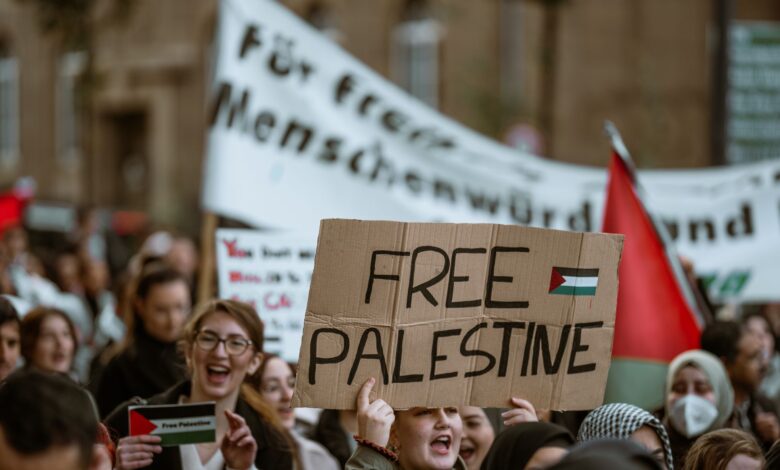
In response, local Palestinians, including young organizers like 21-year-old law student Anas Sgaier, launched daily peaceful protests. The demonstrations, which involved hundreds of residents from Majd al-Krum and neighboring towns like Sakhnin and Arrabeh, continued for nearly a week. On September 16, the JNF ordered the removal of the settler tents, effectively ending the immediate standoff. However, the JNF subsequently stated the initiative would relocate to another plot 500 meters away, a move the village’s Popular Committee rejected outright.
For residents like economic consultant Husein Khalaily, the event was not an isolated incident but a calculated test. “The al-Rus experiment is like a pilot … experiment: ‘come on, let’s see the reaction,’” Khalaily said. He and other locals believe the targeting of Majd al-Krum, a village with a long history of defiance since the 1948 Nakba, is intended to create a pretext for broader demographic changes. “If they break Majd al-Krum,” said Khaled Kewan, a local singer, “[it’s] going to happen all over the Galilee.”
Political Strategy and Demographic Shifts
Smotrich has openly linked the recent incidents to his electoral platform. On August 27, he unveiled a plan to add one million Jewish residents to the Galilee and Naqab, establishing 40 new communities and expanding existing settlements. His party also released an AI-generated video depicting a West Bank Palestinian warning a relative in the Galilee that “the Jews are coming,” a narrative critics argue is incendiary and dehumanizing.
Smotrich’s rhetoric has been matched by a tightening of security measures that Palestinian citizens view as a threat to their civil liberties. National Security Minister Itamar Ben-Gvir has expanded the National Guard, a force established partly in response to the 2021 Dignity Uprising. While the precise operational framework of the National Guard remains under development, its potential deployment in Palestinian towns raises concerns about the militarization of civilian life and the suppression of mass protests.
Furthermore, Ben-Gvir has issued 300,000 gun licenses since taking office, a move that, alongside the integration of settler security squads into the broader security framework, normalizes armed civilian policing. This environment has coincided with a rise in violence attributed to organized crime networks, which have reportedly obtained advanced weapons, leading to hundreds of deaths in Palestinian communities. Critics argue that Israeli law enforcement has largely ignored this crisis, effectively “outsourcing” brutality to criminal elements while maintaining a facade of order.
The Limits of Parliamentary Participation
For Palestinian citizens, the political landscape offers few avenues for relief. The United Arab List (Ra’am), led by Mansour Abbas, has traditionally argued that participating in the Knesset and supporting anti-Netanyahu coalitions is essential to halting the far-right agenda. However, the party’s experience in the 2021–2022 coalition government has dampened such optimism.
In 2022, Ra’am member Mazen Ghnaim publicly acknowledged that his party was unable to push through policies benefiting the Palestinian population, despite being part of the ruling coalition. This failure has led to a growing sentiment that formal citizenship does not equate to substantive equality. Palestinians in Israel continue to face discriminatory laws, systemic underfunding of basic services, and a state apparatus that seeks to reshape their national identity, distinguishing them from Palestinians in the West Bank and Gaza.
As the election date approaches, the question for Palestinian citizens of Israel is no longer just about who holds power, but whether the act of voting itself can alter the trajectory of what some describe as a process of “recolonization” within the 1948 borders. With the far-right consolidating its grip on policy and the mainstream opposition offering no clear path to reversing settler incursions or dismantling the mechanisms of control, the next vote may serve less as a tool for change and more as a marker of continued marginalization.
The immediate next step is the general election on October 27, where the balance of power in the Knesset will determine the extent to which policies like the “Judaisation” plan and the expansion of the National Guard can be implemented or checked.